Section A.7 Compound and Complex Sentences

This section starts from a simple sentence and progressively shows how clauses combine through coordination and subordination.
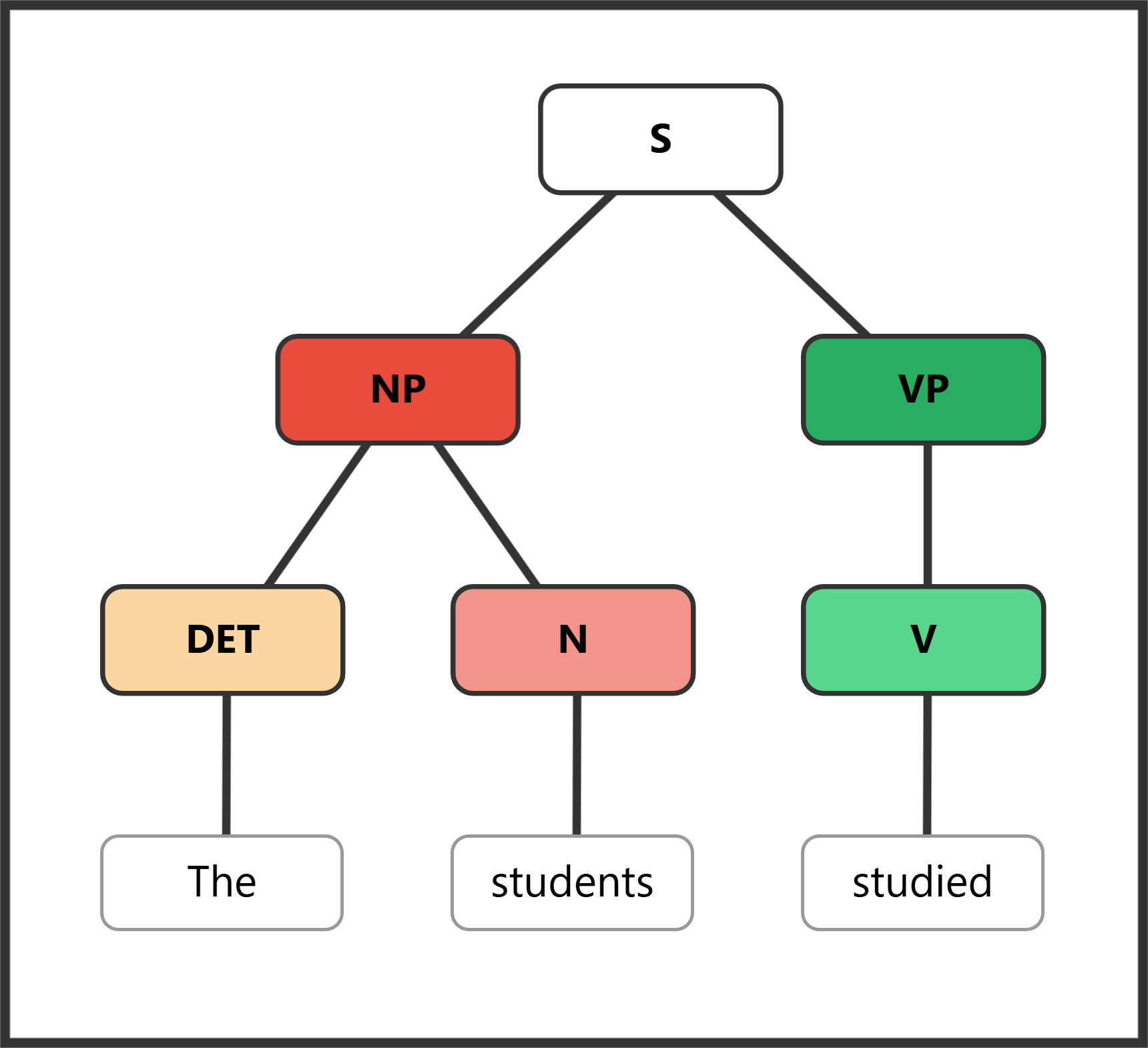
Syntax tree showing a simple sentence as baseline for comparison
Figure A.7.1. Simple Sentence Baseline: The students studied
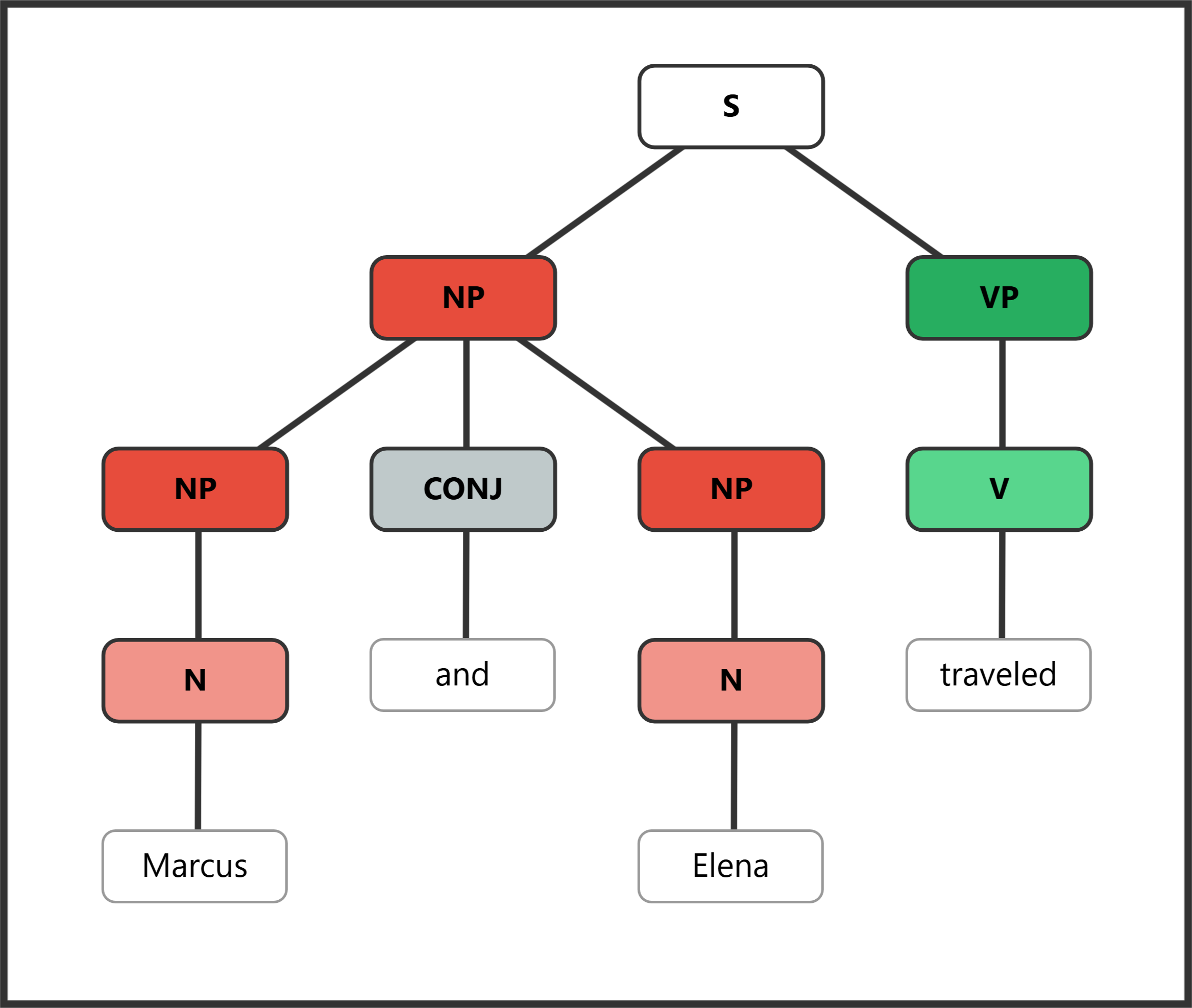
Syntax tree showing coordinated NP subject, not a compound sentence
Figure A.7.2. Compound Subject (Not a Compound Sentence): Marcus and Elena traveled
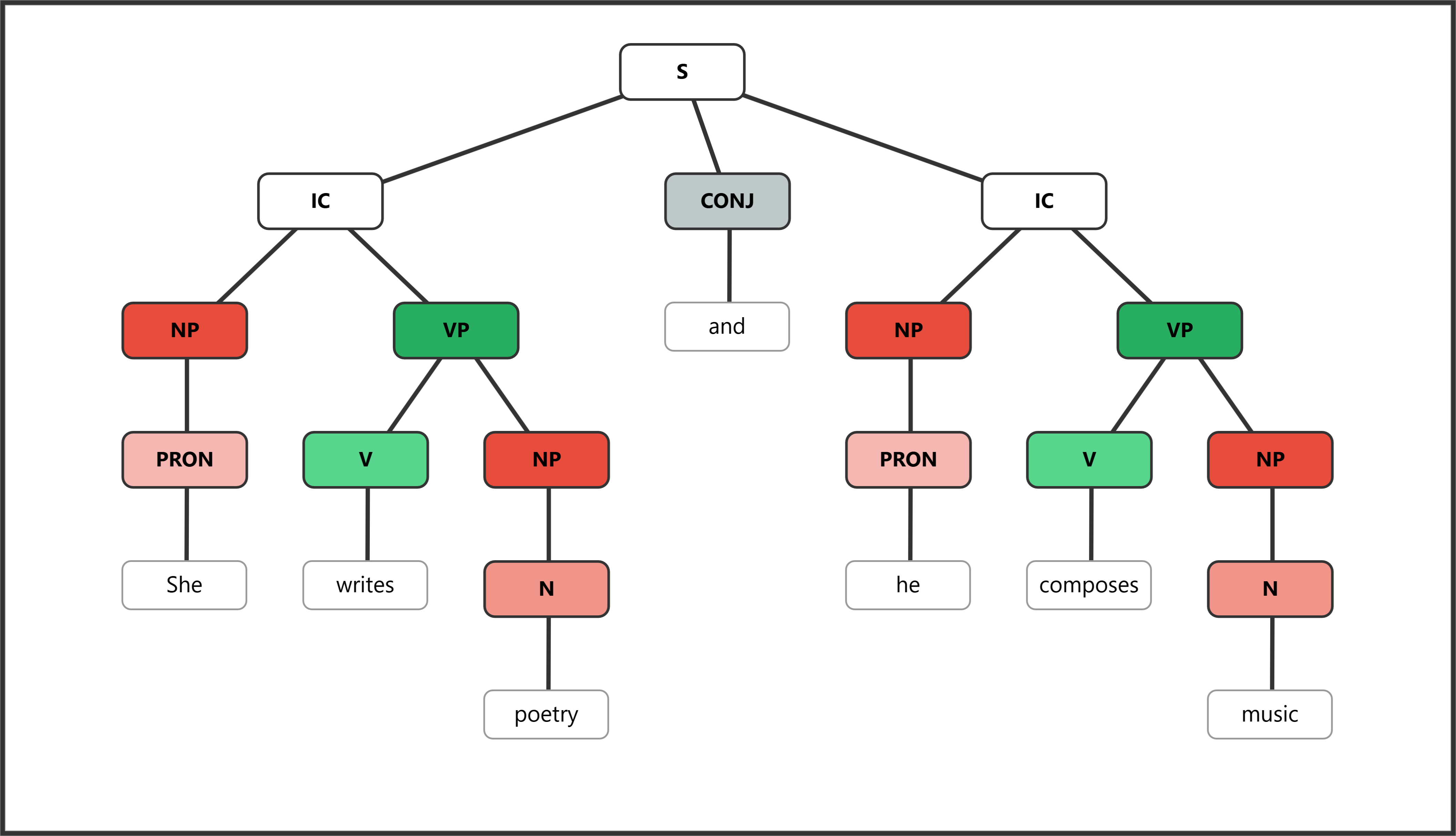
Syntax tree showing compound sentence with two independent clauses joined by "and"
Figure A.7.3. Compound Sentence with and: She writes poetry, and he composes music
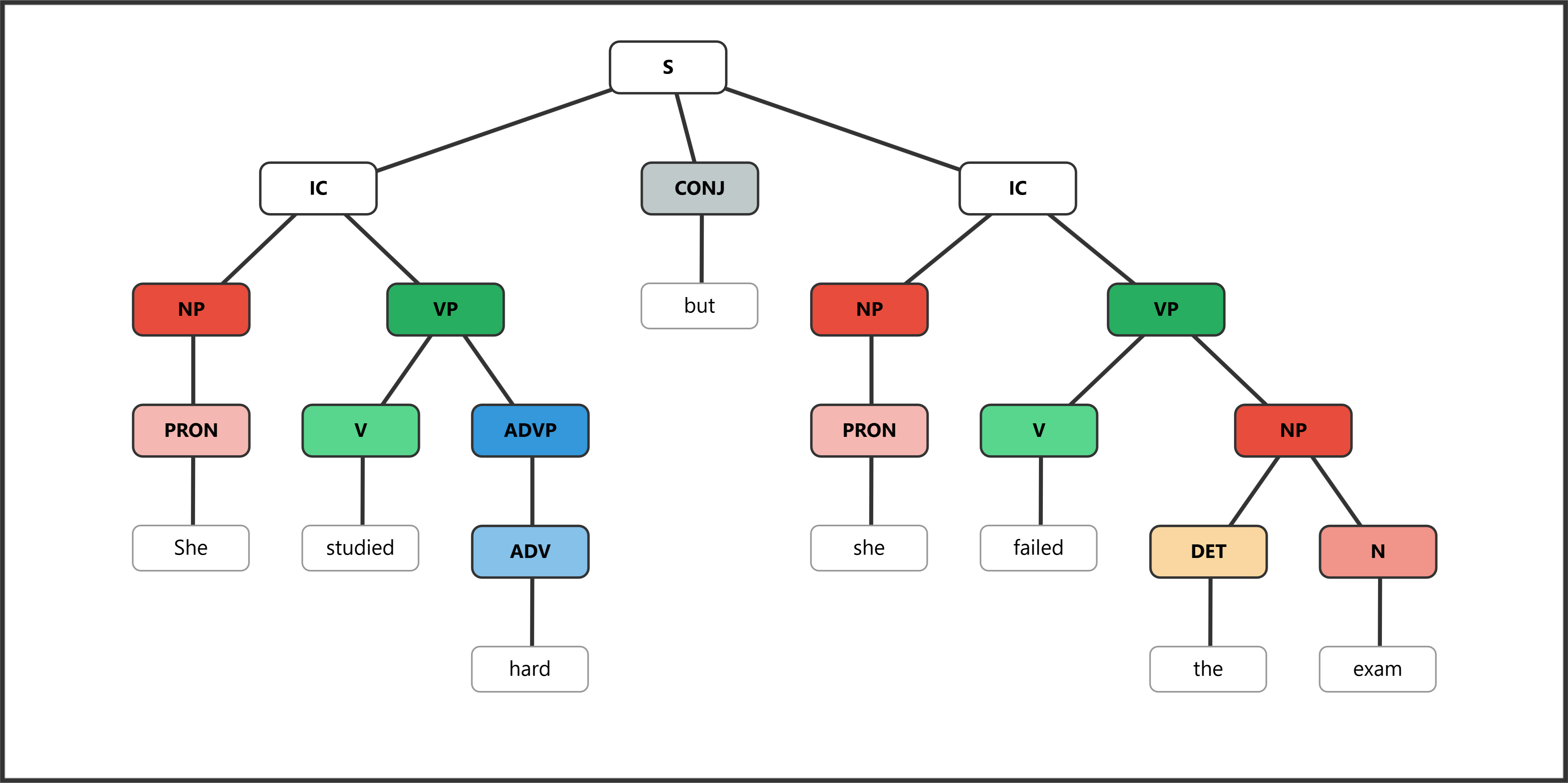
Syntax tree showing compound sentence with two independent clauses joined by "but"
Figure A.7.4. Compound Sentence with but: She studied hard, but she failed the exam
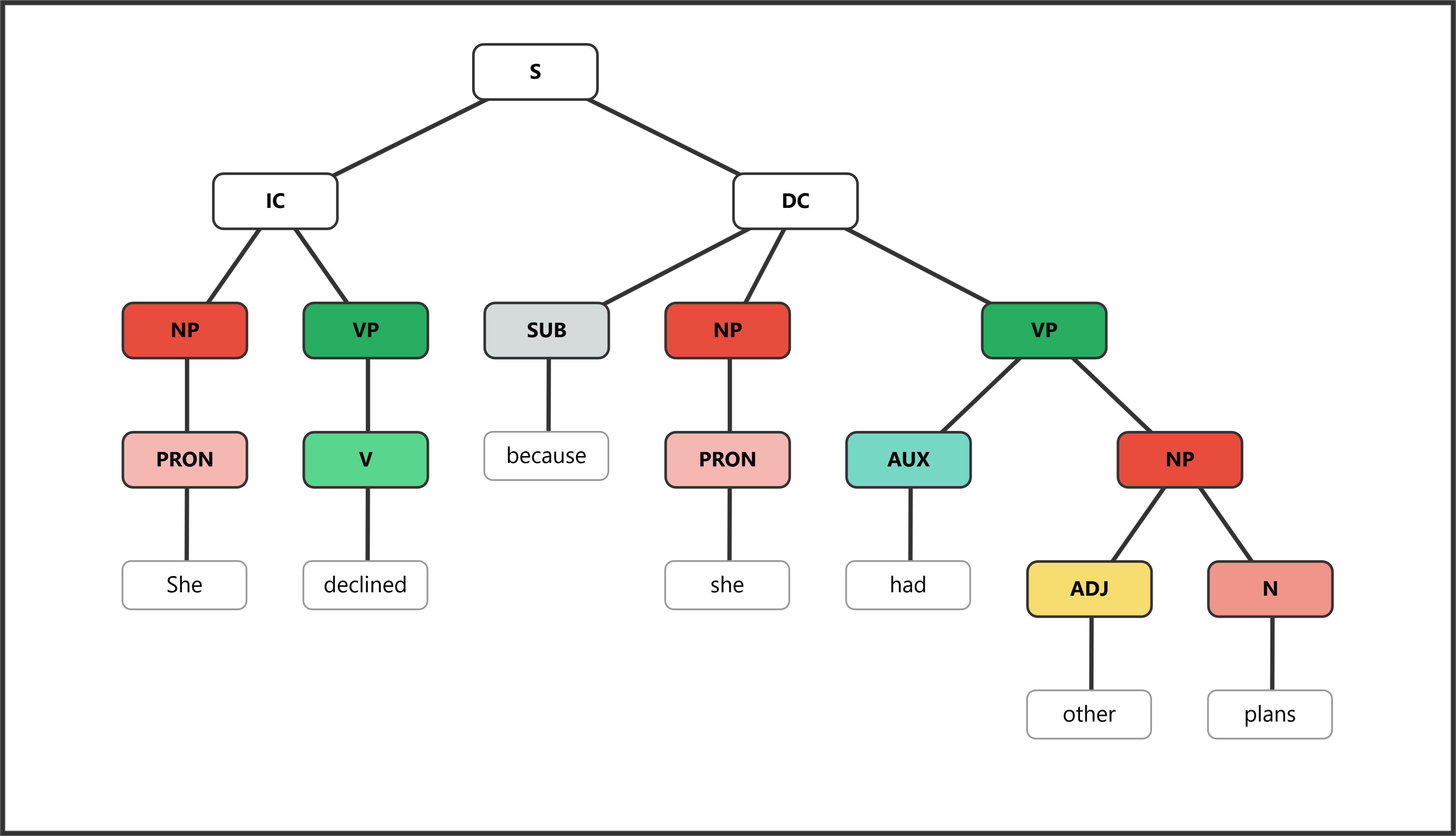
Syntax tree showing complex sentence with dependent clause following independent clause
Figure A.7.5. Complex Sentence — Dependent Clause Second: She declined because she had other plans
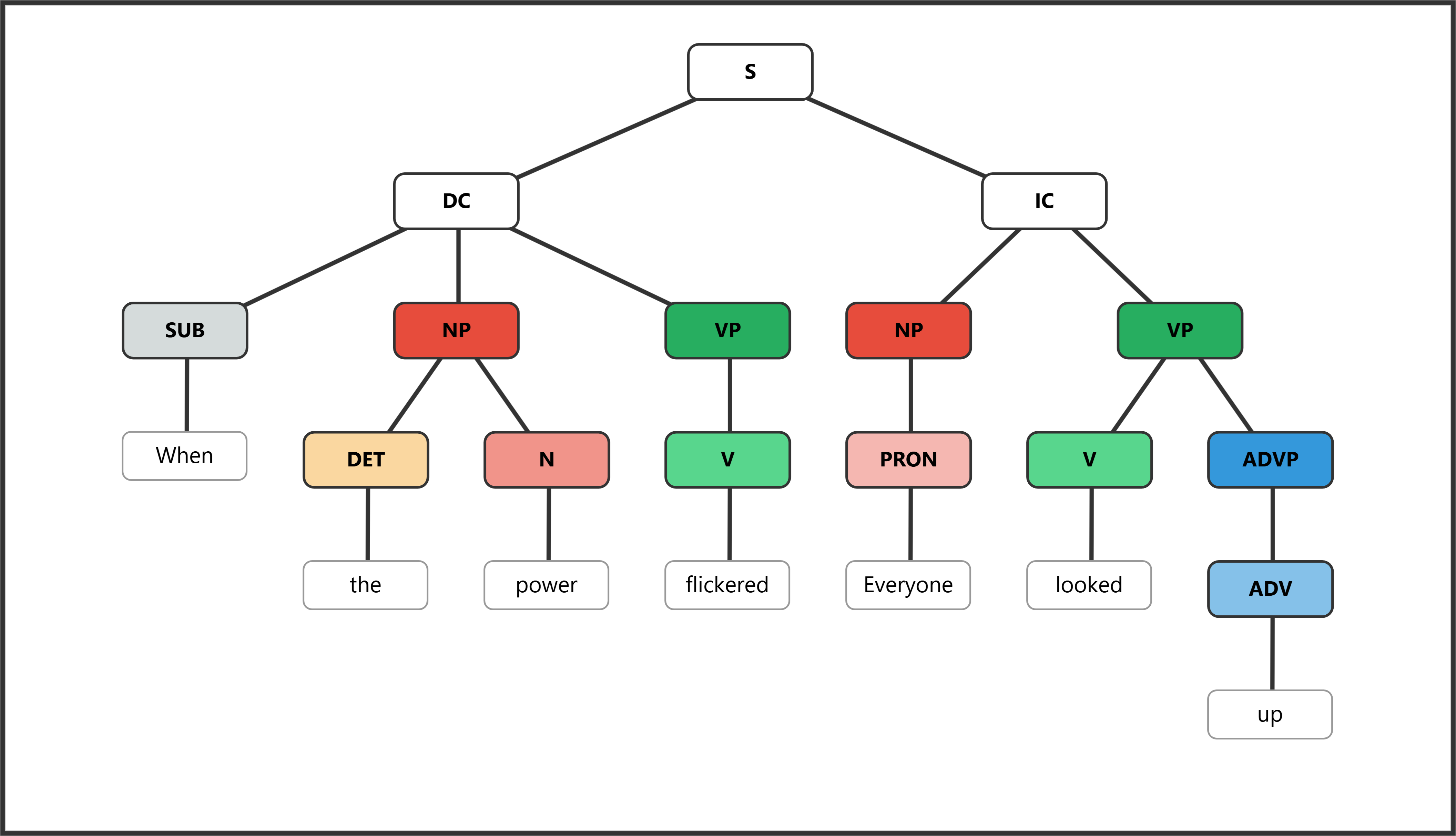
Syntax tree showing complex sentence with dependent clause preceding independent clause
Figure A.7.6. Complex Sentence — Dependent Clause First: When the power flickered, everyone looked up
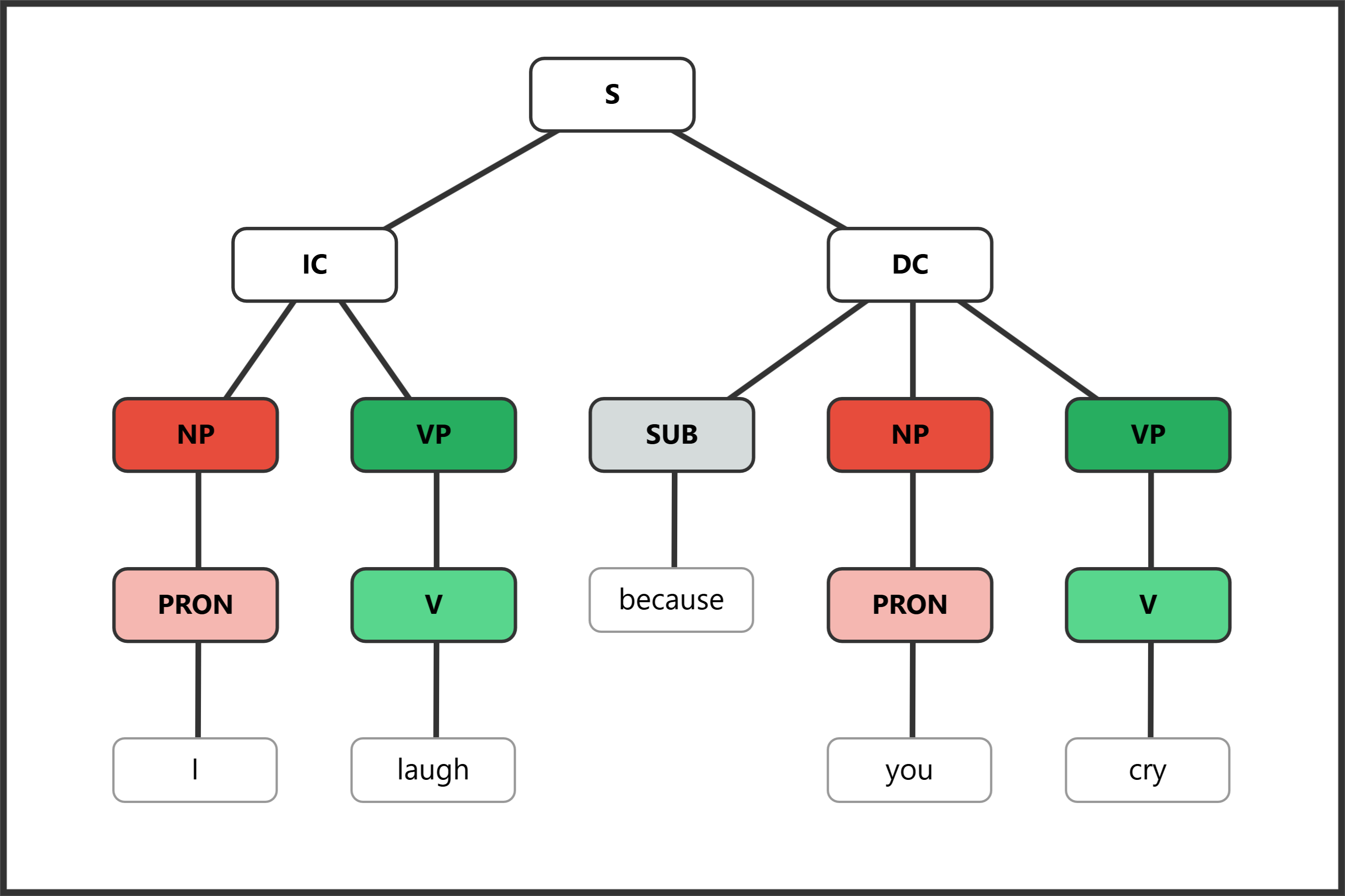
Syntax tree showing subordination with dependent clause in final position
Figure A.7.7. Subordination — DC Following: I laugh because you cry
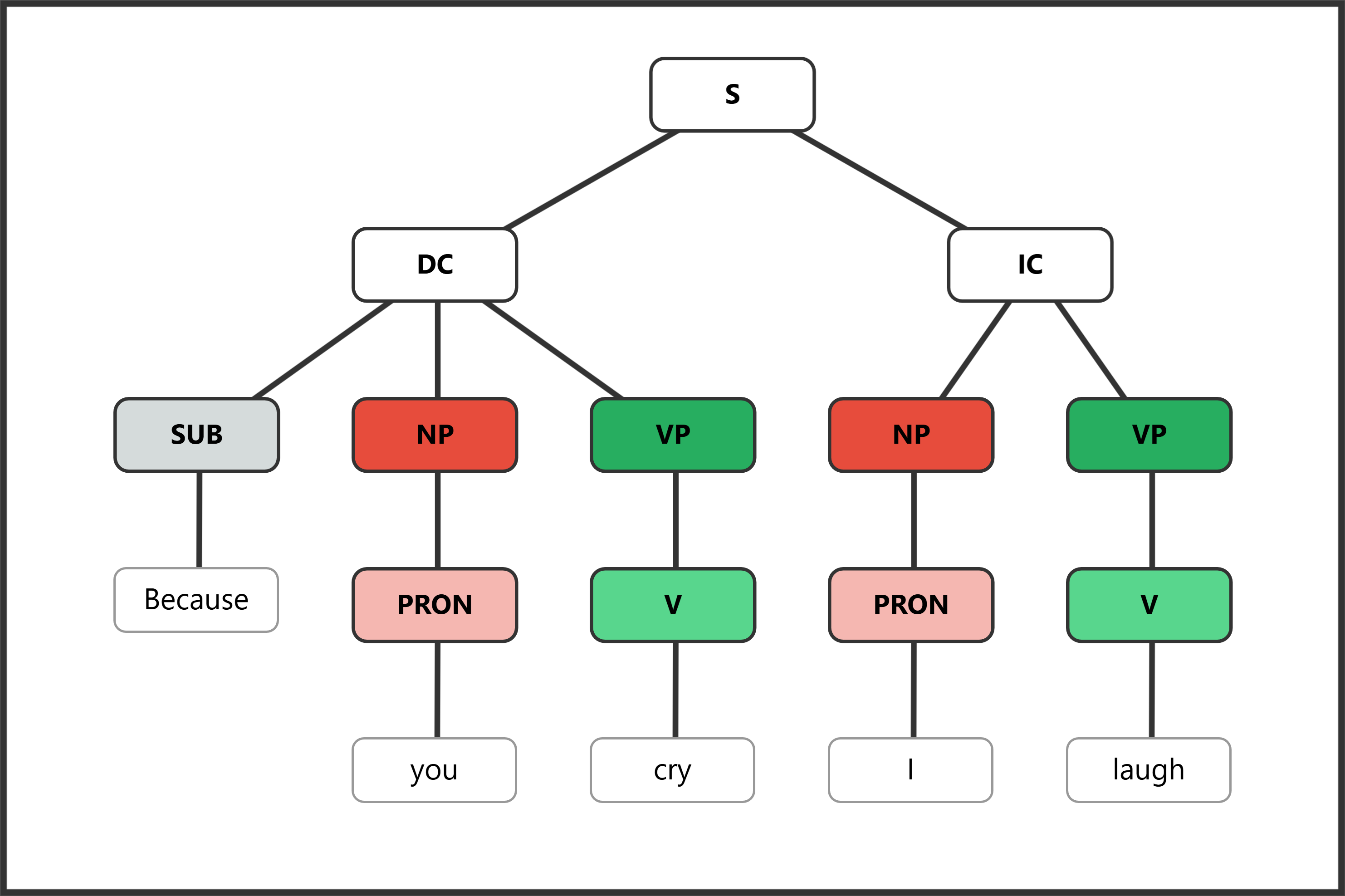
Syntax tree showing subordination with dependent clause fronted
Figure A.7.8. Subordination — DC Fronted: Because you cry, I laugh