Section 10.2 Primary Auxiliary: Be
Be is the most versatile auxiliary, used for both progressive aspect and passive voice. It is also, arguably, the most irregular verb in English—its forms (am, is, are, was, were, been, being) look nothing like one another, a remnant of the verb’s descent from three different Old English roots that merged over centuries. Despite that surface irregularity, the grammatical work be does as an auxiliary is entirely predictable: combine it with an -ing form to get progressive meaning, combine it with a past participle to get passive meaning.
Forms of Be.
| Present | Past | Participles |
|---|---|---|
| am, is, are | was, were | been, being |
Functions of Auxiliary Be.
Progressive aspect (be + -ing):
-
She is reading. (present progressive)
-
They were studying. (past progressive)
-
He has been working. (present perfect progressive)
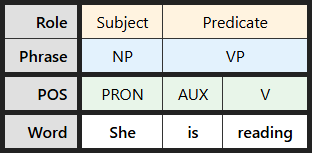
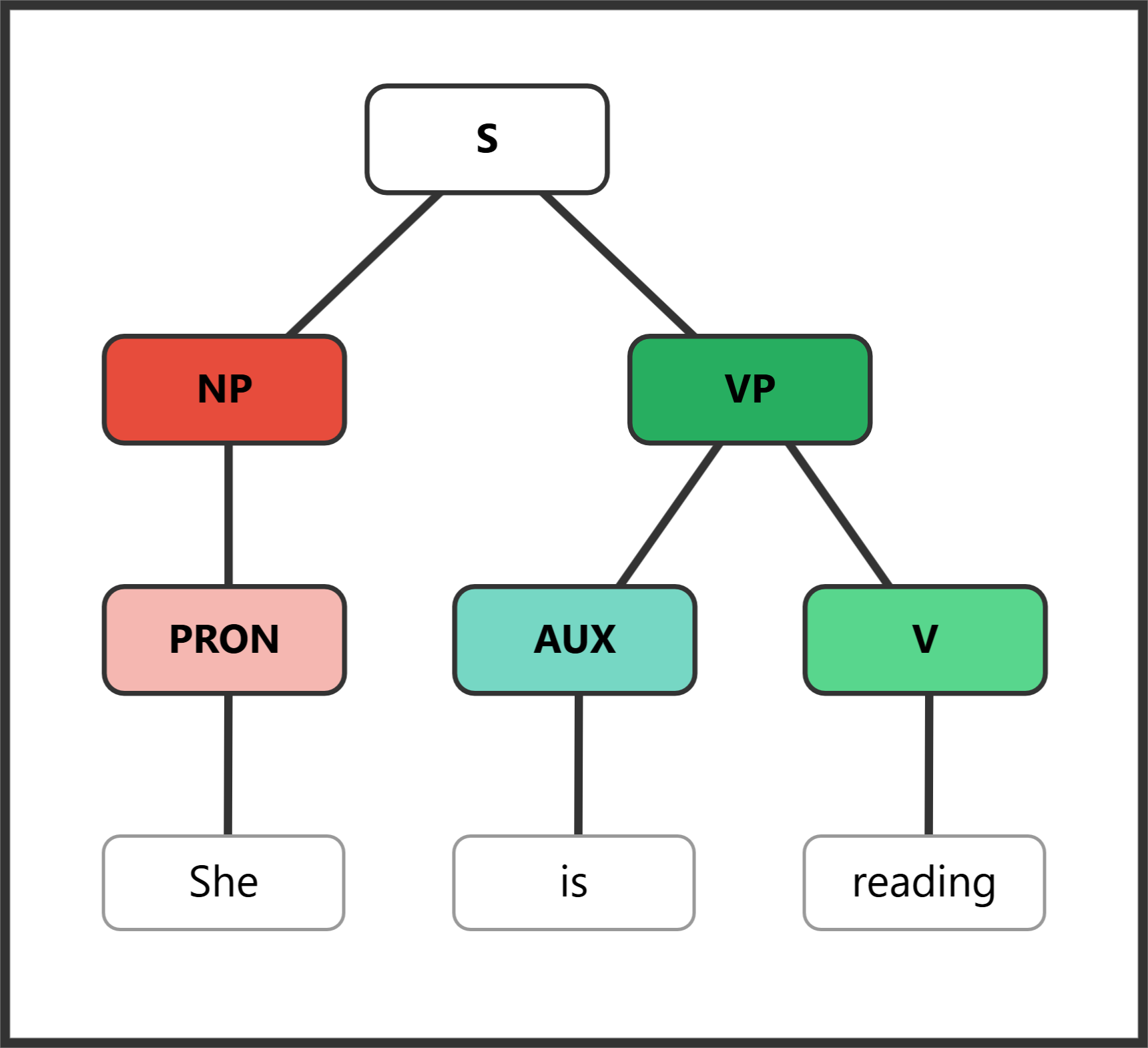
[S [NP [PRON She]] [VP [AUX is] [V reading]]]
Passive voice (be + past participle):
-
The book was written by Maria.
-
The house is being built.
-
The work will be completed.
Note: Passive voice is a rich topic with its own set of patterns and uses. We will examine it in detail in Chapter 11.
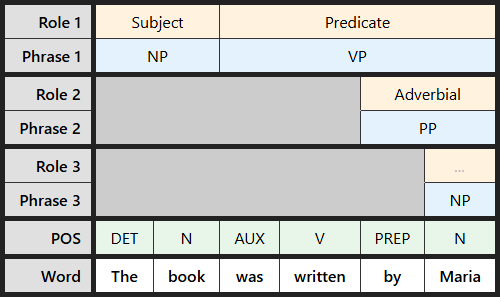
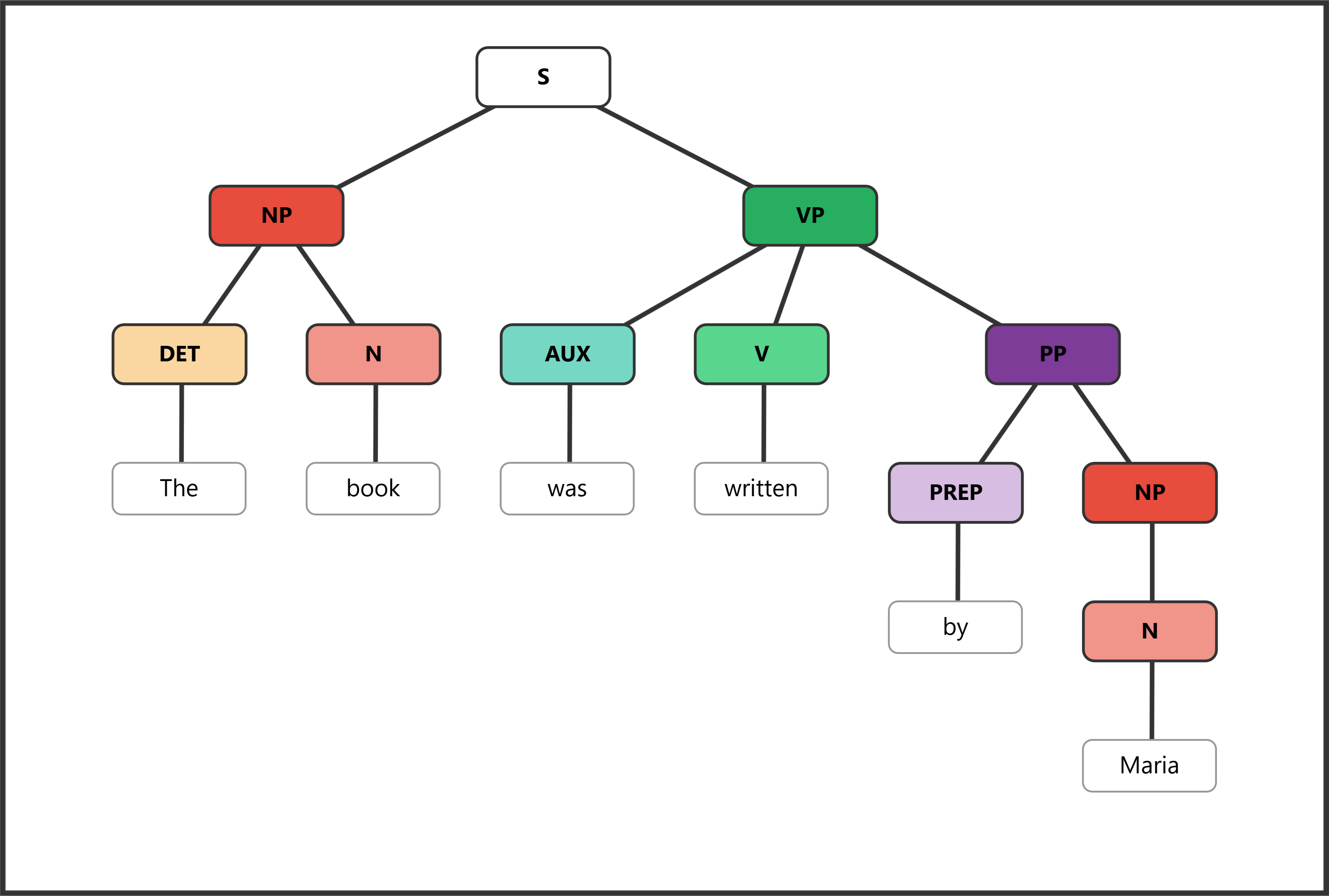
[S [NP [DET The] [N book]] [VP [AUX was] [V written] [PP [PREP by] [NP [N Maria]]]]]
Be as Main Verb vs. Auxiliary.
Be can also be a main verb (copular/linking):
-
She is a teacher. (main verb—links subject to complement)
Distinguishing:
-
Followed by -ing form = auxiliary: She is reading.
-
Followed by past participle = auxiliary (passive): It was done.
-
Followed by NP, AdjP, PP = main verb: She is happy.

