Section 8.4 Verb Valency
Valency refers to the number and types of arguments a verb requires. Different verbs have different valencies, and this determines sentence structure.
The term comes from chemistry, where valence describes the bonding capacity of an atom. The analogy is apt: just as carbon always forms four bonds and hydrogen always forms one, a verb like arrive always takes exactly one argument (a subject) and a verb like give typically takes three. This is not a rule imposed from outside—it is part of what each verb means. You cannot say She arrived the station, because arriving is not a kind of action that can be directed toward an object. The concept of valency captures this fact: the verb’s meaning itself determines how many argument slots must be filled around it.
The Verb as the Sentence’s Architect.
The main verb determines what other elements must appear in the sentence. Think of the verb as an architect’s blueprint—it specifies how many "slots" need to be filled and what types of elements fill them.
-
Sleep requires only a subject (1 argument)
-
Read typically requires a subject and object (2 arguments)
-
Give often has a subject, indirect object, and direct object (3 arguments)
Valency Categories.
Intransitive Verbs (Valency: 1)
Require only a subject:
-
Cameras flashed.
-
The baby slept.
-
Accidents happen.
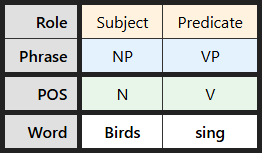
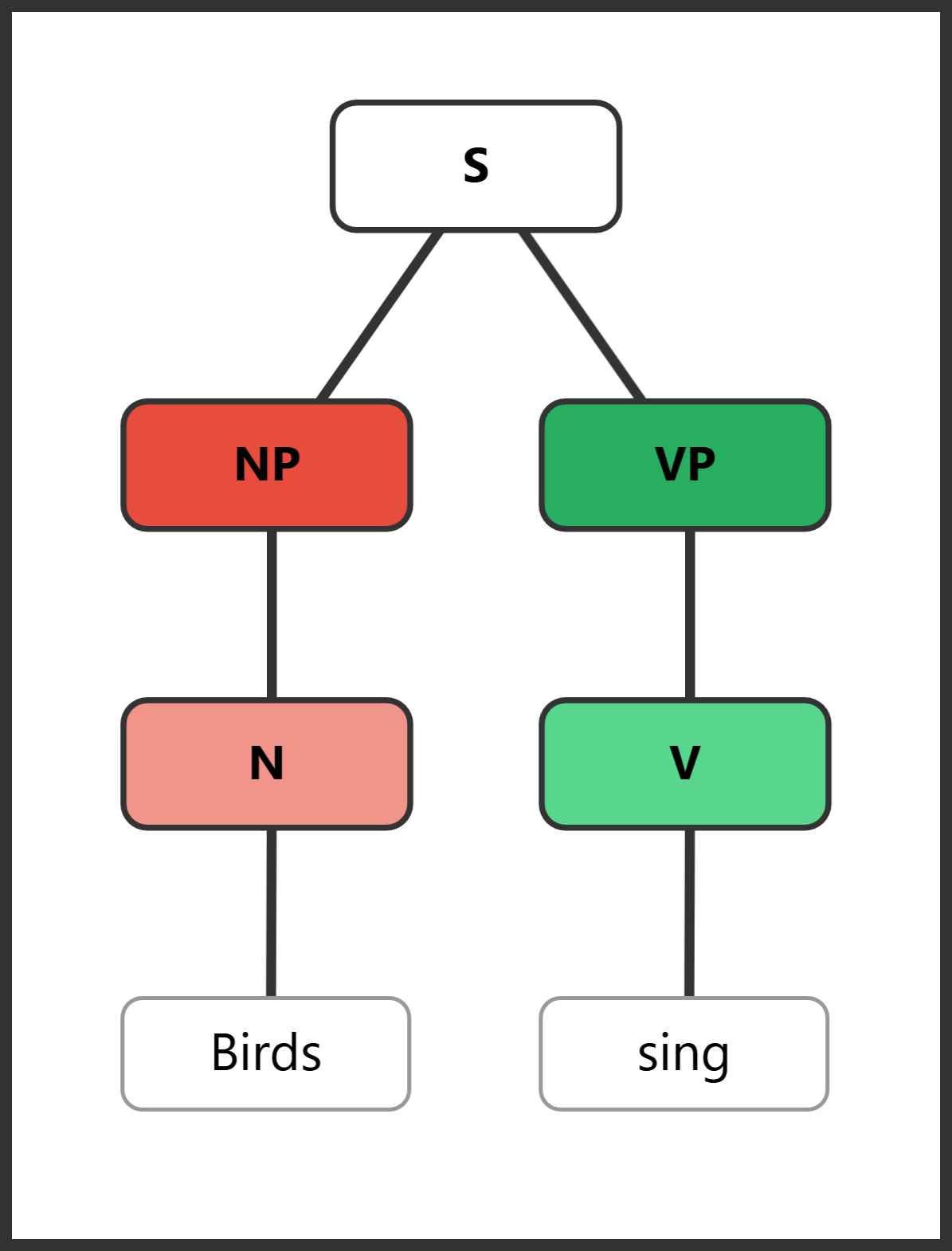
[S [NP [N Birds]] [VP [V sing]]]
Transitive Verbs (Valency: 2)
Require a subject and a direct object:
-
Weasels stalk rabbits.
-
She read the book.
-
They completed the project.
Ditransitive Verbs (Valency: 3)
Require a subject, direct object, and indirect object (or object complement):
-
Marie sent Ramon a gift. (S + IO + DO)
-
She gave me the book. (S + IO + DO)
-
The director considered the performance a success. (S + DO + OC)
Linking Verbs (Valency: 2)
Require a subject and subject complement:
-
She is a doctor. (S + SC)
-
The trail looked steep. (S + SC)
-
He became president. (S + SC)
Verbs with Variable Valency.
Some verbs can be used with different valencies:
Eat:
-
Intransitive: We ate. (1 argument)
-
Transitive: We ate dinner. (2 arguments)
Give:
-
Ditransitive: She gave me a book. (3 arguments)
-
Transitive + PP: She gave a book to me. (2 arguments + PP adverbial)
Run:
-
Intransitive: She runs. (1 argument)
-
Transitive: She runs a business. (2 arguments)

