Section 13.8 Participial Phrase Adjectivals
Participial phrases offer one of the most compact and versatile ways to modify a noun. Built on present participles (-ing) or past participles (-ed/-en), they function adjectivally while retaining some of the verb’s ability to take complements and modifiers. In the next two sections on relative clauses, you will see that many participial phrases can be understood as reduced versions of relative clauses—but for now, the focus is on their form, position, and how to avoid the common error known as the dangling participle.
Formation.
A participial phrase is built on a present participle (-ing) or past participle (-ed/-en) plus any complements or modifiers:
-
Present participial: the woman talking on the phone
-
Past participial: the report written by the committee
Present Participial Phrases.
These express ongoing action or state. The present participle form (-ing) suggests active voice and simultaneous or habitual action:
-
the woman talking on the phone
-
students waiting in line
-
a child playing in the park
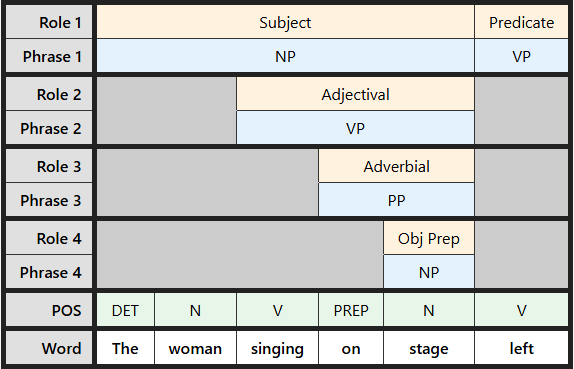
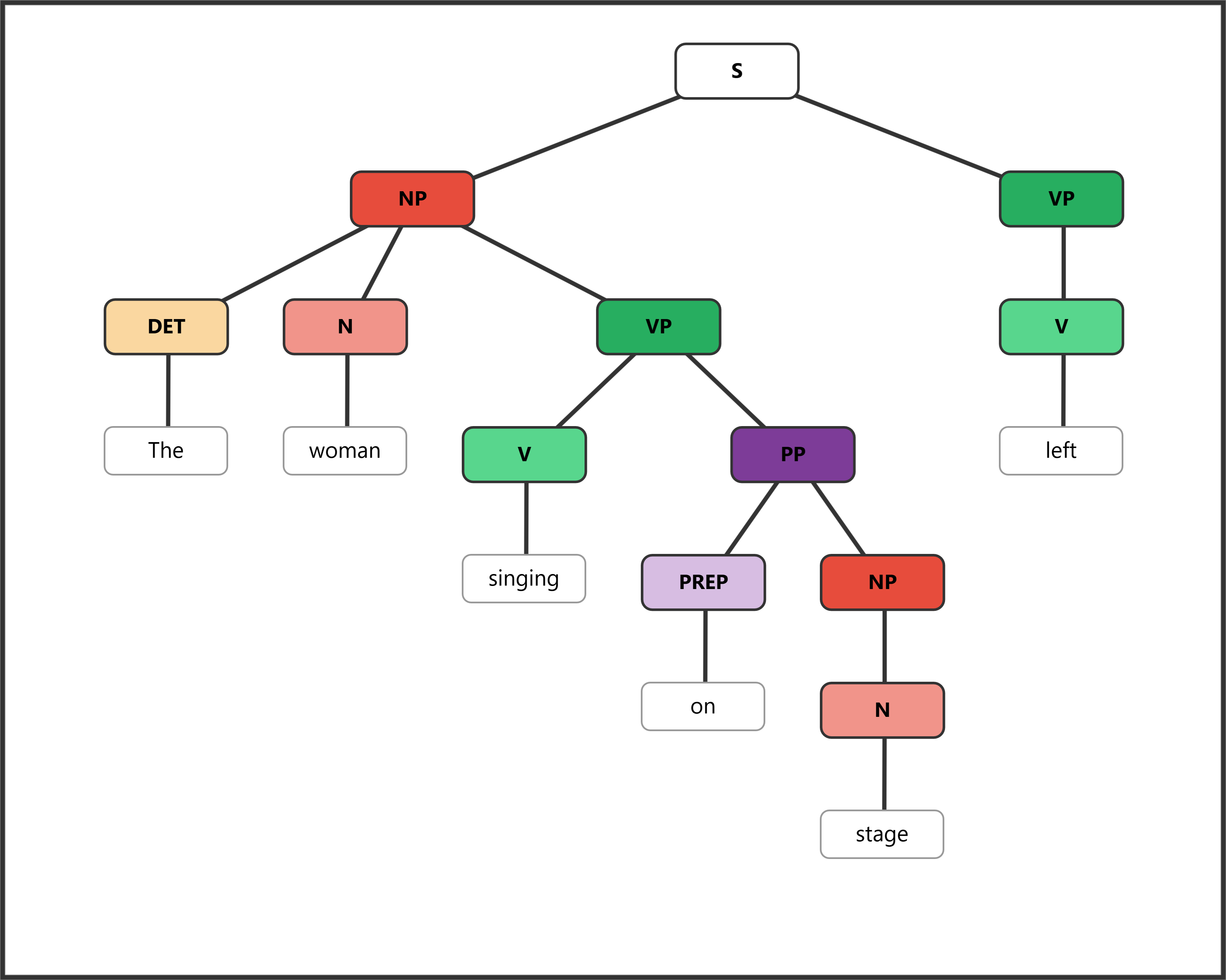
[S [NP [DET The] [N woman] [VP [V singing] [PP [PREP on] [NP [N stage]]]]] [VP [V left]]]
Past Participial Phrases.
These express completed action or state, often passive in meaning:
-
the report written by the committee
-
a house built in 1920
-
the problem discussed earlier
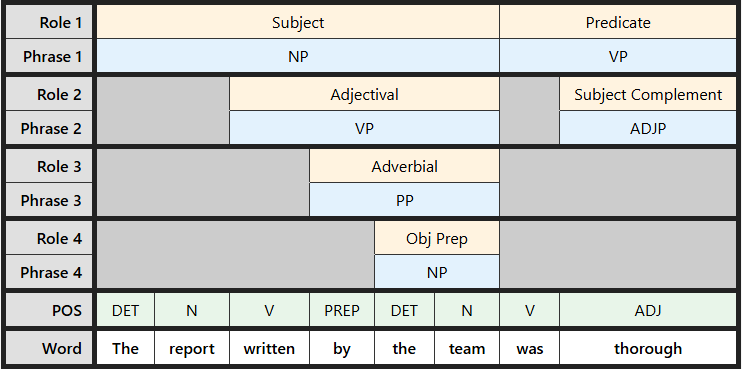
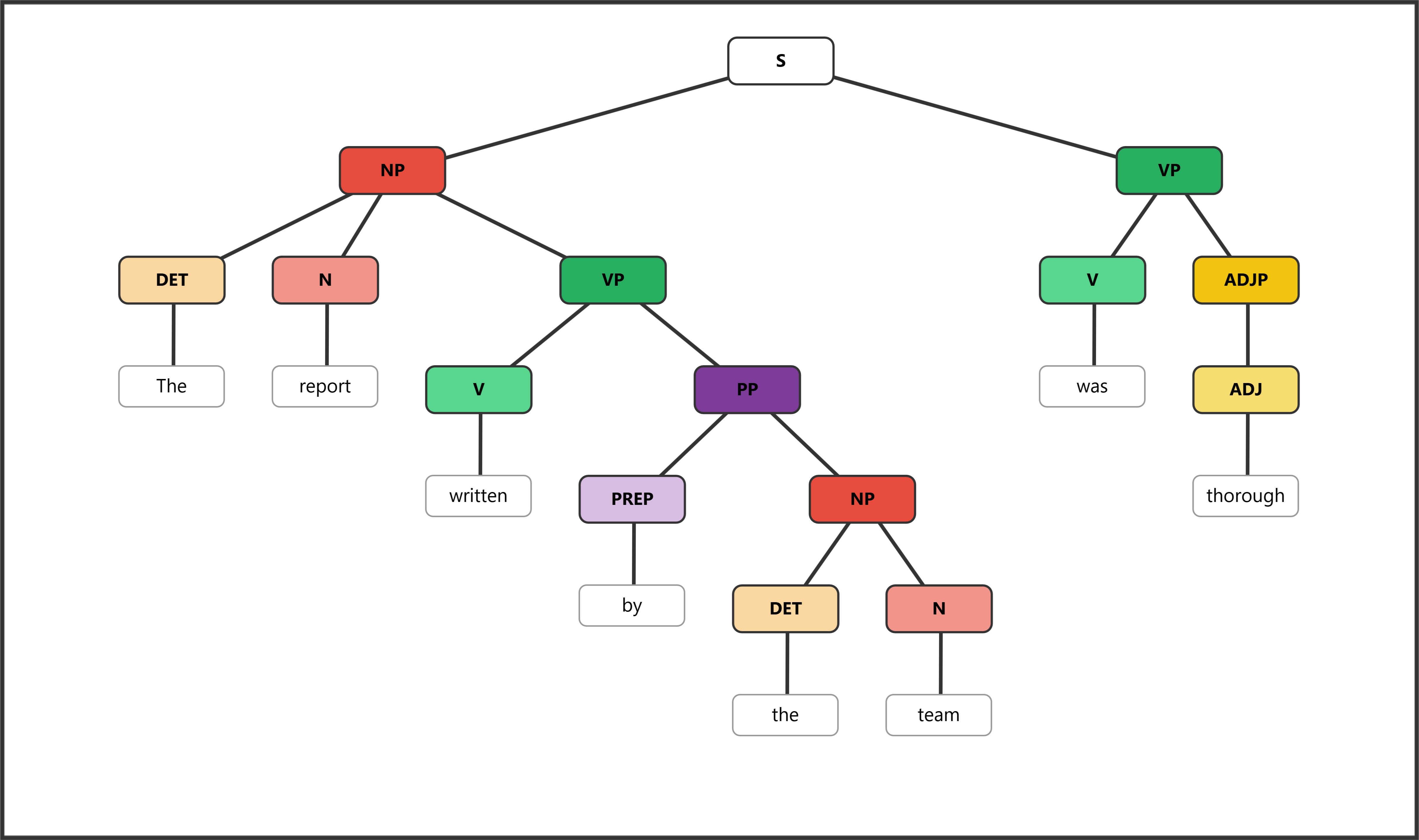
[S [NP [DET The] [N report] [VP [V written] [PP [PREP by] [NP [DET the] [N team]]]]] [VP [V was] [ADJP [ADJ thorough]]]]
Reduced Relative Clauses.
Participial phrases can often be understood as reduced relative clauses—relative clauses with the relative pronoun and auxiliary verb deleted:
-
the woman who is talking → the woman talking
-
the report that was written → the report written
Position.
Participial phrases typically follow the noun they modify:
-
the man standing by the door
-
the book published last year
But single-word participles often precede the noun:
-
the running water
-
the broken window
Dangling Participles.
A dangling participle occurs when a participial phrase does not logically connect to the noun it appears to modify:
-
Walking down the street, the trees were beautiful.(trees weren’t walking) -
Correct: Walking down the street, I noticed the beautiful trees.
The fix: make sure the subject of the main clause is the one performing the action of the participle.
Labeling Table.
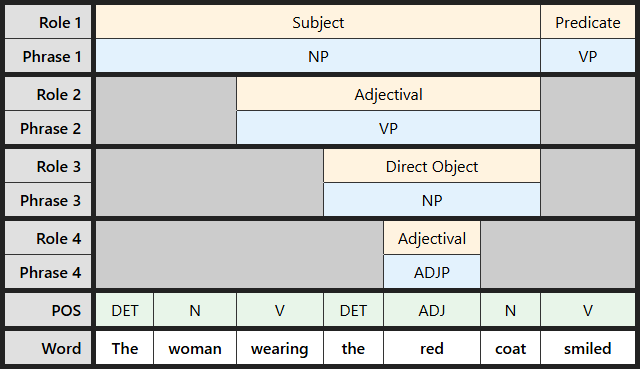
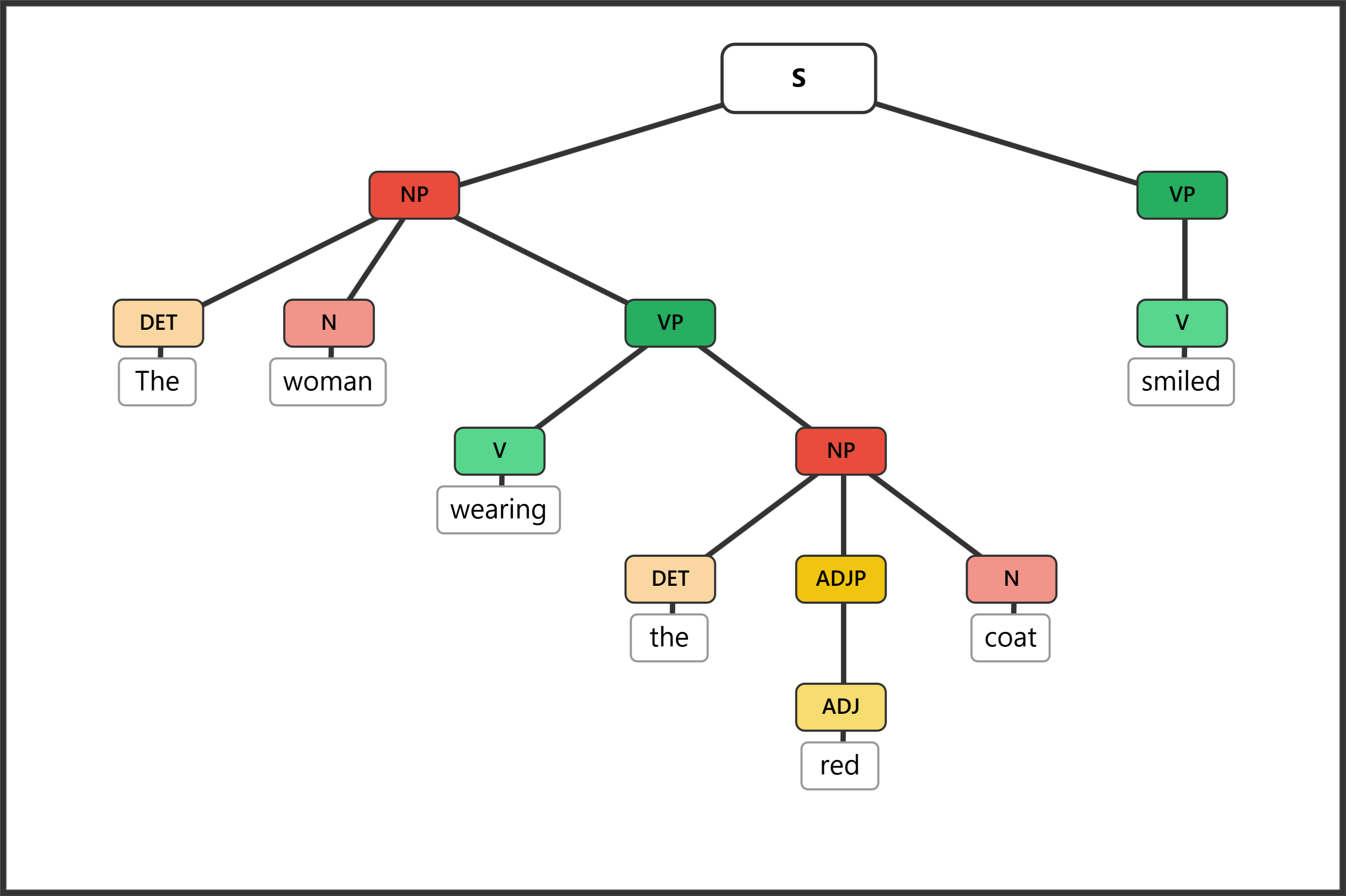
[S [NP [DET The] [N woman] [VP [V wearing] [NP [DET the] [ADJP [ADJ red]] [N coat]]]] [VP [V smiled]]]
Key Points.
-
Present participles (-ing) suggest active, ongoing action; past participles (-ed/-en) suggest completed, often passive action.
-
Multi-word participial phrases follow the noun; single-word participles can precede it.
-
Always check that the participle logically modifies the intended noun to avoid dangling participles.
-
Participial phrases are structurally more compact than the relative clauses they reduce.

