Section 8.3 Objects and Complements
Among a verb’s arguments are two main types: objects (direct and indirect objects) and complements (subject and object complements).
These two categories behave differently from each other in important ways. Objects are always noun phrases (or clauses functioning as NPs), and they receive or are affected by the verb’s action. Complements, by contrast, do not receive action—they describe or identify either the subject or the direct object. A subject complement after is characterizes the subject; an object complement after found characterizes the direct object. Confusing the two is a frequent source of analysis errors, so learning to distinguish them by their grammatical behavior—not just by intuition—is essential.
Direct Objects.
The direct object receives the action of the verb. It answers “What?” or “Whom?”
Examples:
-
Weasels stalk rabbits. (stalk what? → rabbits)
-
She read the book. (read what? → the book)
-
I saw him. (saw whom? → him)
Direct objects are always noun phrases (or clauses functioning as NPs).
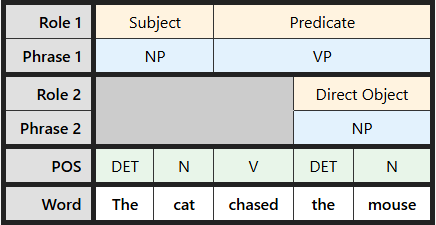
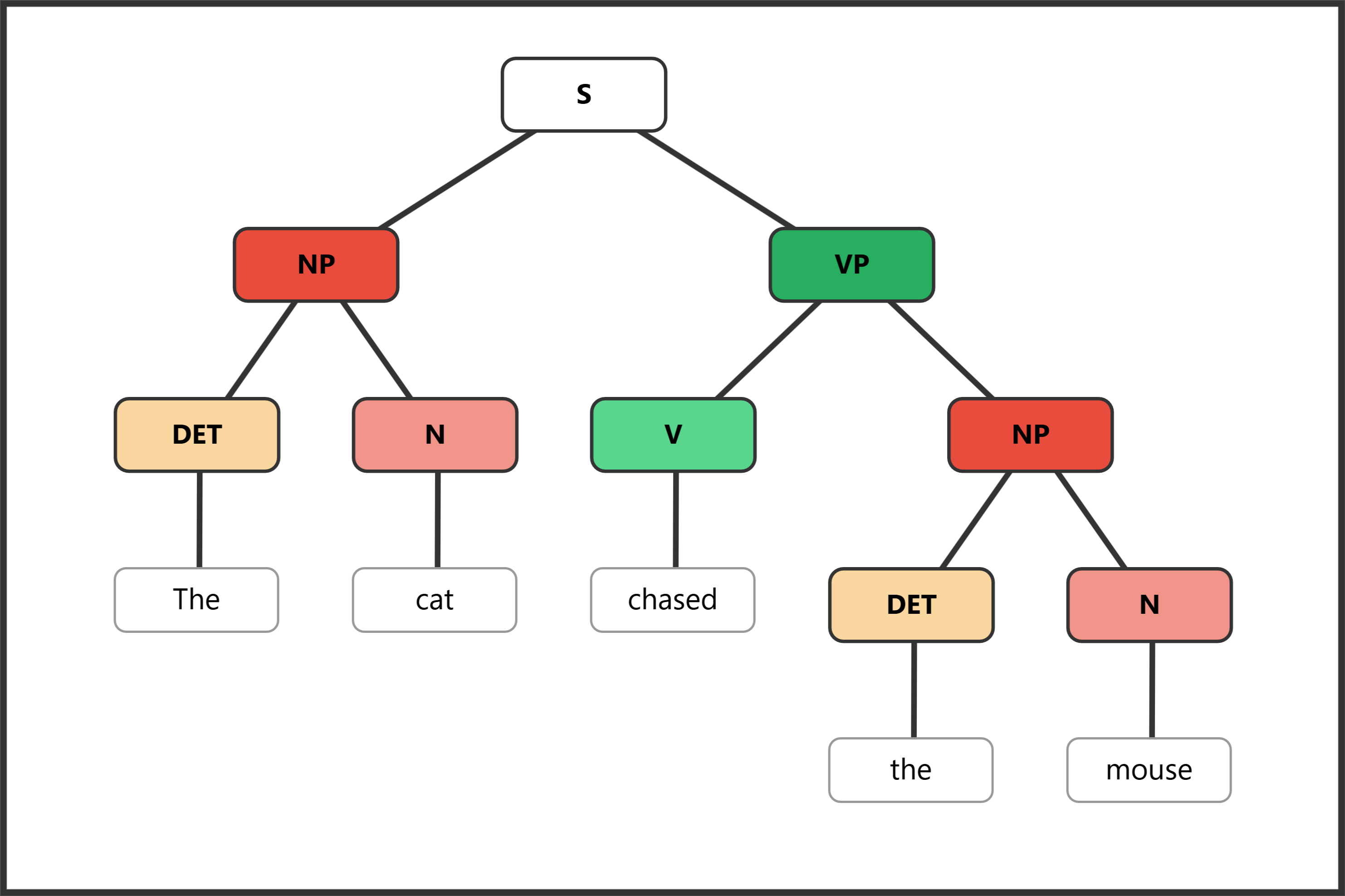
[S [NP [DET The] [N cat]] [VP [V chased] [NP [DET the] [N mouse]]]]
Indirect Objects.
The indirect object indicates the recipient or beneficiary of the action. It answers “To whom?” or “For whom?”
Examples:
-
Marie sent Ramon a birthday gift. (sent to whom? → Ramon)
-
She gave me the book. (gave to whom? → me)
-
He told the students a story. (told to whom? → the students)
Indirect objects:
-
Appear between the verb and direct object
-
Are always noun phrases
-
Can be rephrased with “to” or “for”: “She gave the book to me.”
Subject Complements.
A subject complement describes or identifies the subject. It follows a linking verb (be, become, seem, appear, feel, etc.).
Examples:
-
I am an optimist. (NP—identifies subject)
-
The writers are very cold. (AdjP—describes subject)
-
He seems in trouble. (PP—describes subject)
Subject complements can be:
-
Noun phrases: She is a nurse.
-
Adjective phrases: The trail looked steep.
-
Prepositional phrases: He seems in good spirits.
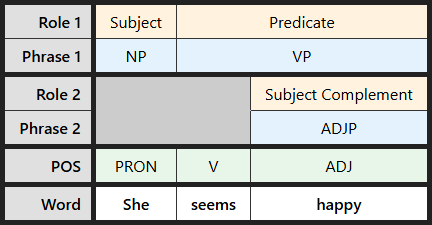
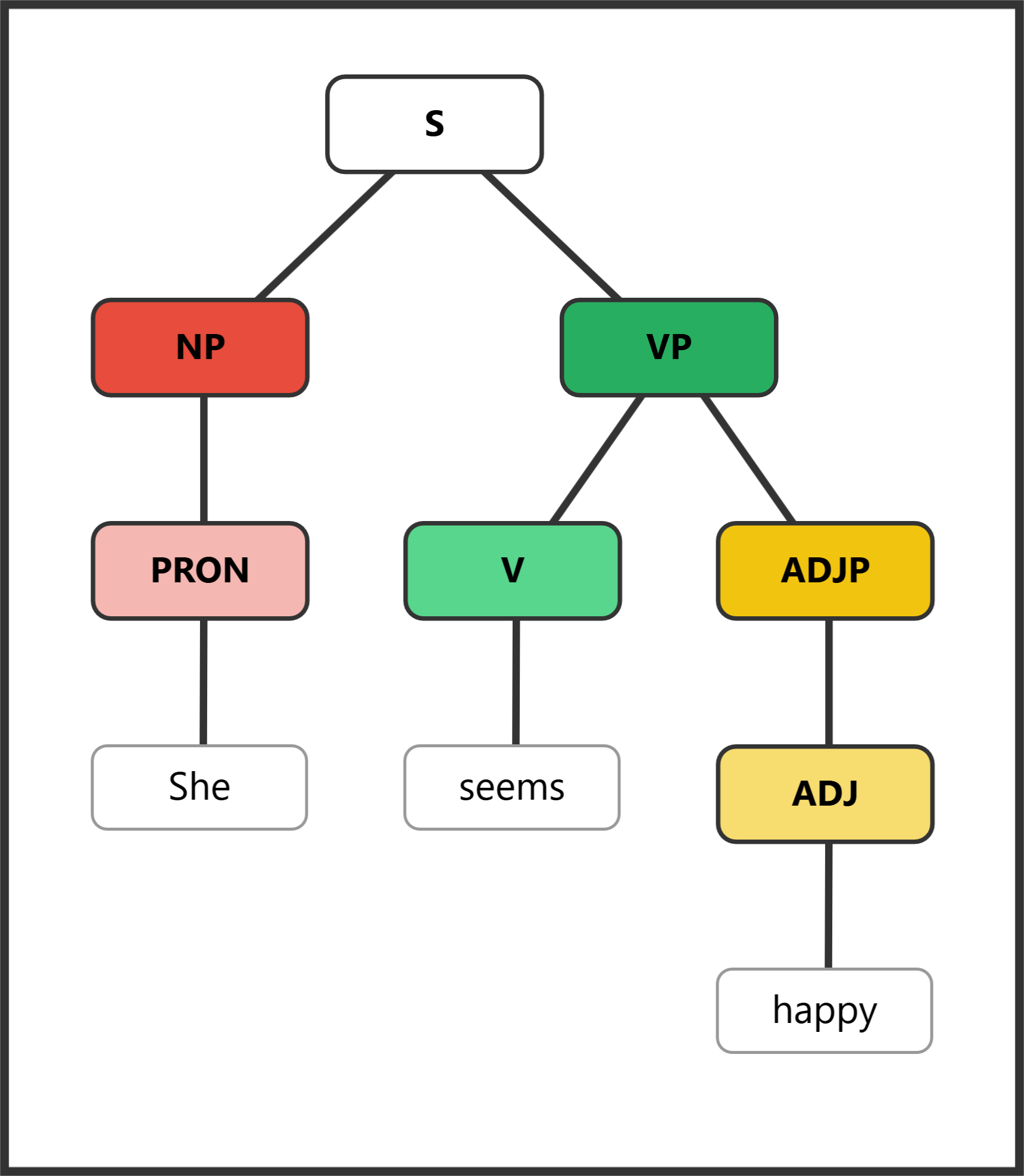
[S [NP [PRON She]] [VP [V seems] [ADJP [ADJ happy]]]]
Object Complements.
An object complement describes or identifies the direct object. It follows certain transitive verbs.
Examples:
-
The director considered the performance a success. (NP—identifies DO)
-
The critic called the acting brilliant. (AdjP—describes DO)
-
They elected her president. (NP—identifies DO)
Object complements can be noun phrases or adjective phrases.
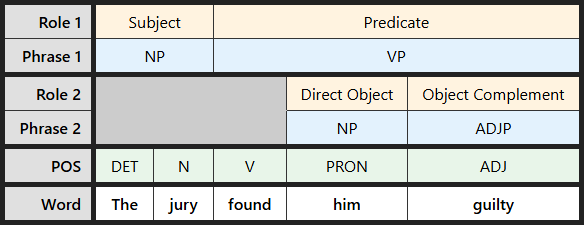
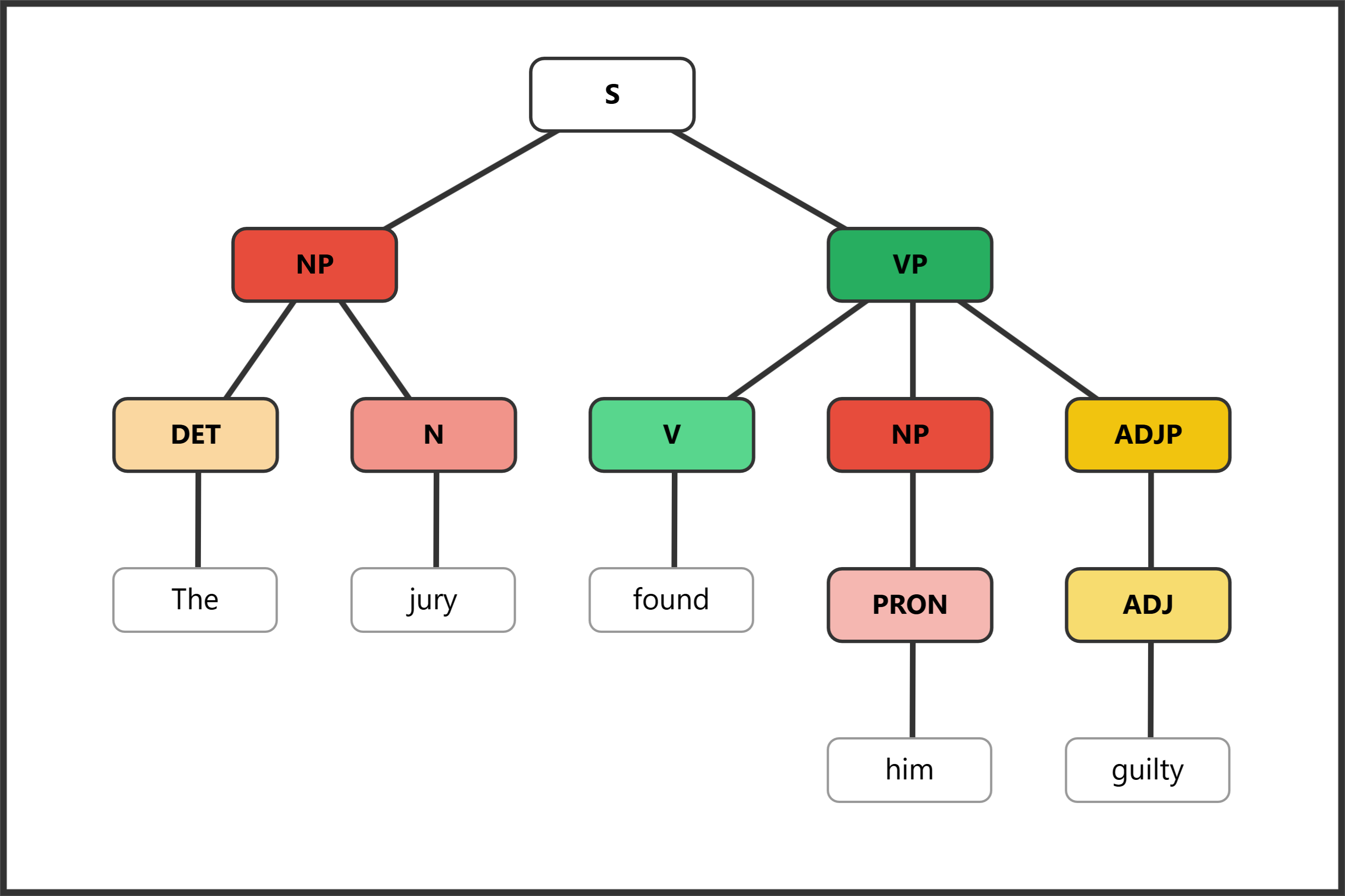
[S [NP [DET The] [N jury]] [VP [V found] [NP [PRON him]] [ADJP [ADJ guilty]]]]

