Section 10.11 Diagramming Verb Phrases
You have seen tree diagrams in earlier chapters for subjects, predicates, and clause structure. Now that you understand auxiliaries, tense, and aspect, you can diagram the internal structure of the verb phrase itself. The key convention is simple: auxiliary verbs are labeled AUX, and the main verb is labeled V. When a verb phrase contains multiple auxiliaries, each one gets its own AUX node.
Simple Verb Phrases.
When a sentence has no auxiliary, the verb phrase contains only the main verb:
She walks.
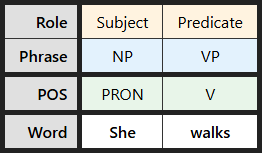
[S [NP [PRON She]] [VP [V walks]]]
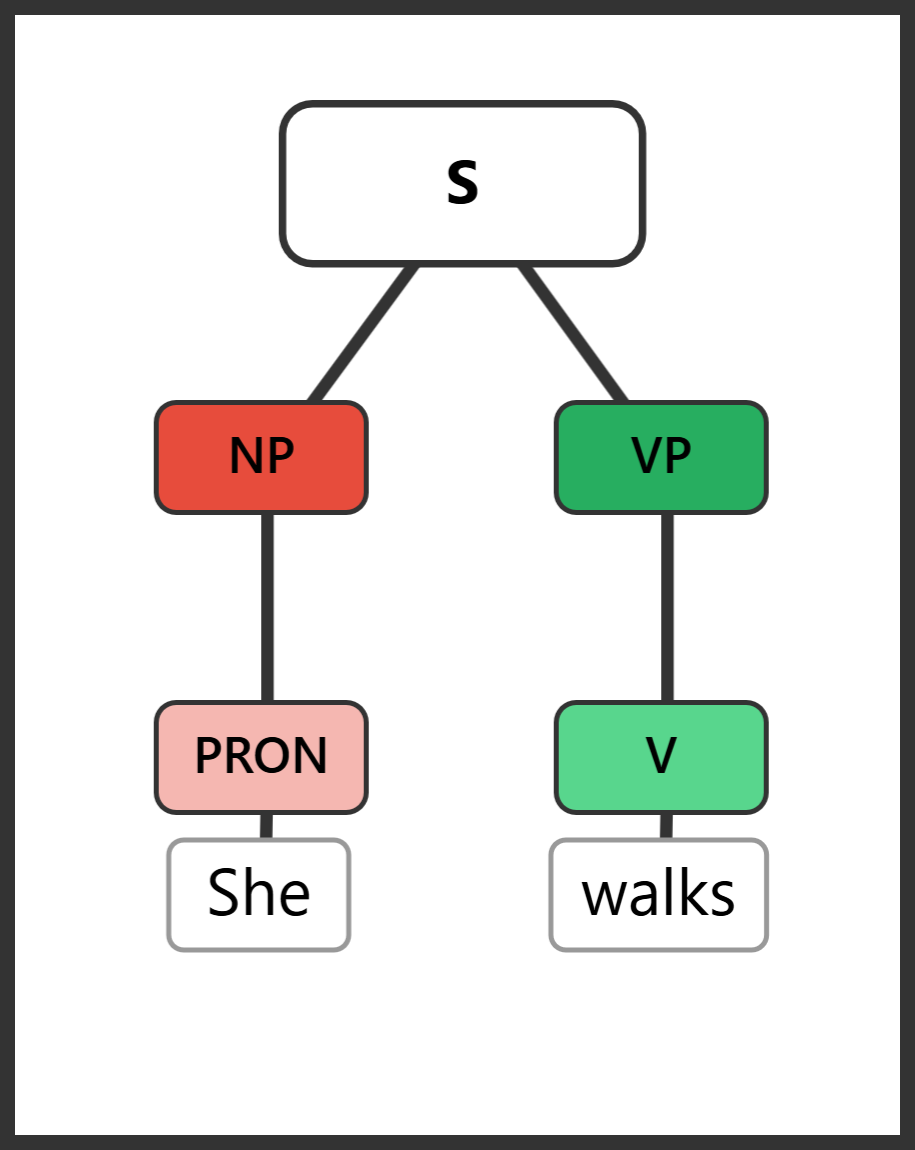
The verb carries the tense marking directly. There is no AUX node because there is no auxiliary.
One Auxiliary.
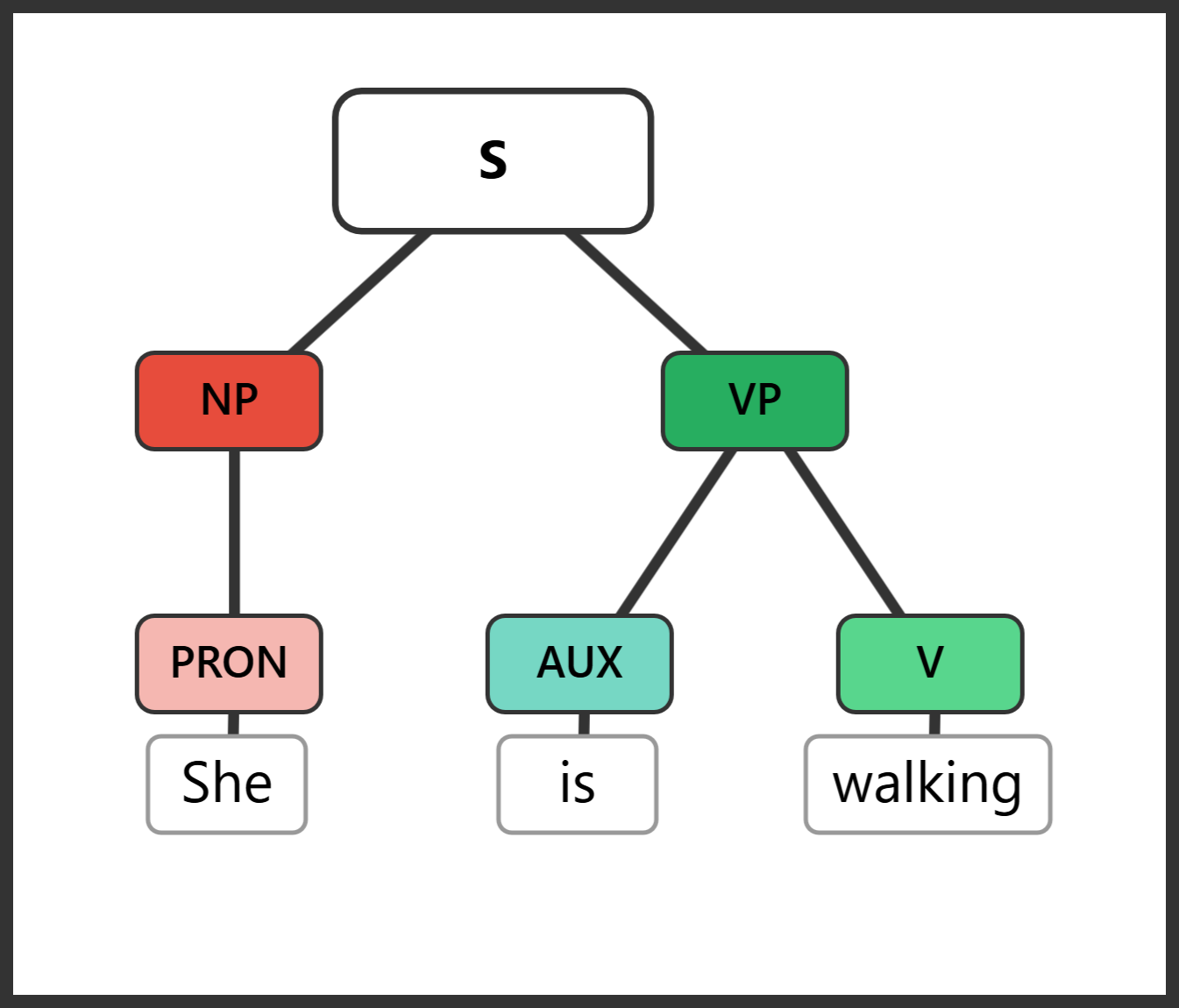
Progressive and perfect constructions add one auxiliary before the main verb:
Progressive (be + present participle):
She is walking.
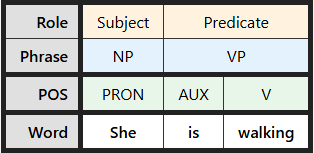
[S [NP [PRON She]] [VP [AUX is] [V walking]]]
Perfect (have + past participle):
She has walked.
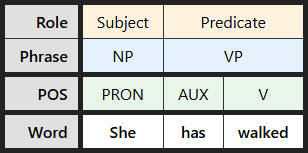
[S [NP [PRON She]] [VP [AUX has] [V walked]]]
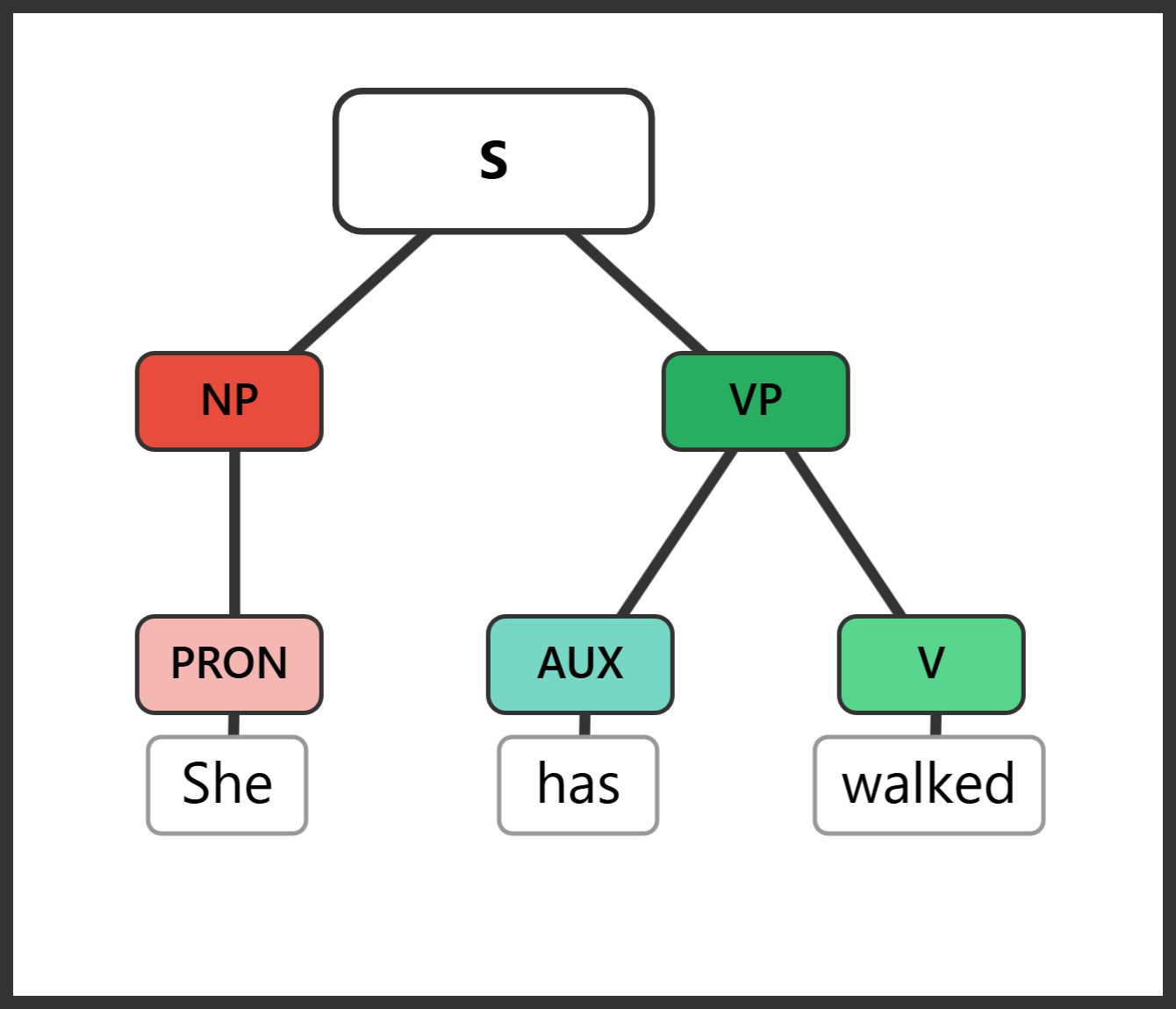
In each case, tense is marked on the auxiliary (the first element in the verb phrase), not on the main verb. The main verb carries the participle form that signals the aspect.
Two Auxiliaries.
Perfect progressive stacks two auxiliaries before the main verb:
She has been walking.
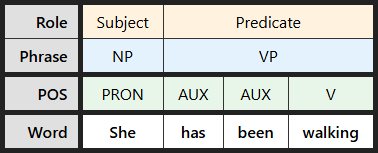
[S [NP [PRON She]] [VP [AUX has] [AUX been] [V walking]]]
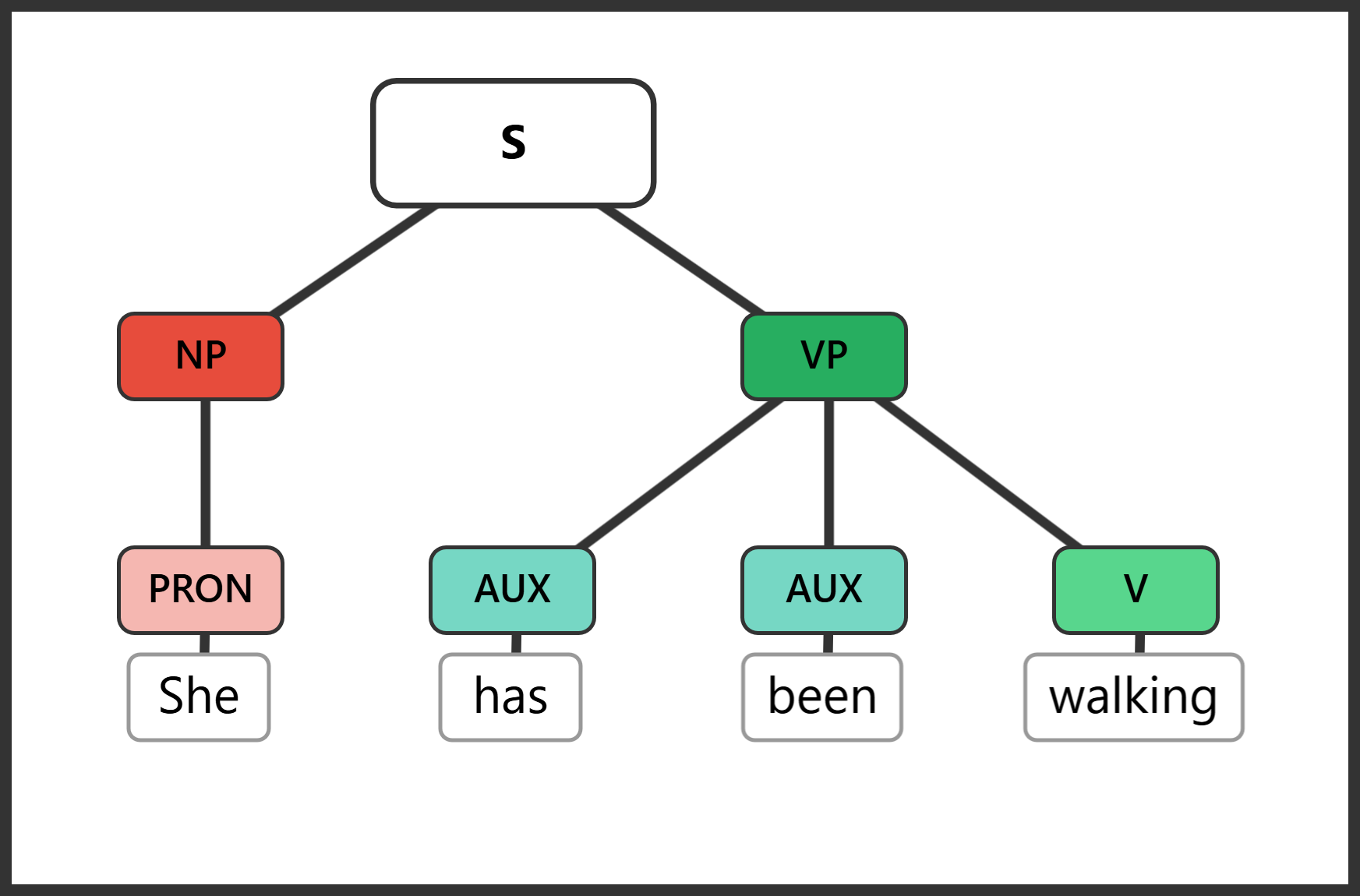
Notice the order: has (perfect auxiliary, carries tense) → been (progressive auxiliary, past participle form) → walking (main verb, present participle form). Each auxiliary is labeled AUX.
Full Sentences with Complex Verb Phrases.
The examples above isolate the verb phrase pattern. In real sentences, the VP also contains objects, adverbials, and prepositional phrases. The auxiliaries sit at the front of the VP, and everything else follows the main verb just as in earlier chapters. Here are three full-sentence diagrams, one for each aspect:
Progressive: The children are playing a game in the backyard.
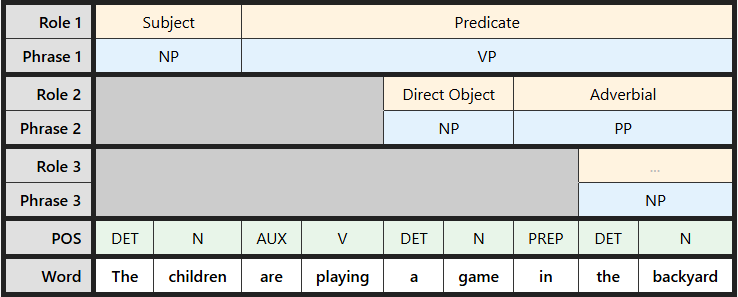
[S [NP [DET The] [N children]] [VP [AUX are] [V playing] [NP [DET a] [N game]] [PP [PREP in] [NP [DET the] [N backyard]]]]]
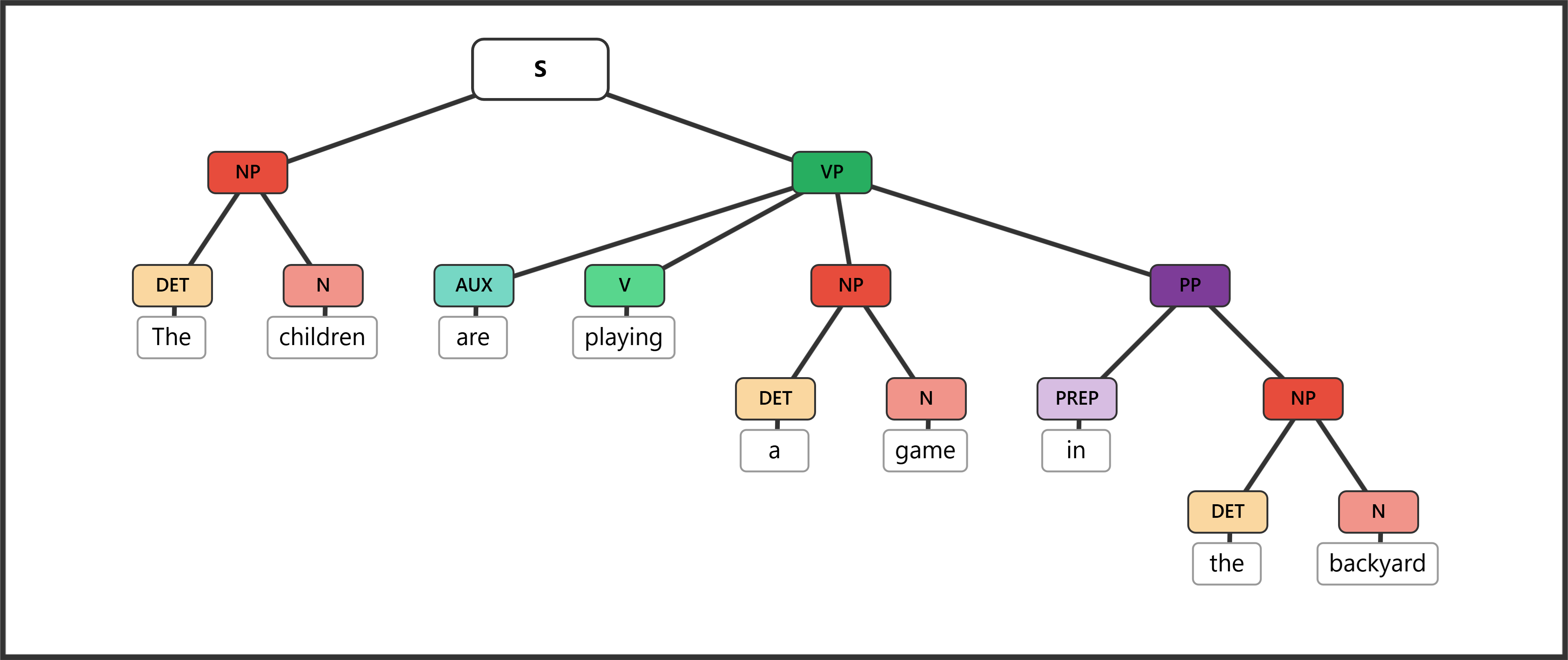
The progressive auxiliary are carries present tense. The main verb playing is followed by a direct object NP and a prepositional phrase.
Perfect: The professor has assigned three chapters for next week.
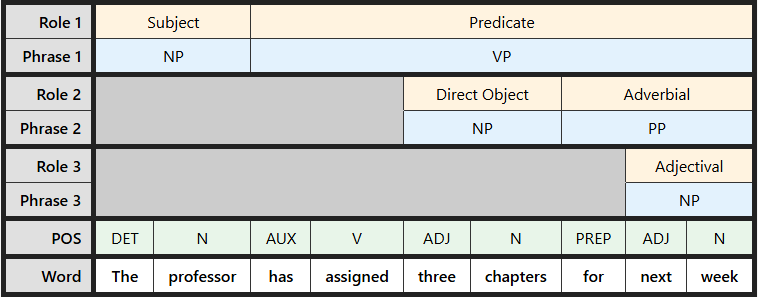
[S [NP [DET The] [N professor]] [VP [AUX has] [V assigned] [NP [ADJ three] [N chapters]] [PP [PREP for] [NP [ADJ next] [N week]]]]]
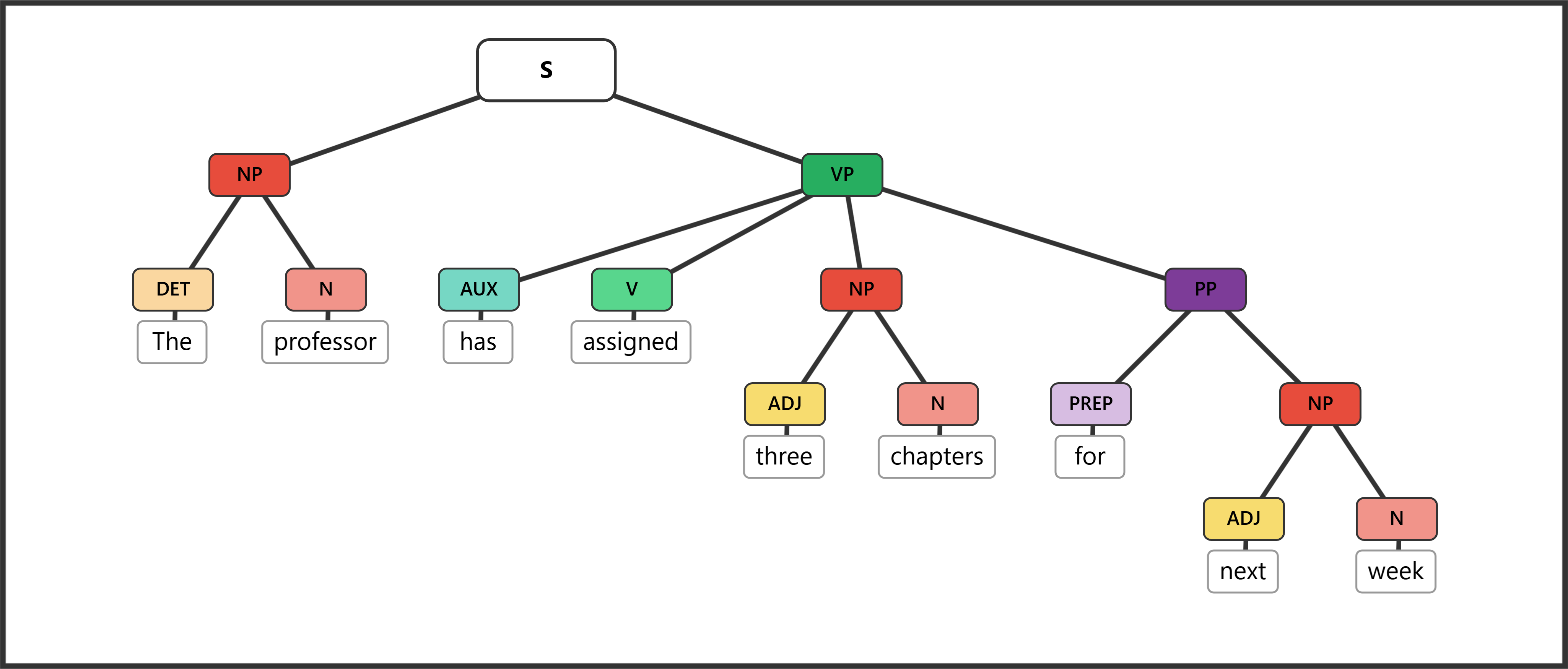
The perfect auxiliary has carries present tense. The past participle assigned is followed by a direct object NP and a prepositional phrase of time.
Perfect progressive: The students had been studying grammar in the library all afternoon.
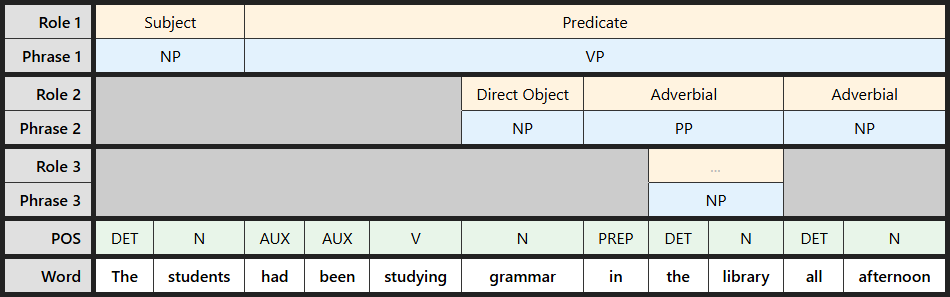
[S [NP [DET The] [N students]] [VP [AUX had] [AUX been] [V studying] [NP [N grammar]] [PP [PREP in] [NP [DET the] [N library]]] [NP [DET all] [N afternoon]]]]
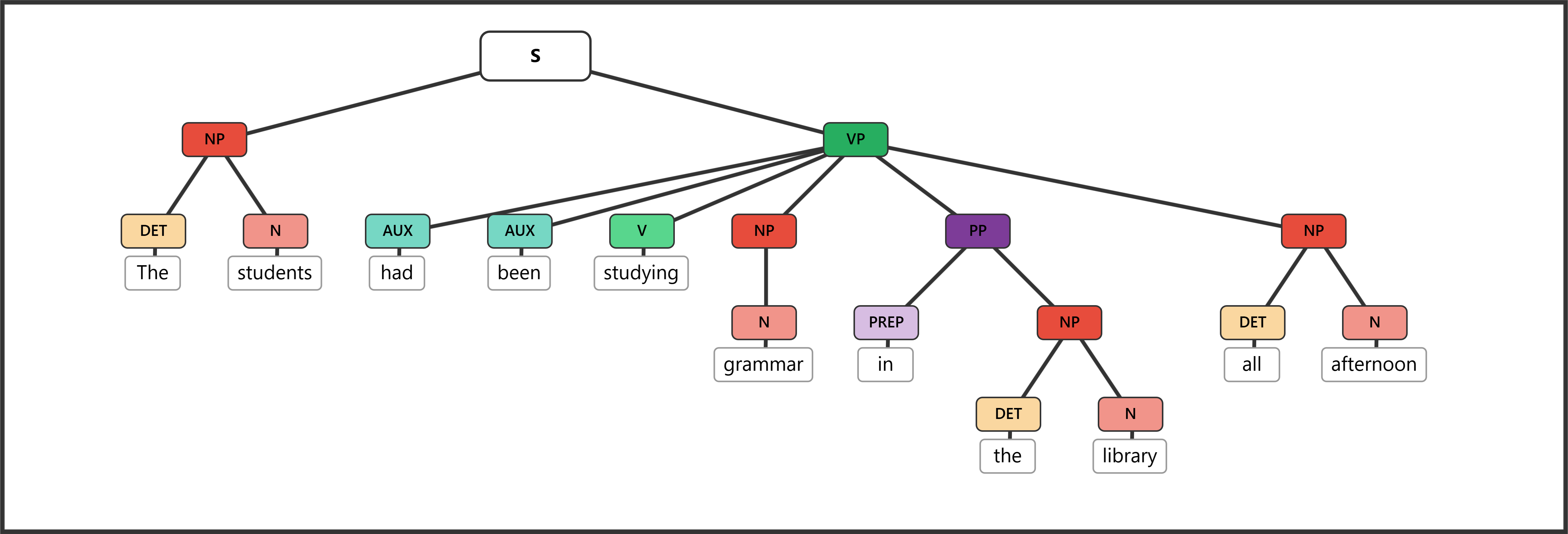
Two auxiliaries stack at the front: had (perfect, carries past tense) and been (progressive). The main verb studying is followed by a direct object, a prepositional phrase of place, and an adverbial NP of time.
Do-Support in Diagrams.
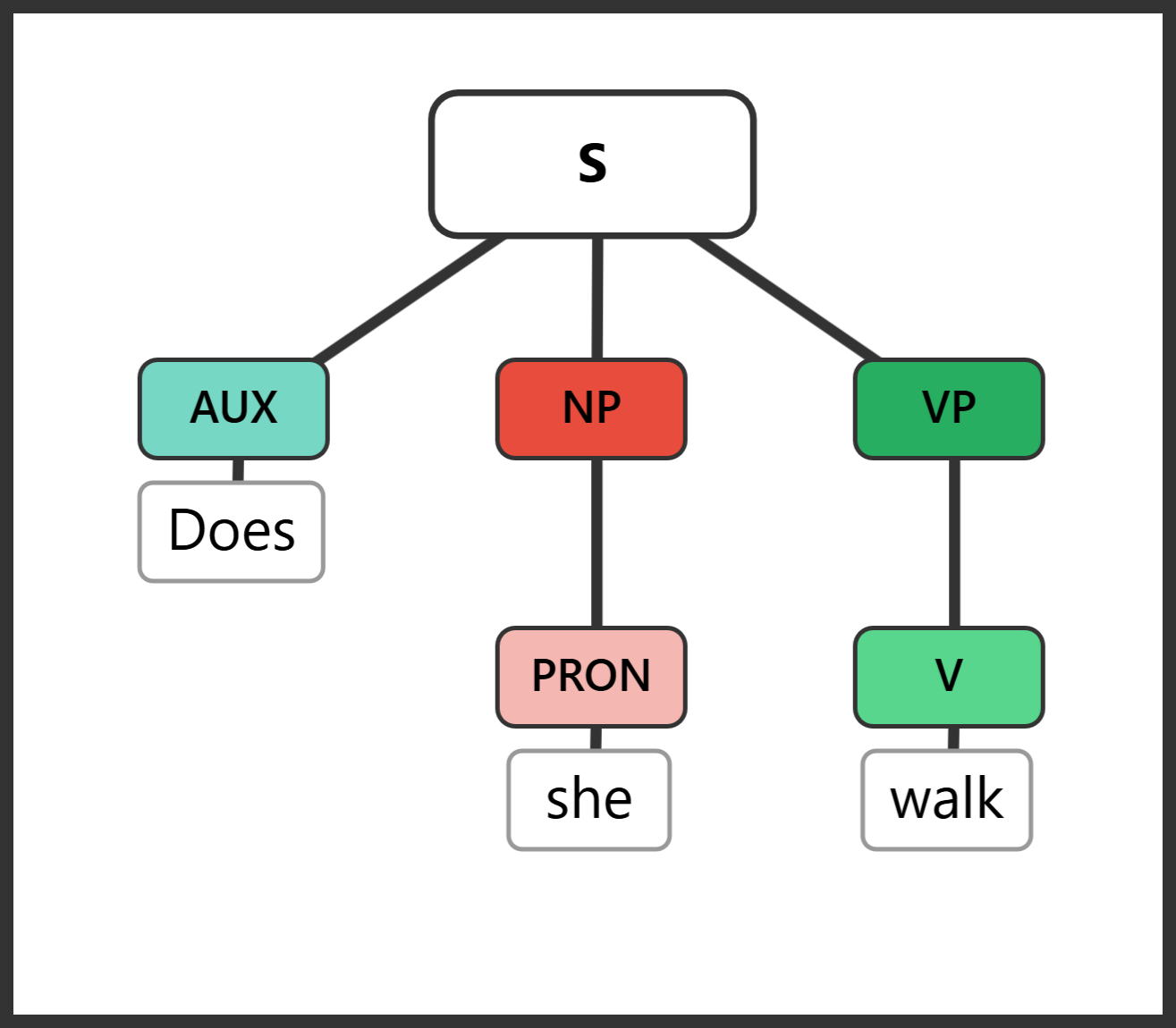
When do is inserted for questions or negation, it is also labeled AUX:
Does she walk?
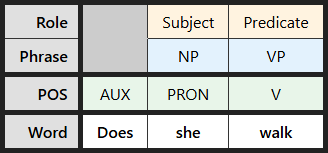
[S [AUX Does] [NP [PRON she]] [VP [V walk]]]
She does not walk.
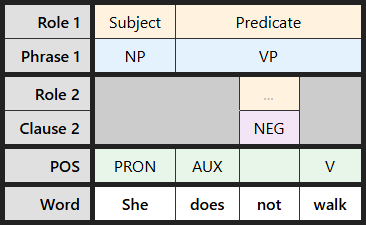
[S [NP [PRON She]] [VP [AUX does] [ADV not] [V walk]]]
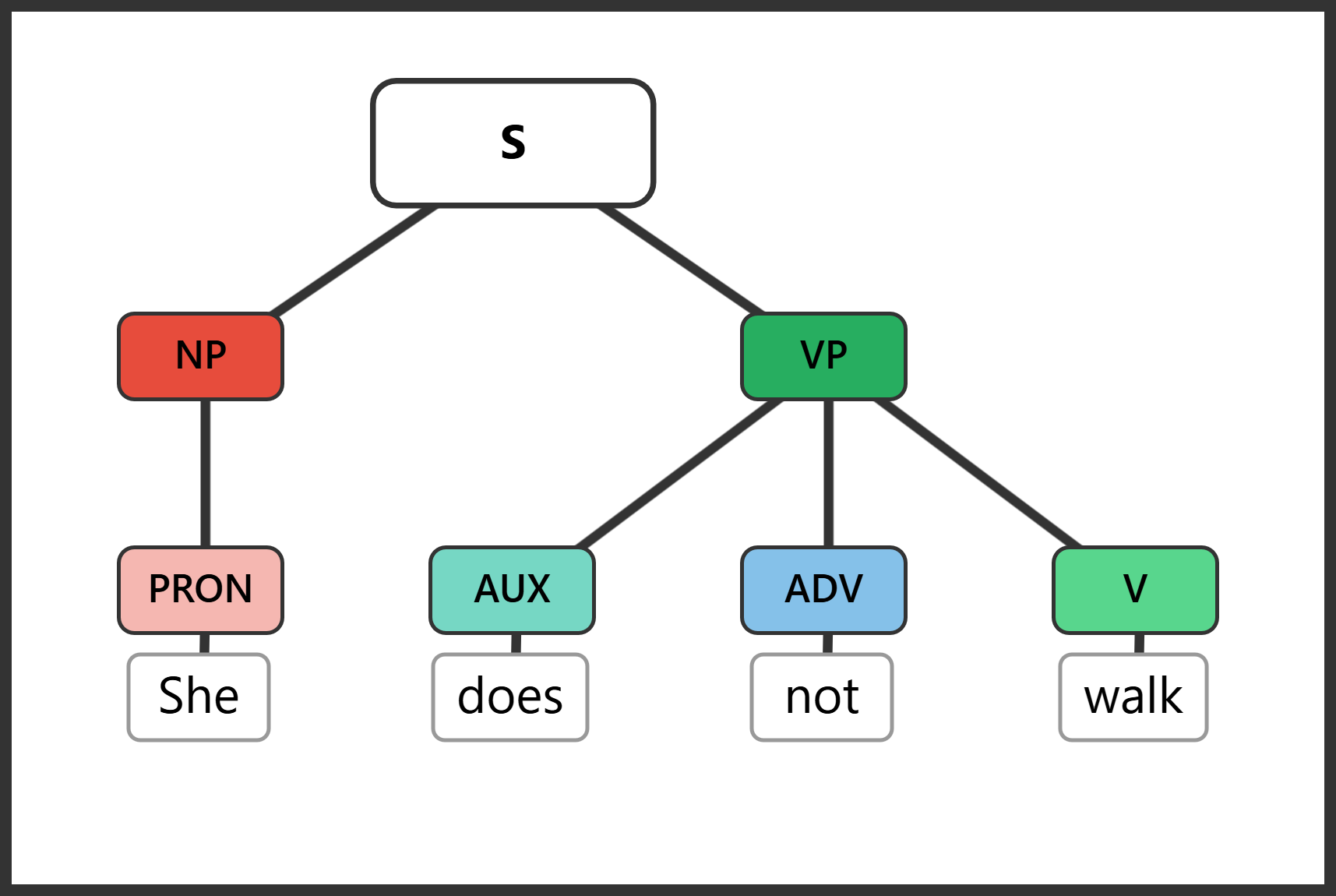
In questions, the auxiliary moves to the front of the sentence, before the subject NP. In negation, not appears between the auxiliary and the main verb.
Summary.
The diagramming rules for verb phrases are straightforward:
-
Label every auxiliary verb AUX and every main verb V.
-
Tense is always on the first element in the verb phrase (the first AUX, or V if there is no auxiliary).
-
Auxiliaries stack in a fixed order: perfect (have) before progressive (be).
-
Objects, complements, and modifiers follow the main verb, just as in earlier chapters.

