Section 10.3 Primary Auxiliary: Have
Of the three primary auxiliaries, have is the one that creates the most subtle and often misunderstood category in English grammar: the perfect aspect. The difference between She finished the report and She has finished the report seems small on the surface, but it is meaningful. The first presents the event as completed and disconnected from the present; the second connects the completed event to right now—it signals that the finishing is relevant to the current moment. That connection to the present is what the perfect aspect is fundamentally about, and have is the auxiliary that creates it.
Have forms the perfect aspect, indicating that an action is completed or has continuing relevance.
Forms of Have.
| Present | Past | Participle |
|---|---|---|
| have, has | had | had |
Functions of Auxiliary Have.
Perfect aspect (have + past participle):
-
She has finished the work. (present perfect)
-
They had left before I arrived. (past perfect)
-
By then, I will have completed it. (future perfect)
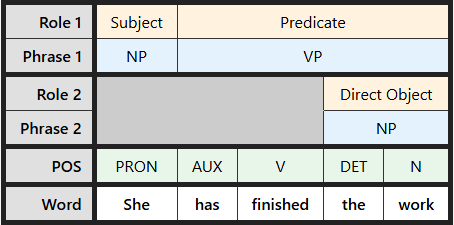
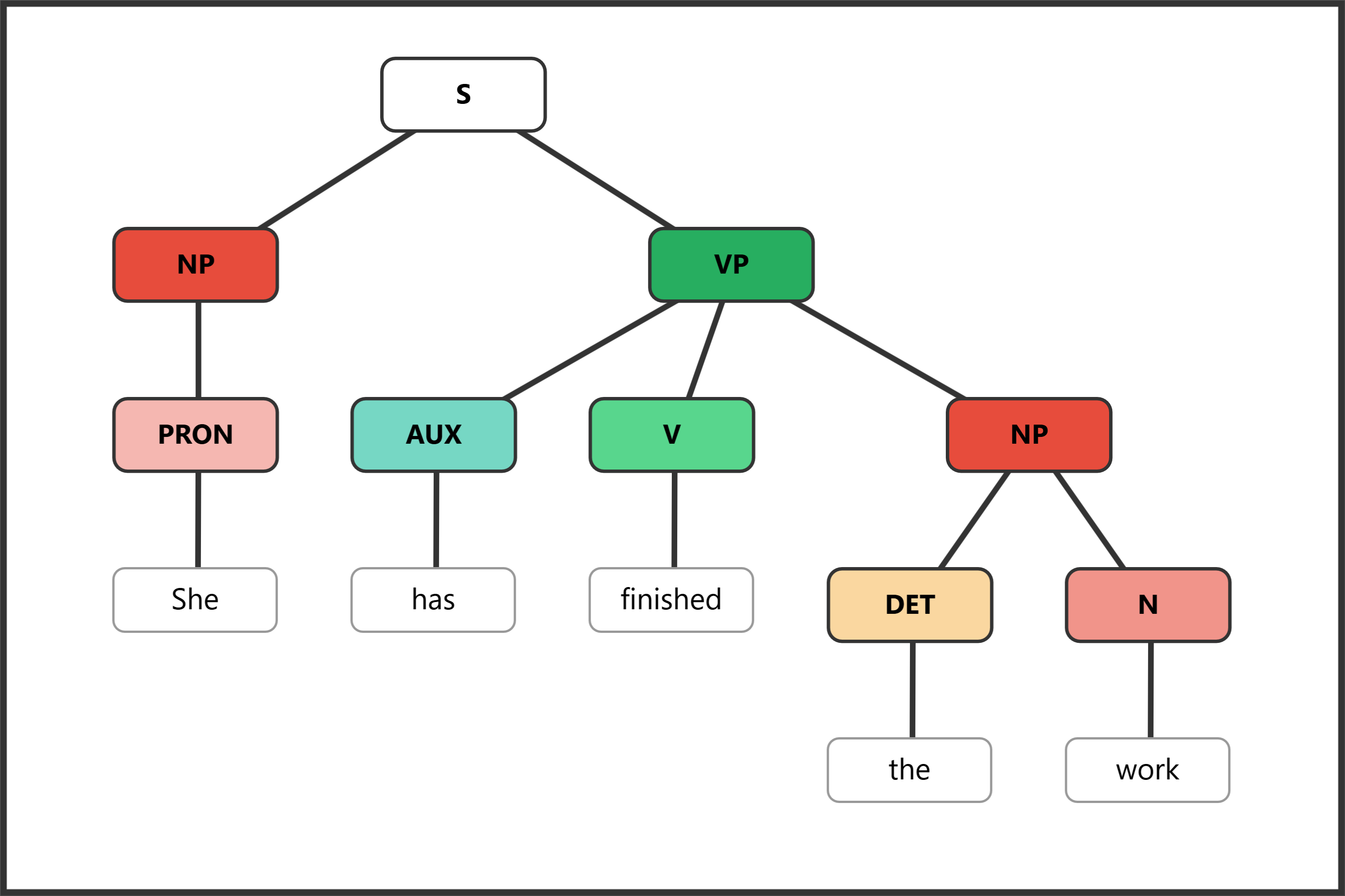
[S [NP [PRON She]] [VP [AUX has] [V finished] [NP [DET the] [N work]]]]
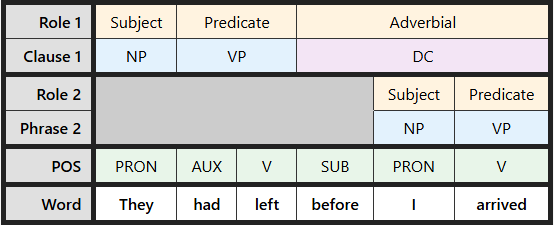
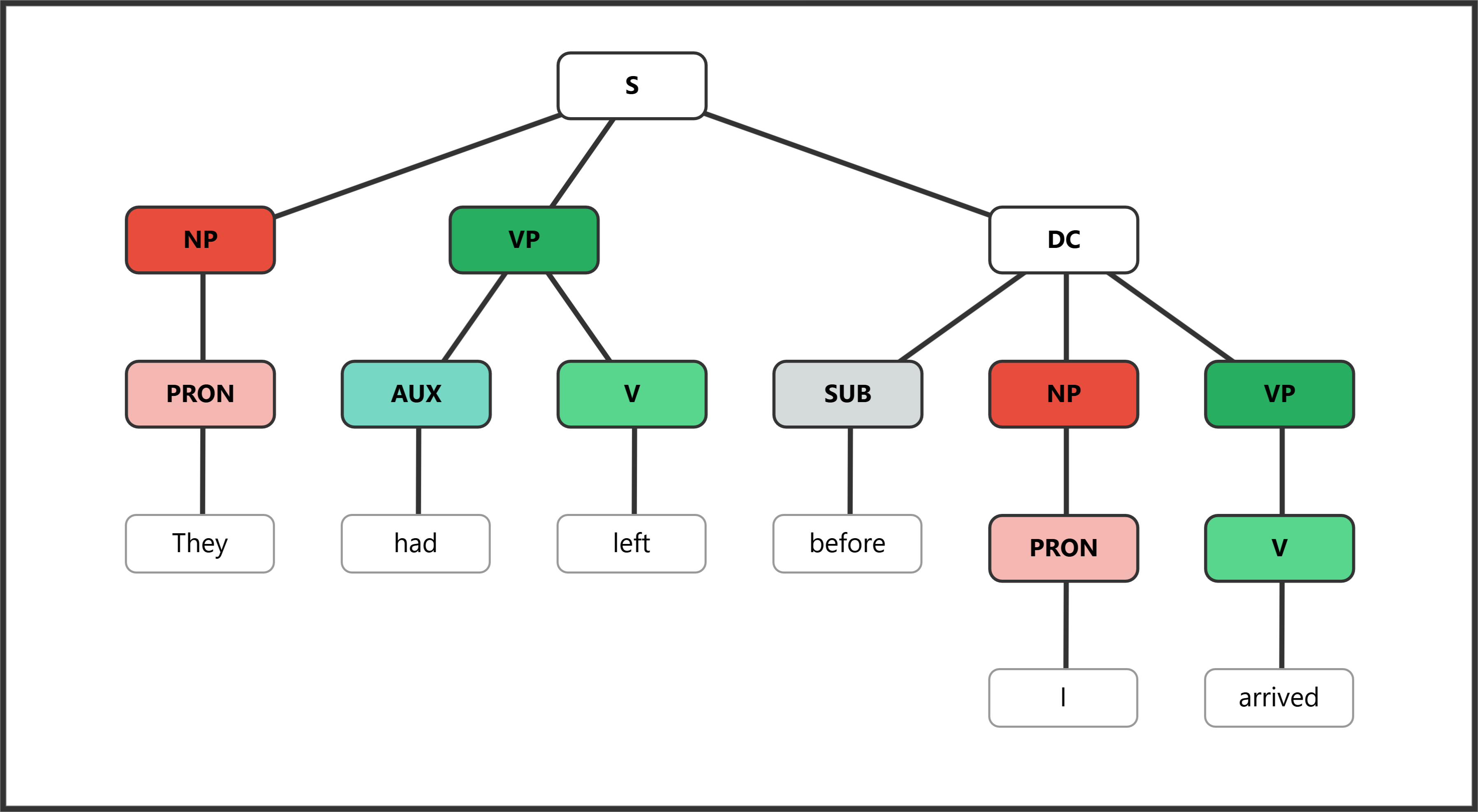
[S [NP [PRON They]] [VP [AUX had] [V left]] [DC [SUB before] [NP [PRON I]] [VP [V arrived]]]]
Have as Main Verb vs. Auxiliary.
Have is also a main verb meaning “possess”:
-
I have a car. (main verb)
-
I have seen that movie. (auxiliary)
Test: Can you add got after have?
-
I have (got) a car. ✓ (main verb)
-
I have got seen that movie.✗ (auxiliary)

