Section 6.8 Diagram Examples
This section provides reference diagrams for closed-class word structures introduced in this chapter. Use these as models when analyzing how determiners, pronouns, and prepositions function within sentences.
Subsection 6.8.1 Determiner Examples
6.8.1 A: Article determiner in simple sentence.
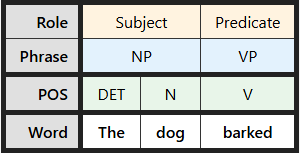
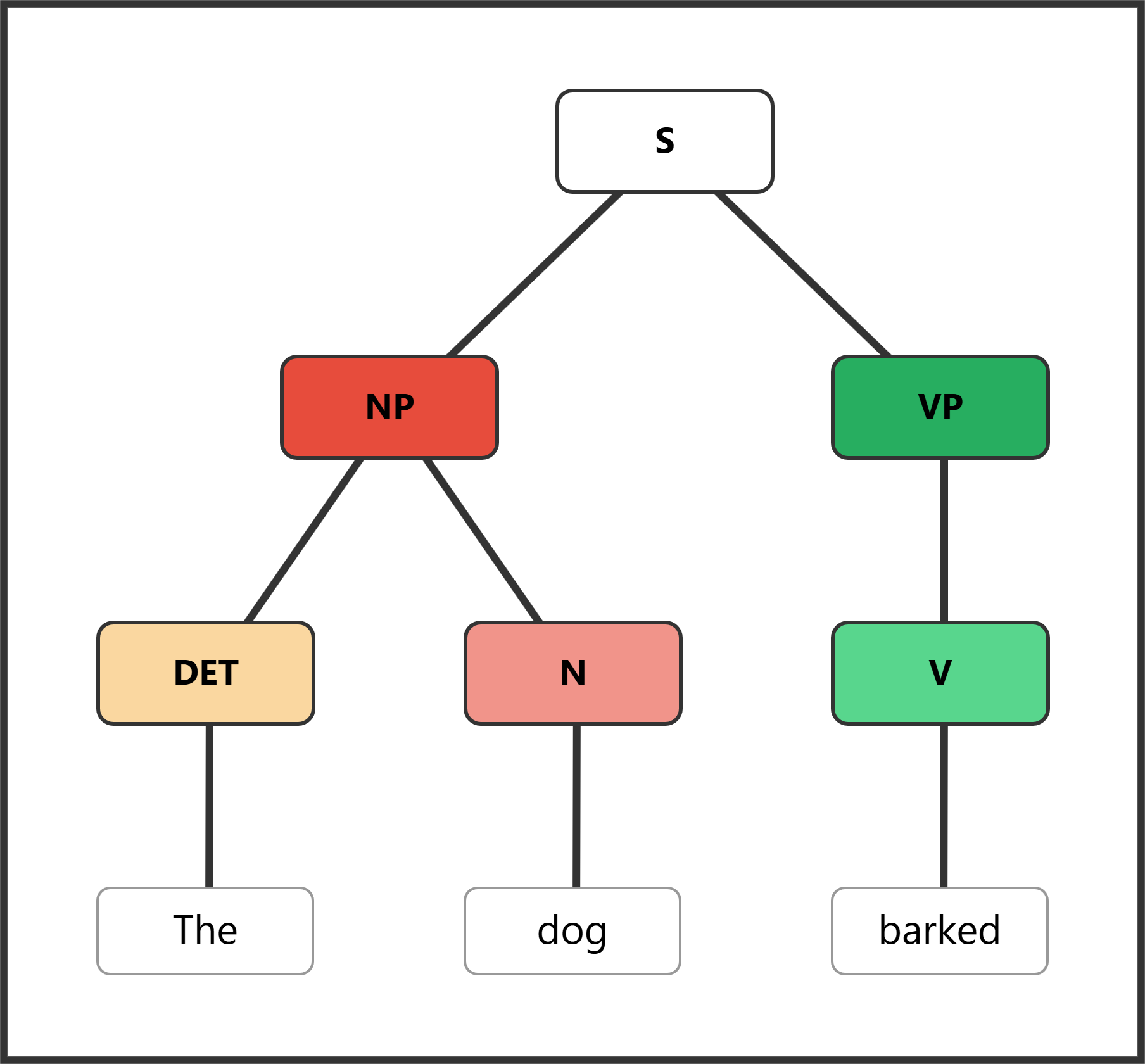
[S [NP [DET The] [N dog]] [VP [V barked]]]
6.8.1 B: Possessive determiner.
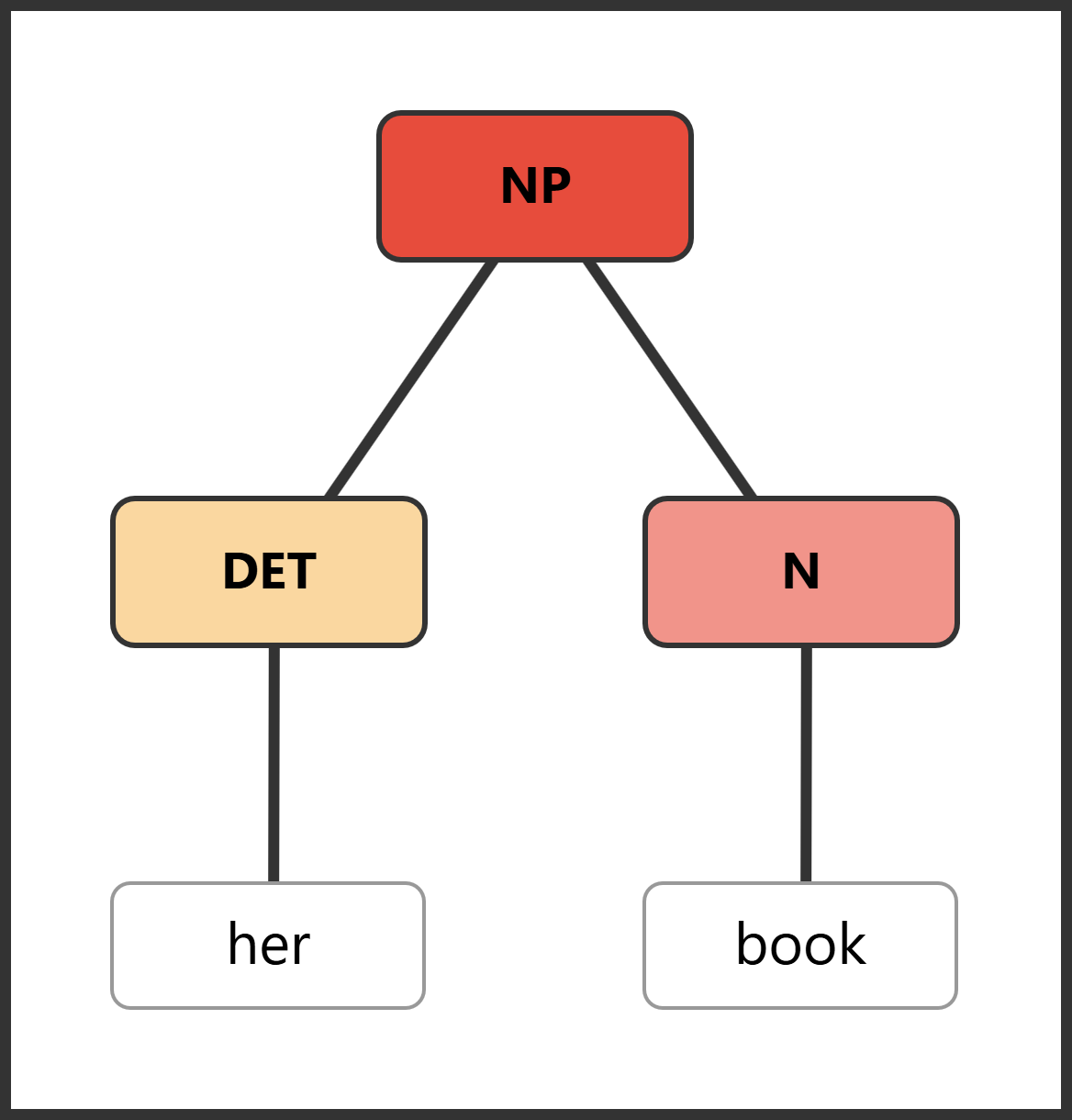
[NP [DET her] [N book]]
6.8.1 C: Demonstrative determiner.
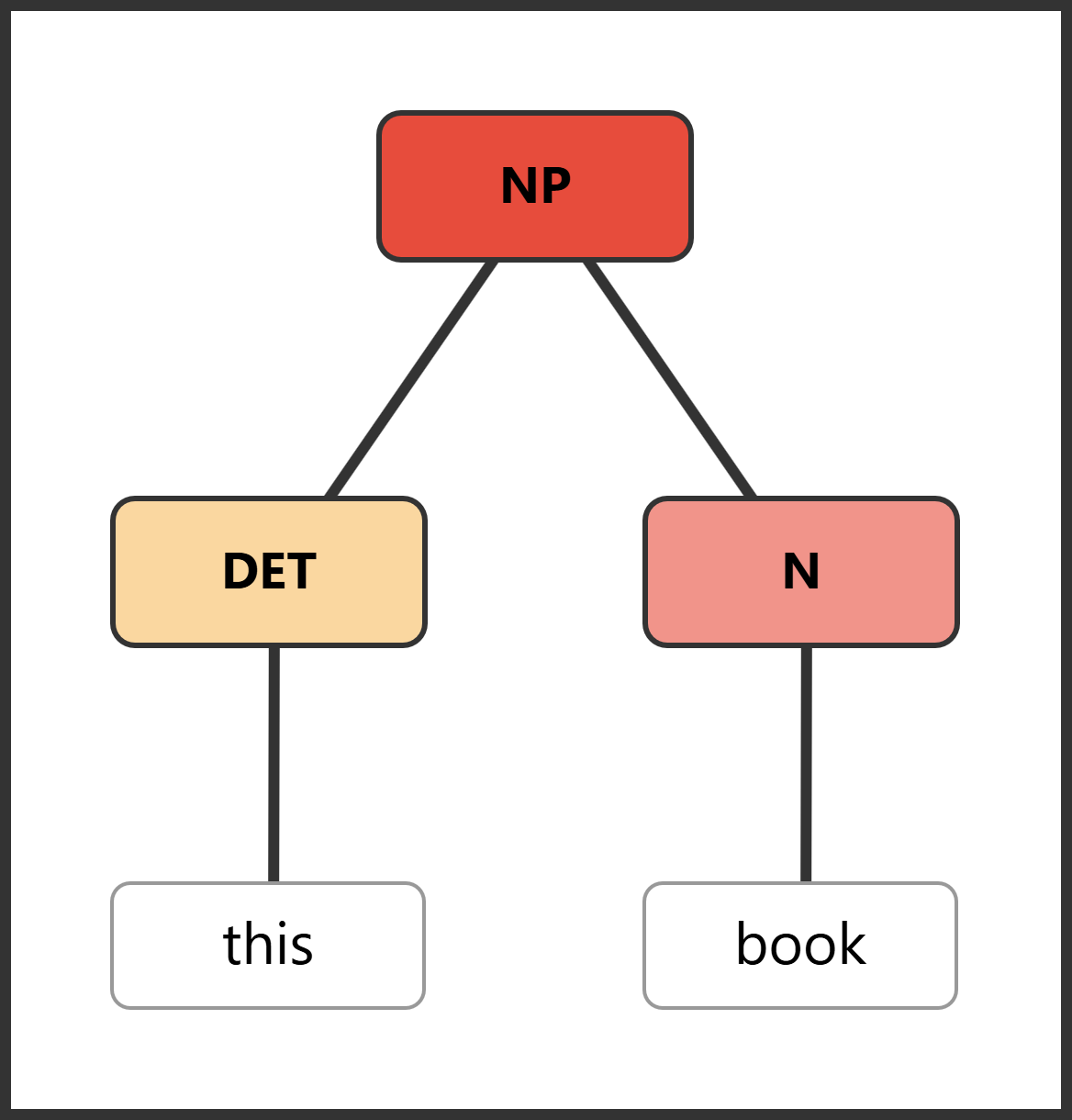
[NP [DET this] [N book]]
6.8.1 D: Quantifier determiner.
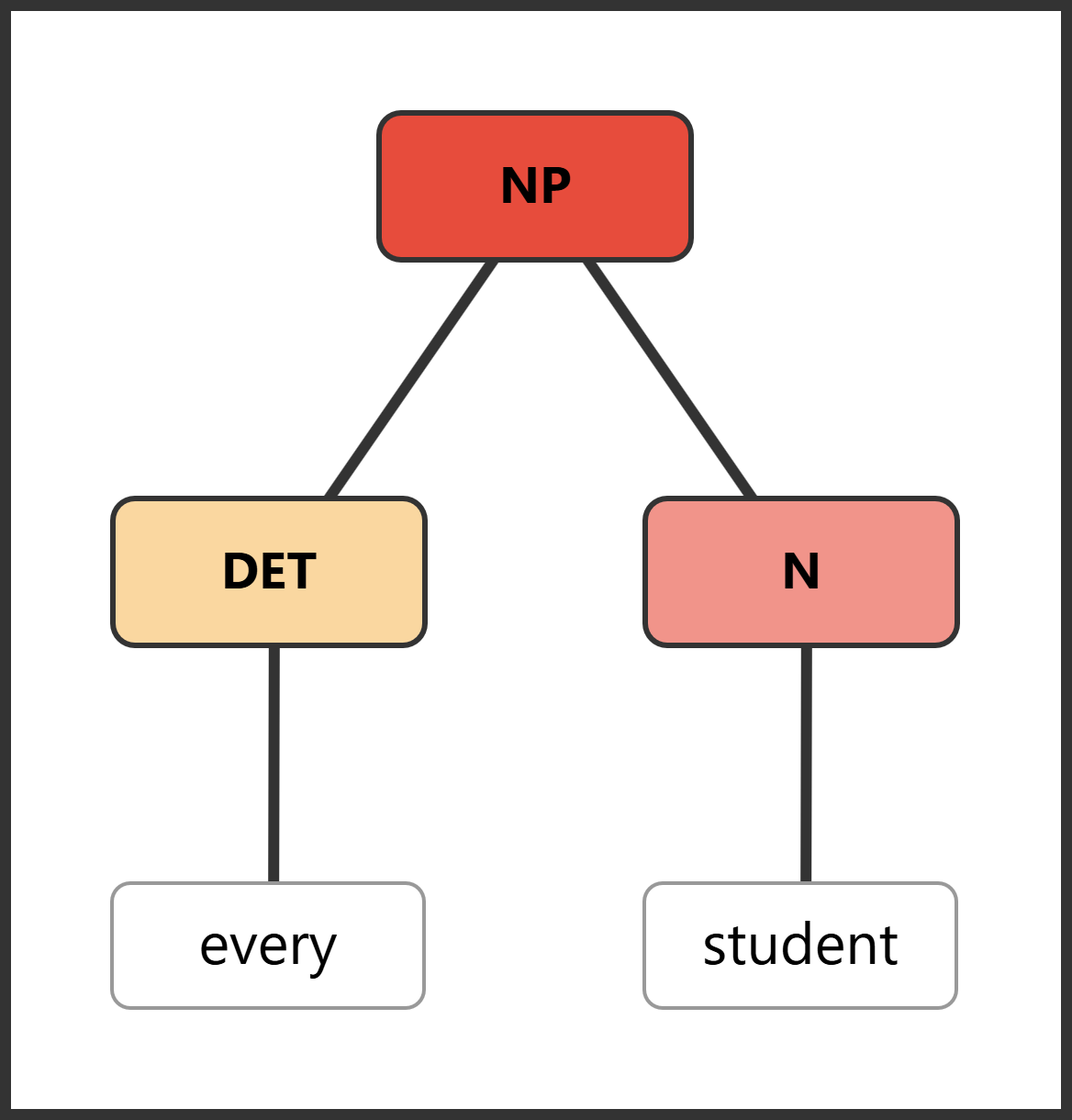
[NP [DET every] [N student]]
6.8.1 E: Determiner in transitive sentence.
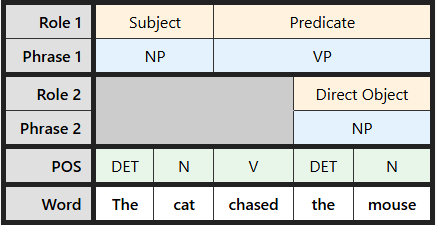
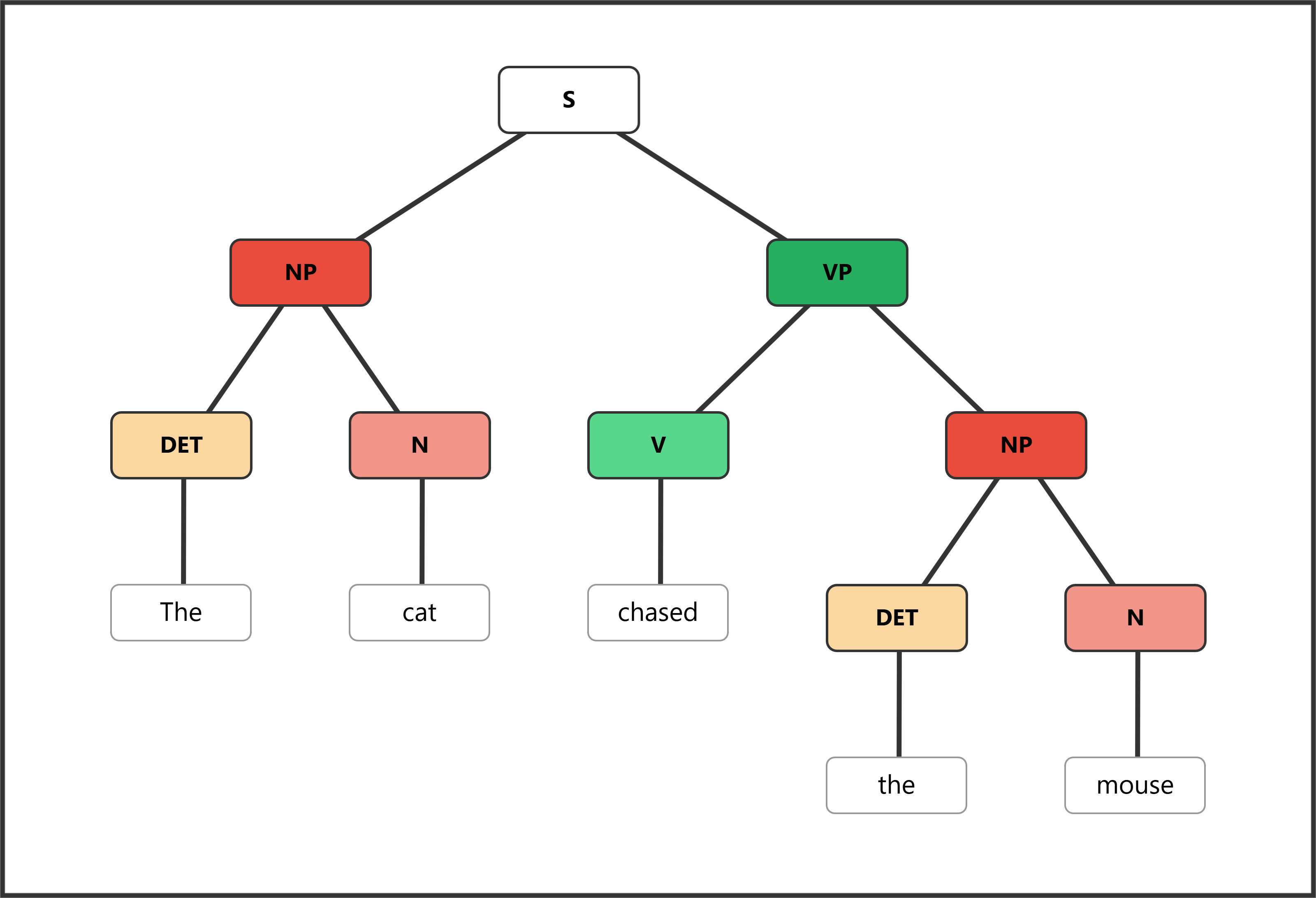
[S [NP [DET The] [N cat]] [VP [V chased] [NP [DET the] [N mouse]]]]
6.8.1 F: Two determiners in one NP.
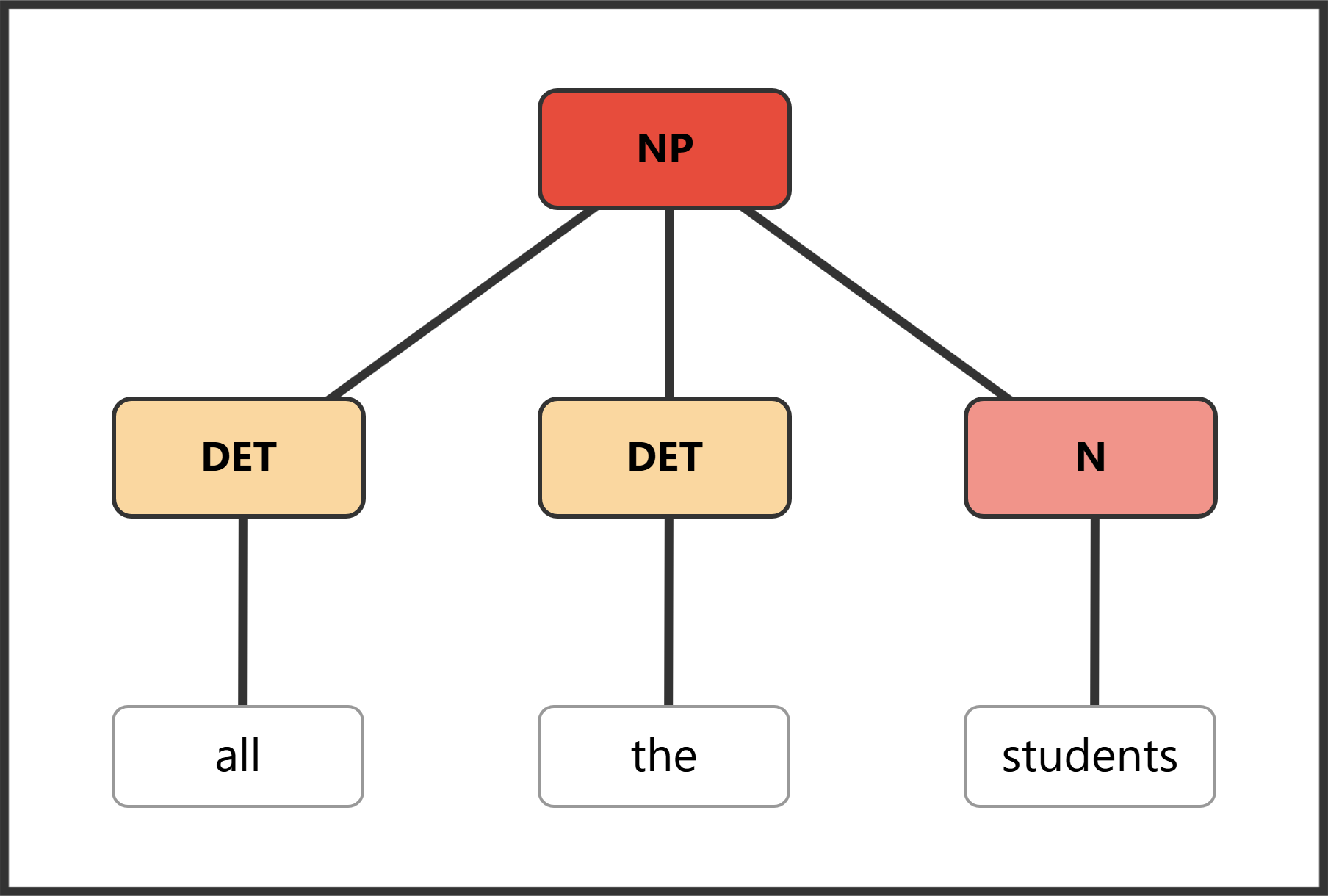
[NP [DET all] [DET the] [N students]]
Subsection 6.8.2 Pronoun Examples
6.8.2 A: Pronoun as subject.
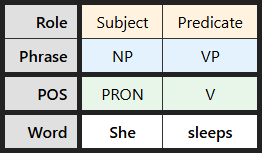
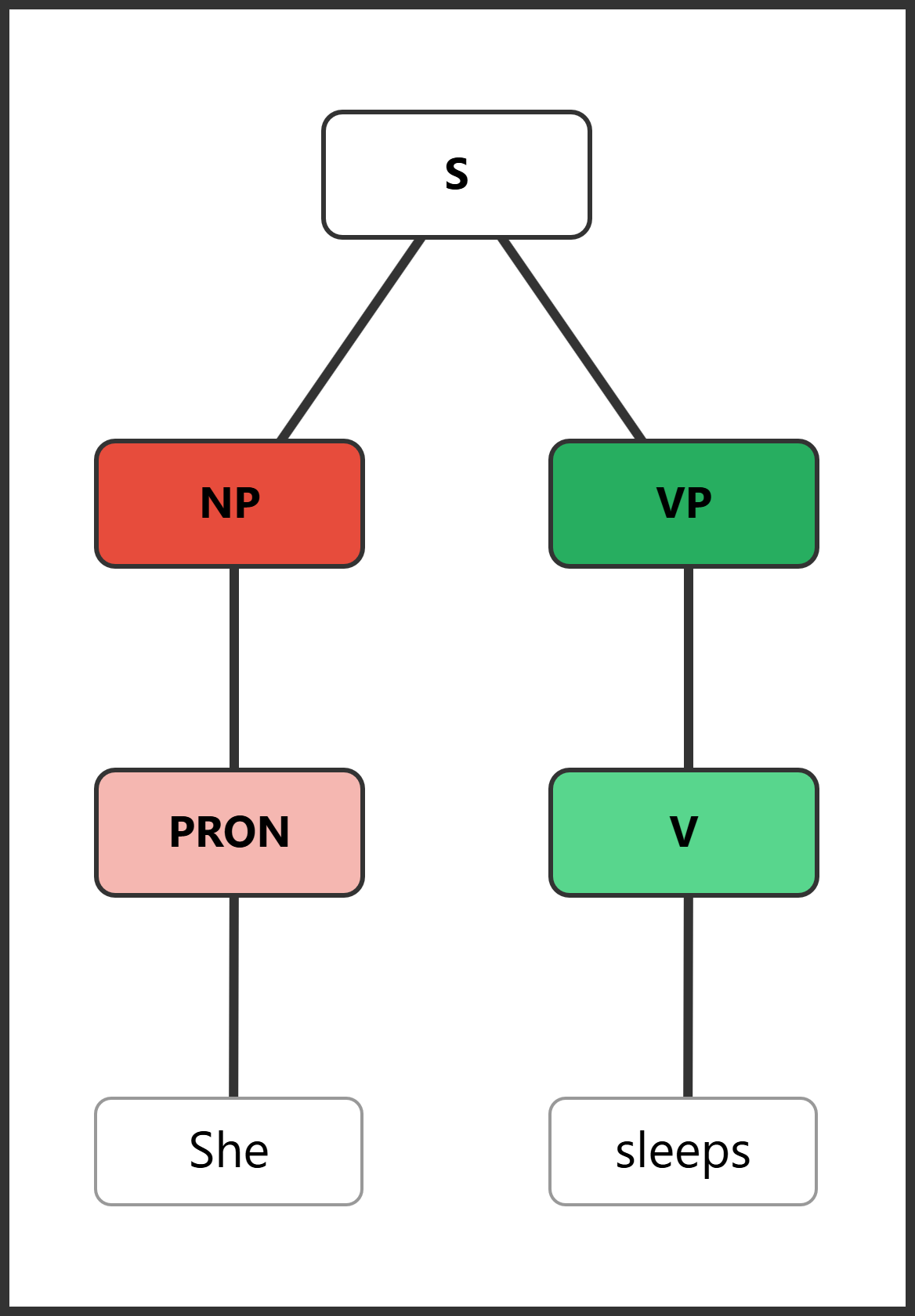
[S [NP [PRON She]] [VP [V sleeps]]]
6.8.2 B: Pronouns as subject and indirect object.
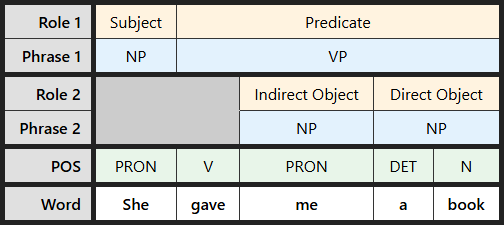
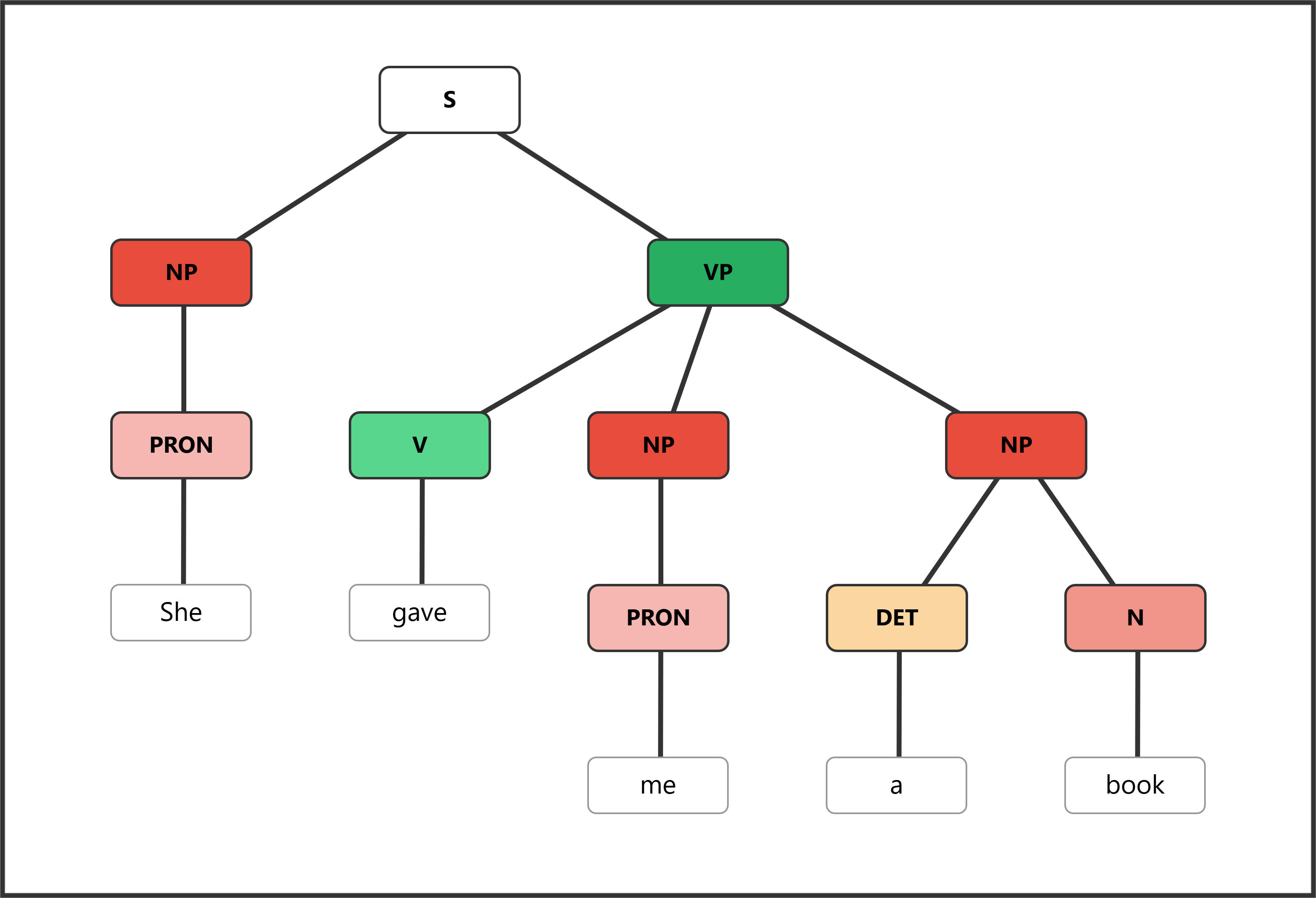
[S [NP [PRON She]] [VP [V gave] [NP [PRON me]] [NP [DET a] [N book]]]]
6.8.2 C: Pronoun with linking verb.
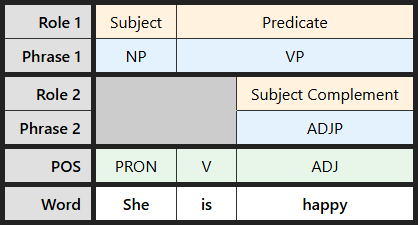
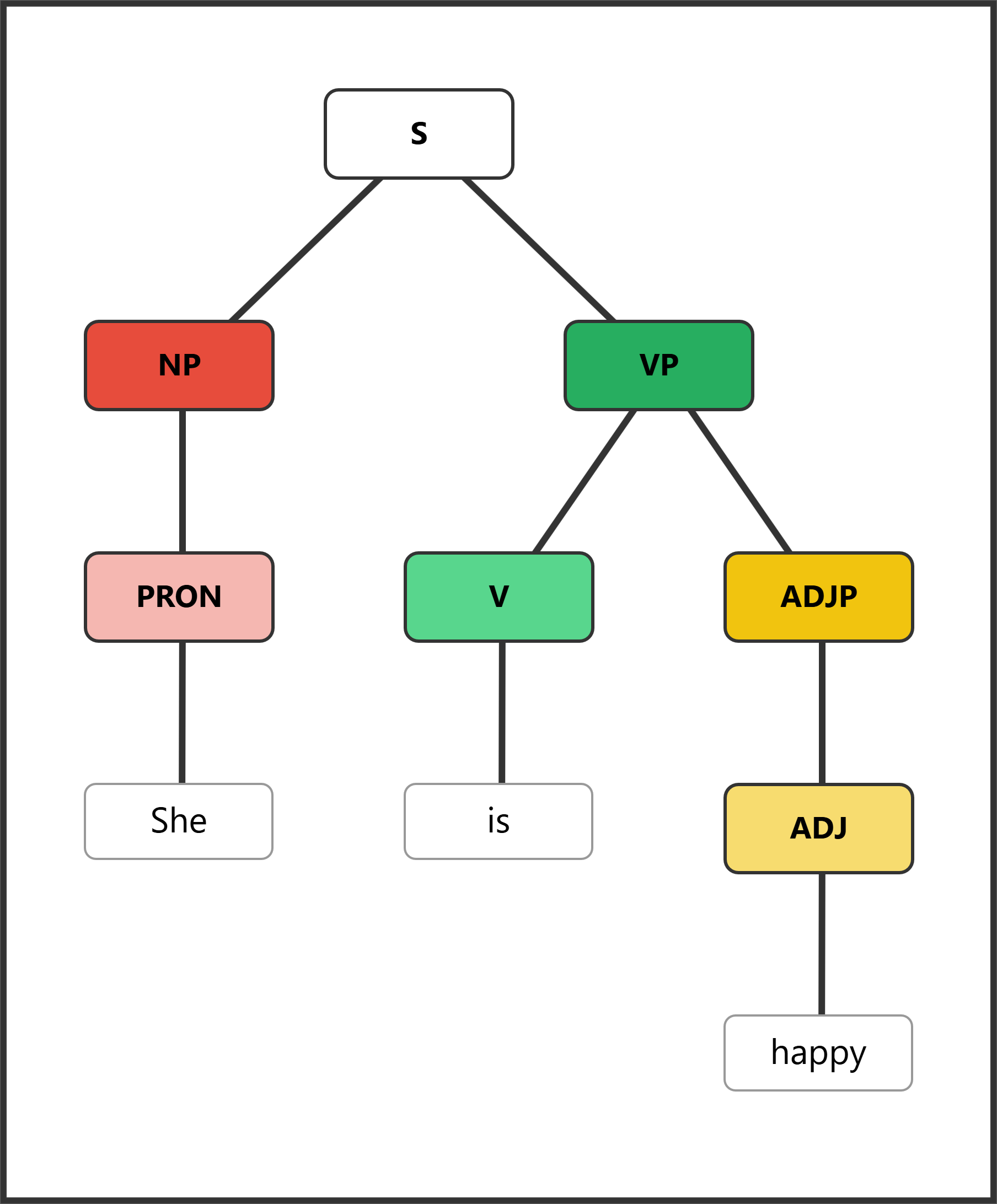
[S [NP [PRON She]] [VP [V is] [ADJP [ADJ happy]]]]
6.8.2 D: Pronoun as object complement.
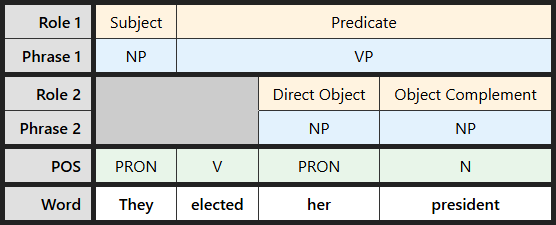
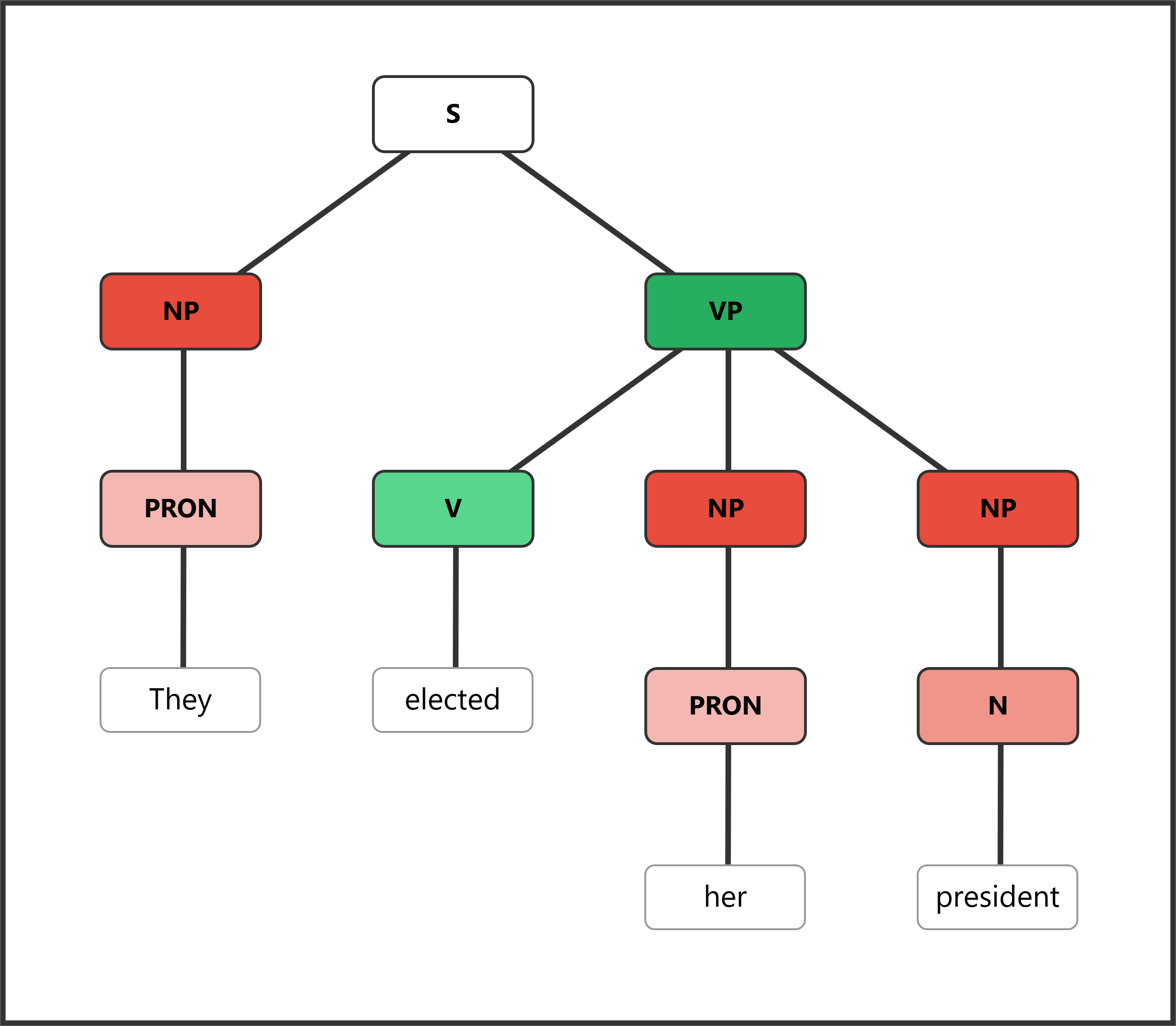
[S [NP [PRON They]] [VP [V elected] [NP [PRON her]] [NP [N president]]]]
6.8.2 E: Pronoun in object position.
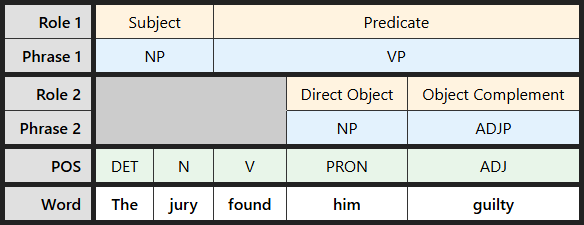
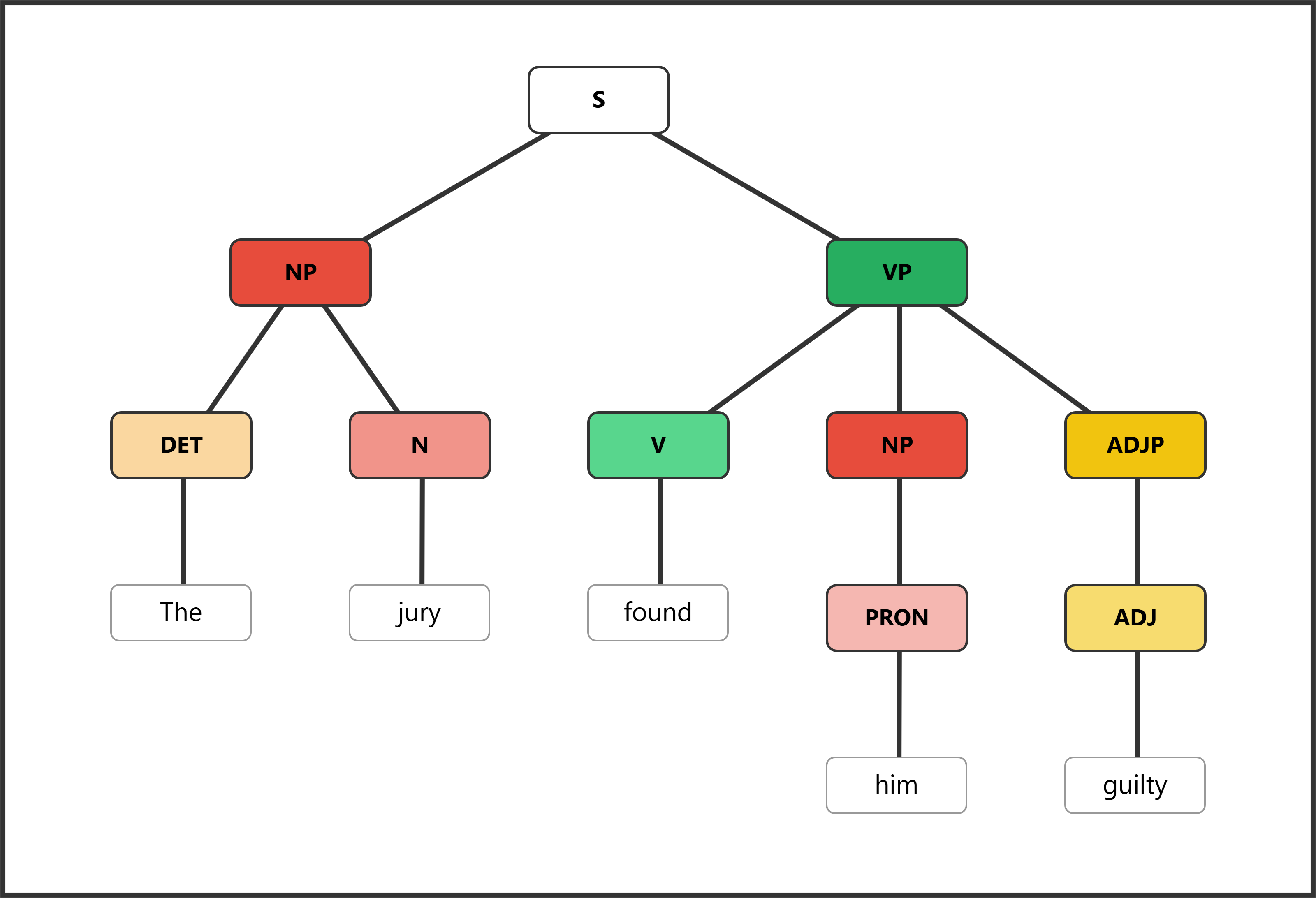
[S [NP [DET The] [N jury]] [VP [V found] [NP [PRON him]] [ADJP [ADJ guilty]]]]
The following pairs show how a pronoun replaces an entire noun phrase—not just the head noun, but all its modifiers as well.
6.8.2 F: Full NP — "The tall student sleeps".
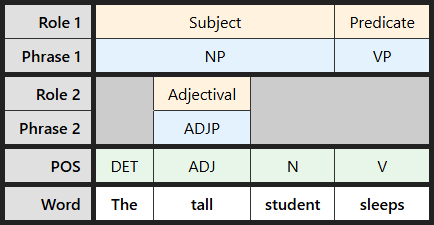
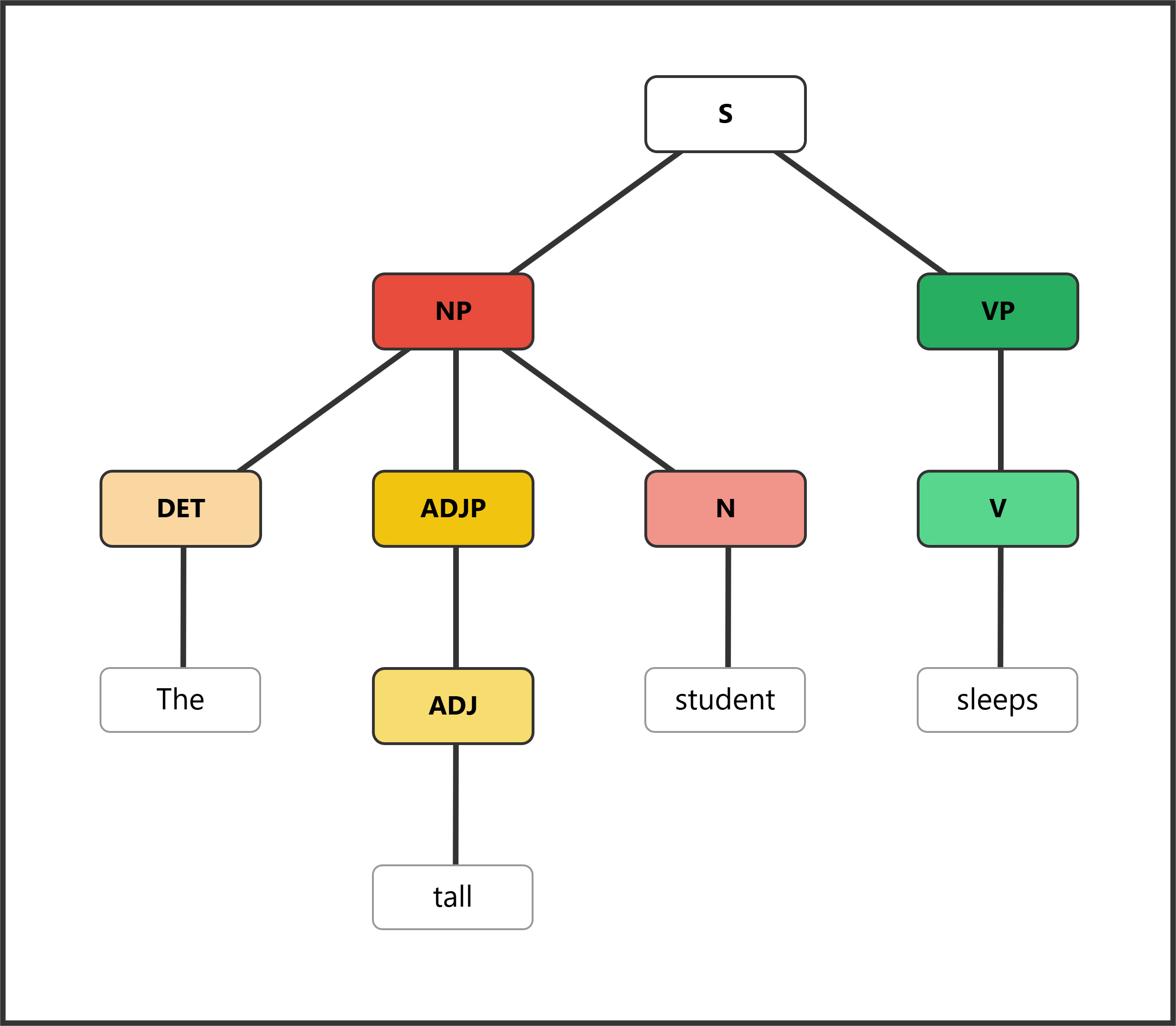
[S [NP [DET The] [ADJP [ADJ tall]] [N student]] [VP [V sleeps]]]
6.8.2 F (comparison): Pronoun replacement — "She sleeps".
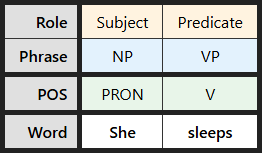
[S [NP [PRON She]] [VP [V sleeps]]]
6.8.2 G: Full NP — "The teacher gave the young student a book".
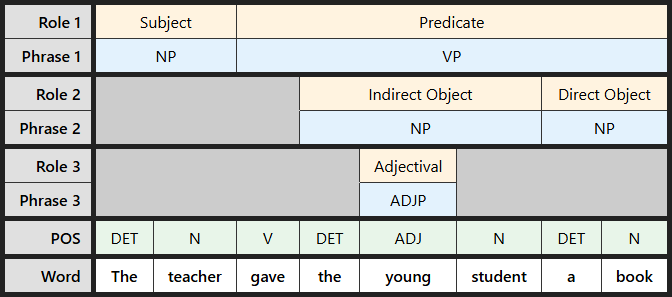
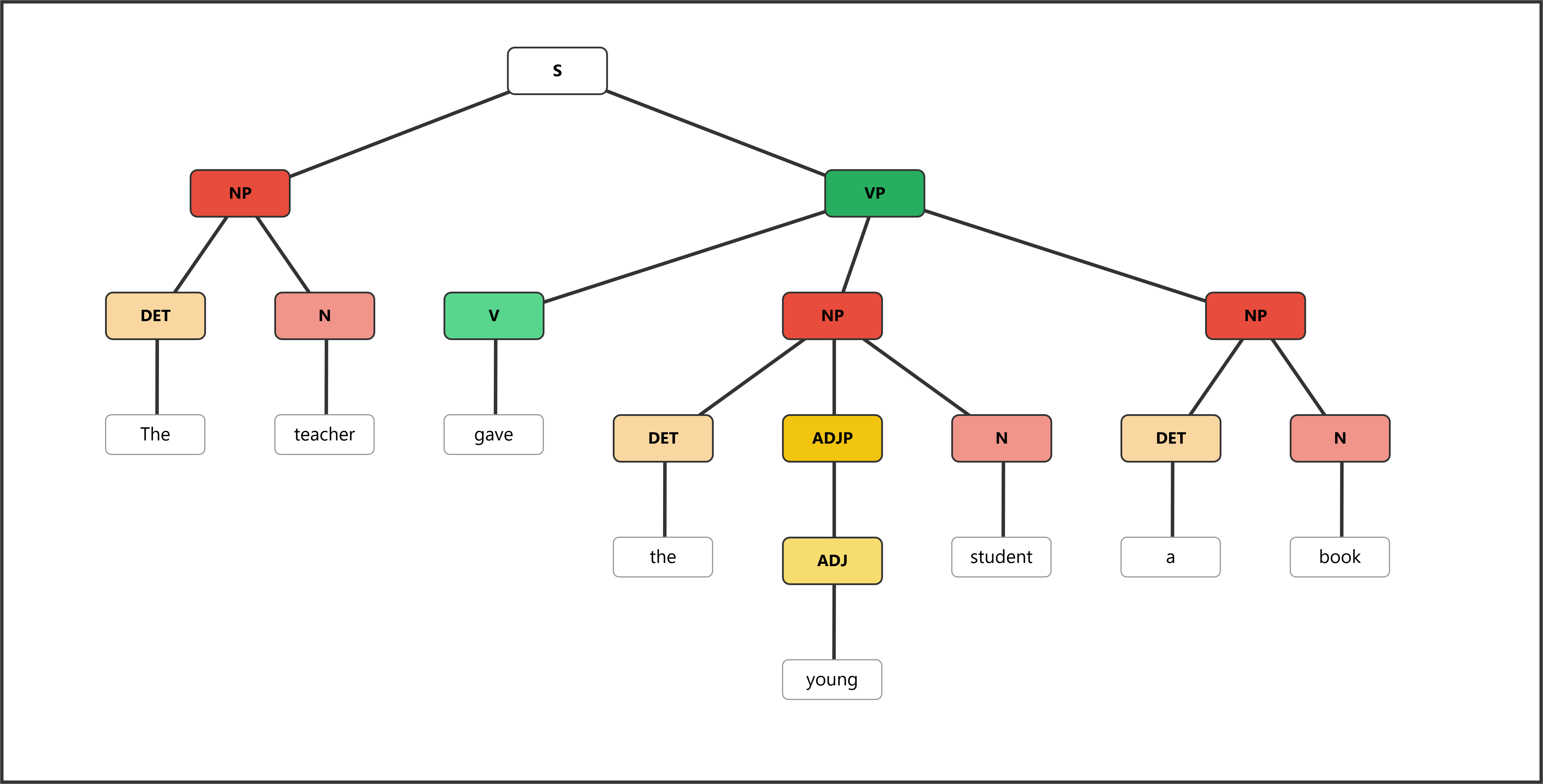
[S [NP [DET The] [N teacher]] [VP [V gave] [NP [DET the] [ADJP [ADJ young]] [N student]] [NP [DET a] [N book]]]]
6.8.2 G (comparison): Pronoun replacement — "She gave me a book".
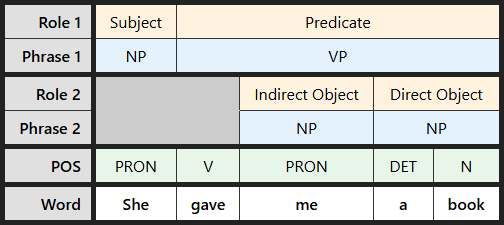
[S [NP [PRON She]] [VP [V gave] [NP [PRON me]] [NP [DET a] [N book]]]]
6.8.2 H: Full NP with PP modifier — "The old car on the corner".
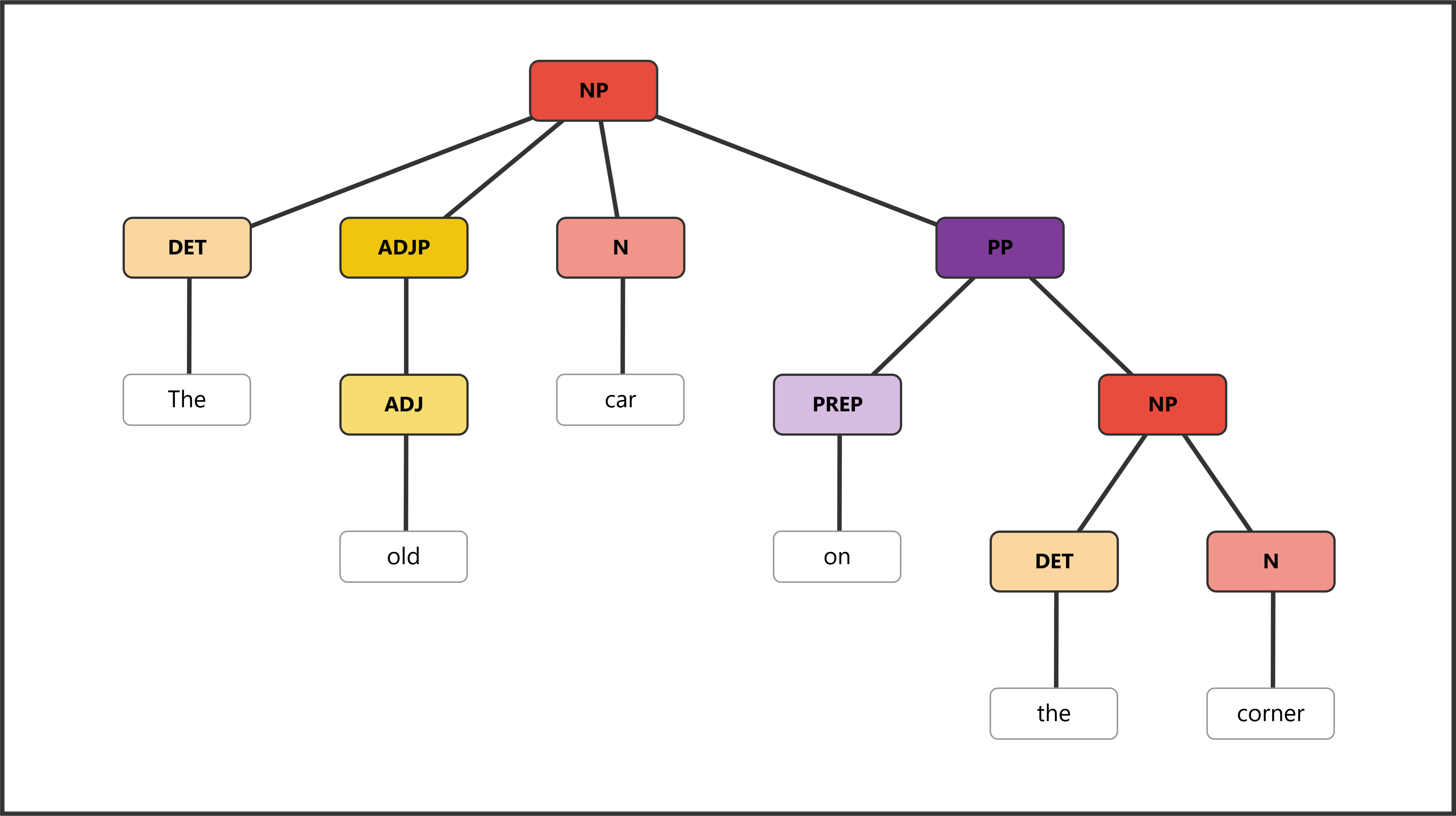
[NP [DET The] [ADJP [ADJ old]] [N car] [PP [PREP on] [NP [DET the] [N corner]]]]
6.8.2 H (comparison): Pronoun replacement — "it".
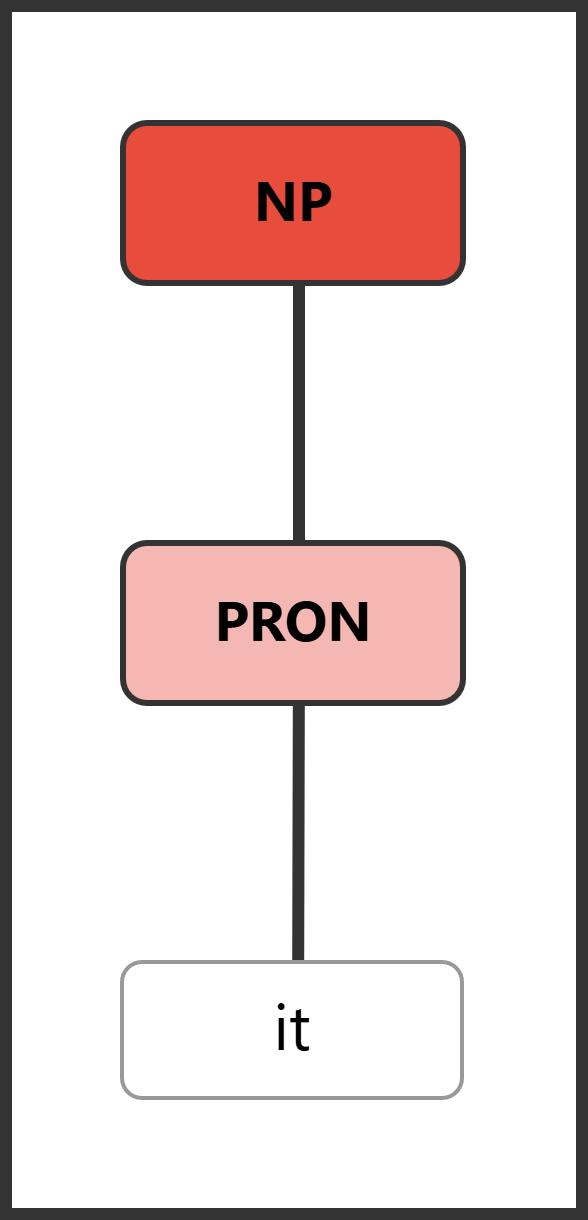
[NP [PRON it]]
Subsection 6.8.3 Preposition Examples
6.8.3 A: Simple PP — "in the box".
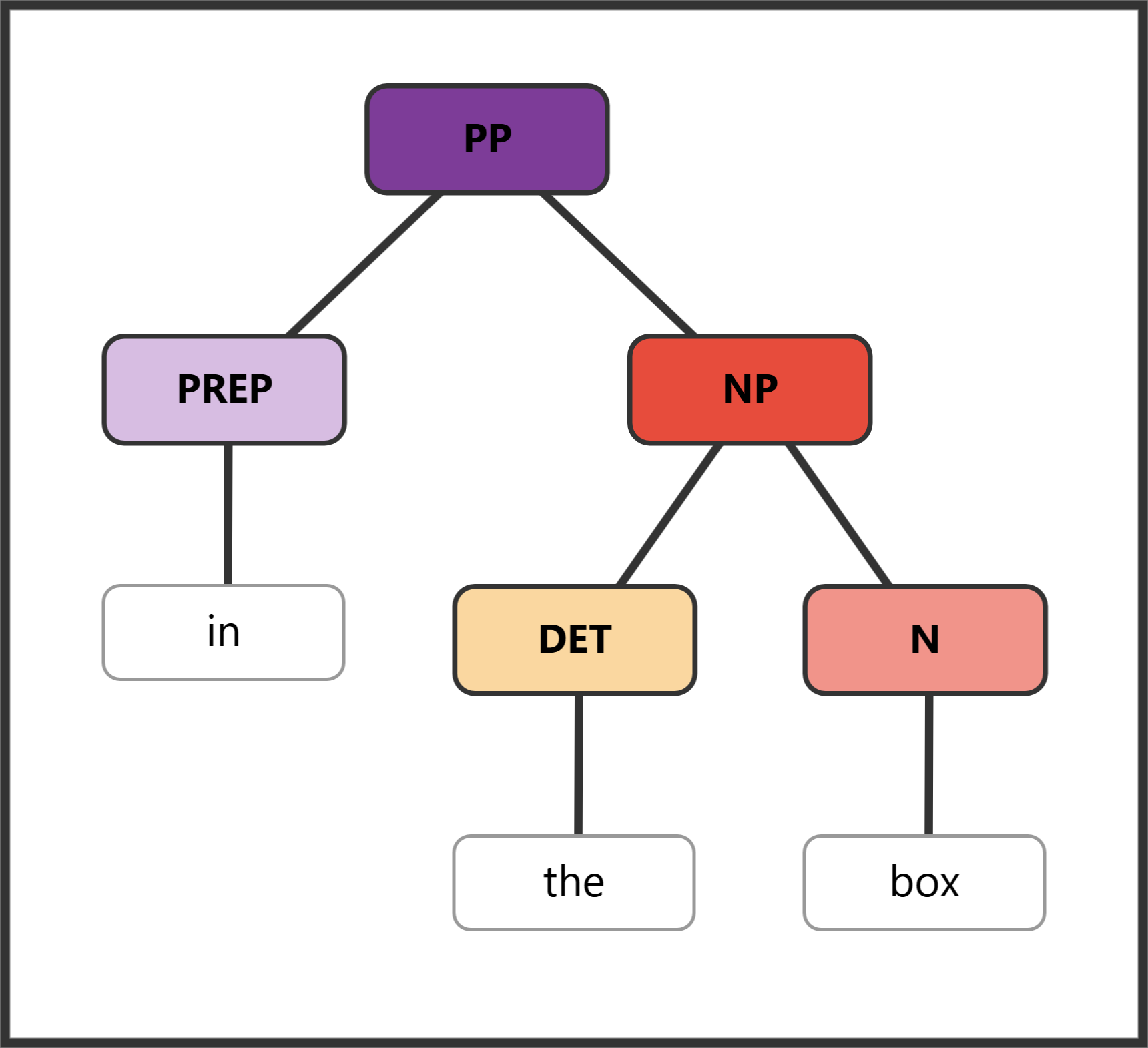
[PP [PREP in] [NP [DET the] [N box]]]
6.8.3 B: PP — "on the table".
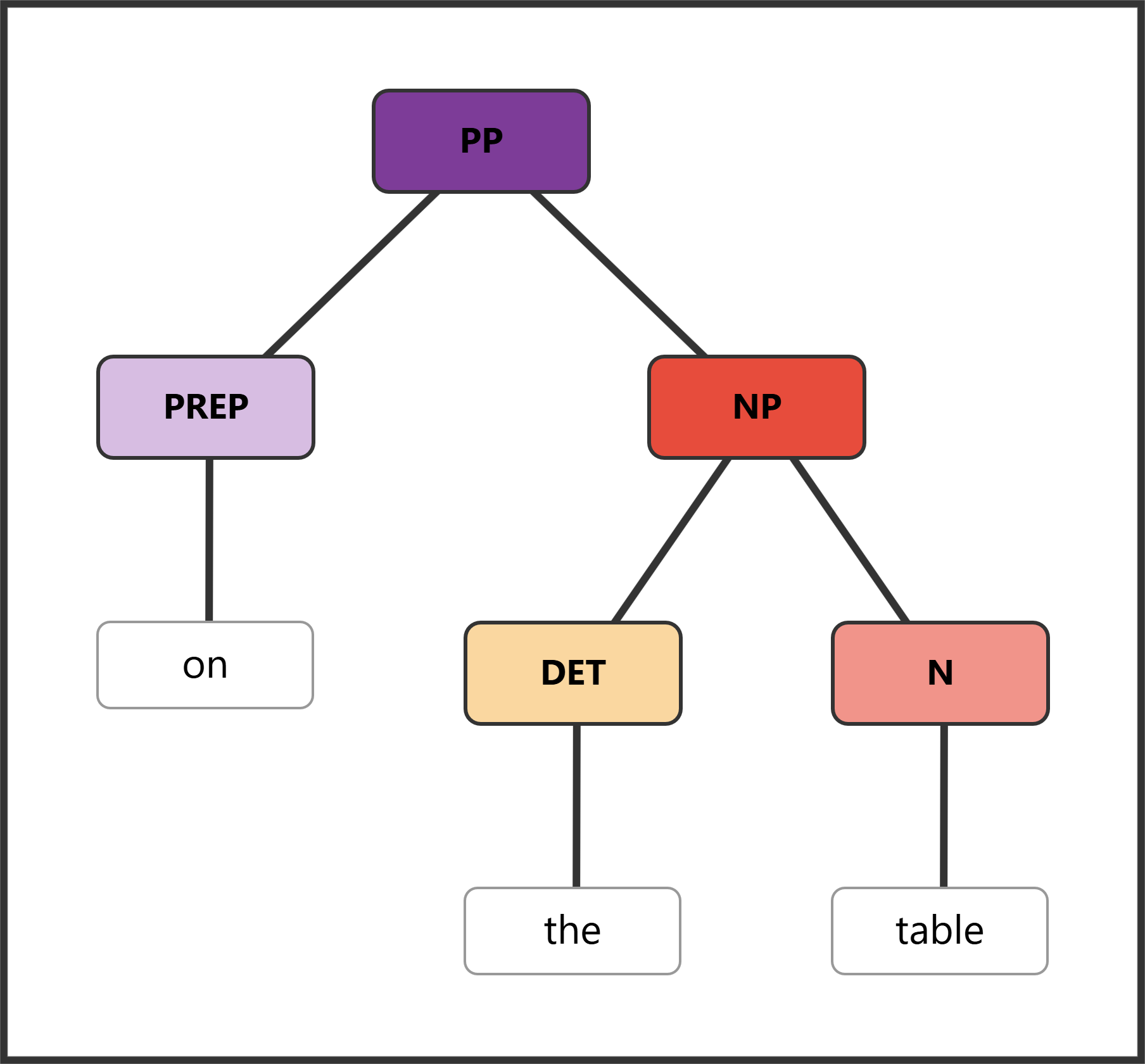
[PP [PREP on] [NP [DET the] [N table]]]
6.8.3 C: PP with pronoun object — "with her".
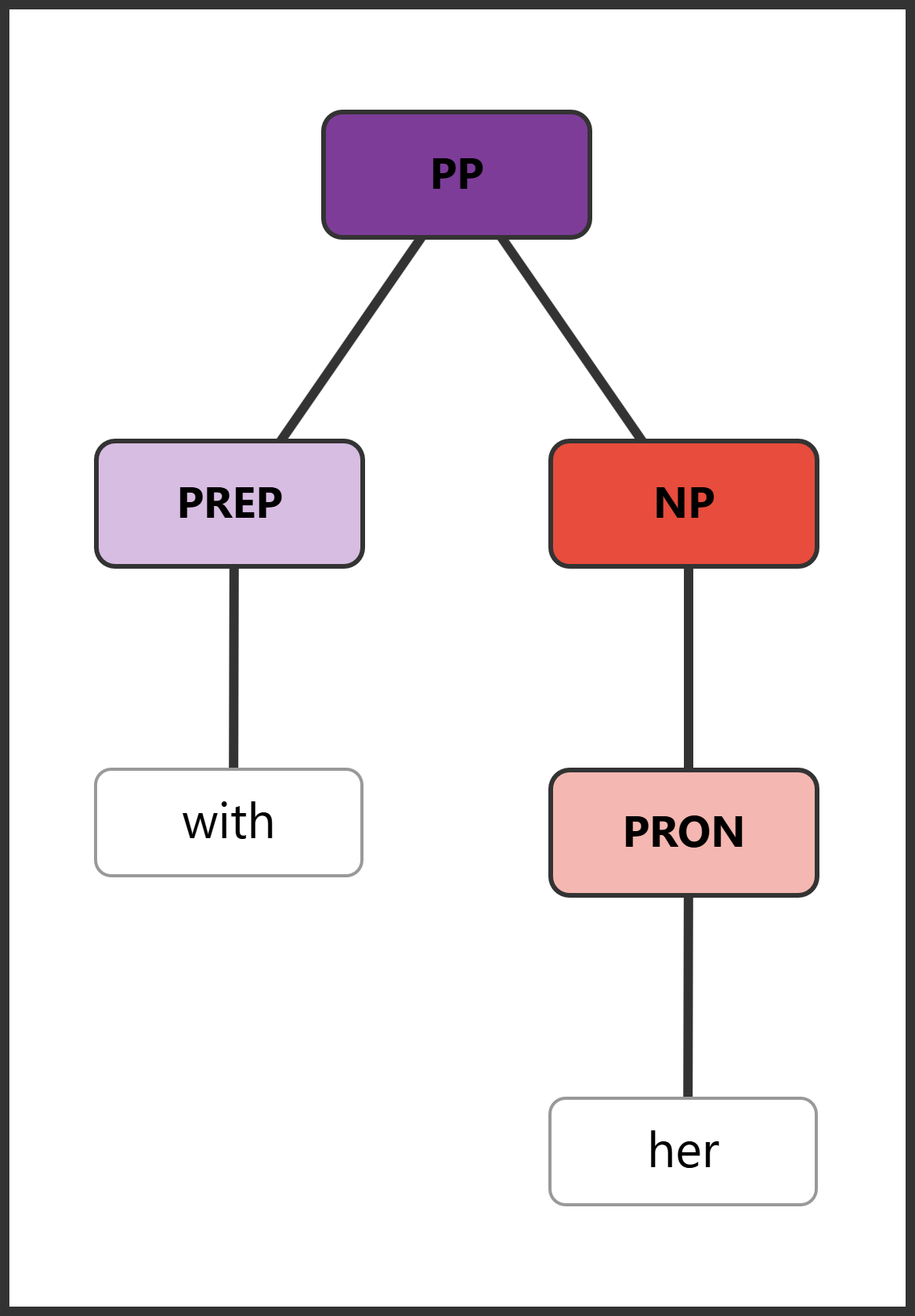
[PP [PREP with] [NP [PRON her]]]
6.8.3 D: PP — "before noon".
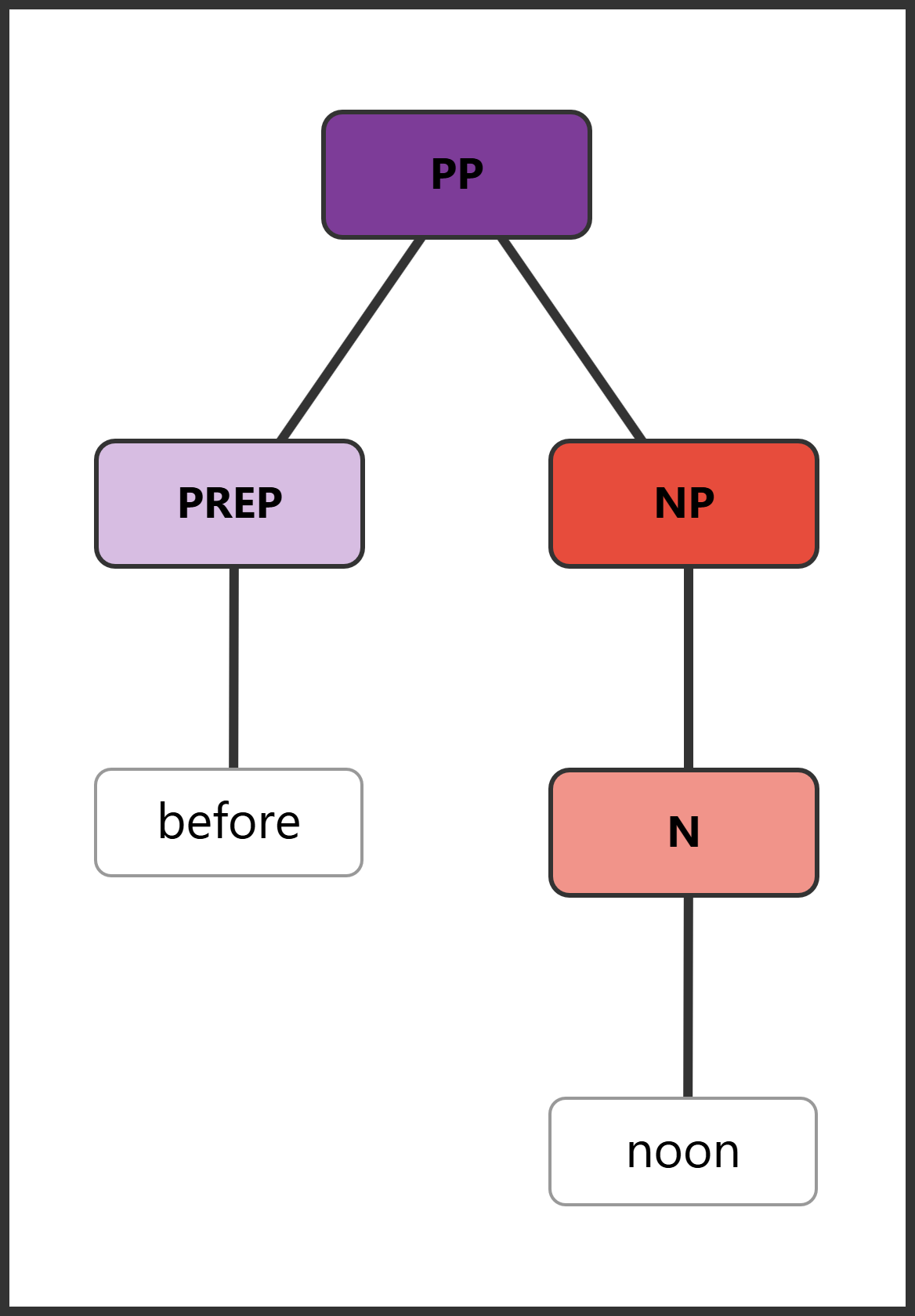
[PP [PREP before] [NP [N noon]]]
The following diagrams show how a PP attaches differently depending on what it modifies: a noun phrase, a verb phrase, an adjective phrase, or an entire sentence.
6.8.3 E: PP modifying NP — "the man in the hat".
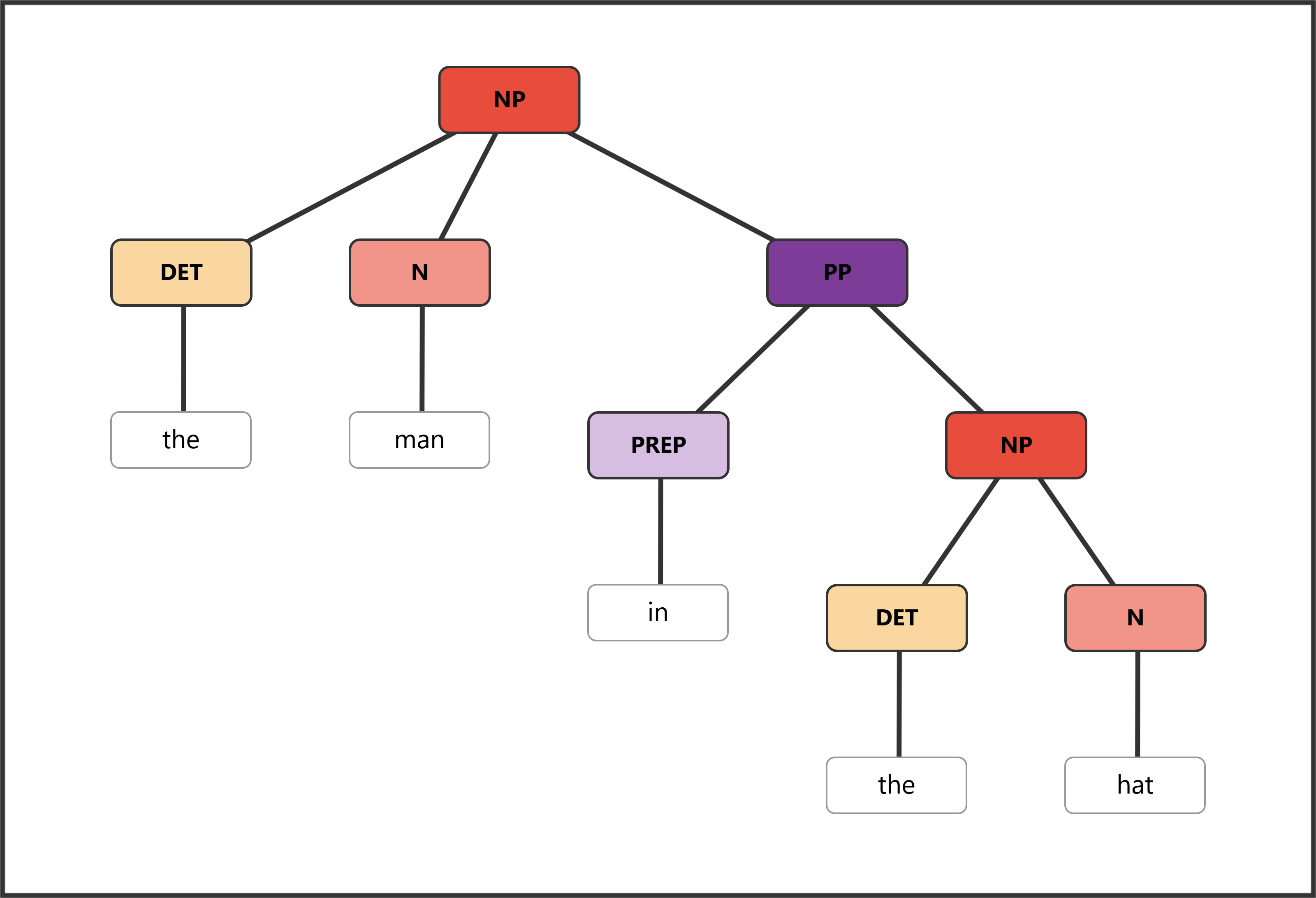
[NP [DET the] [N man] [PP [PREP in] [NP [DET the] [N hat]]]]
6.8.3 F: PP modifying VP — "She waited in the lobby".
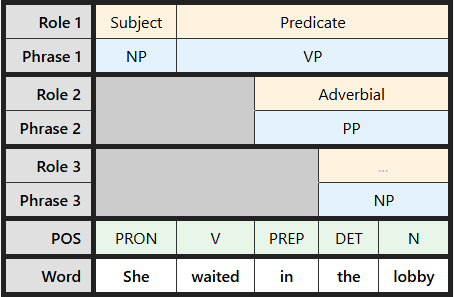
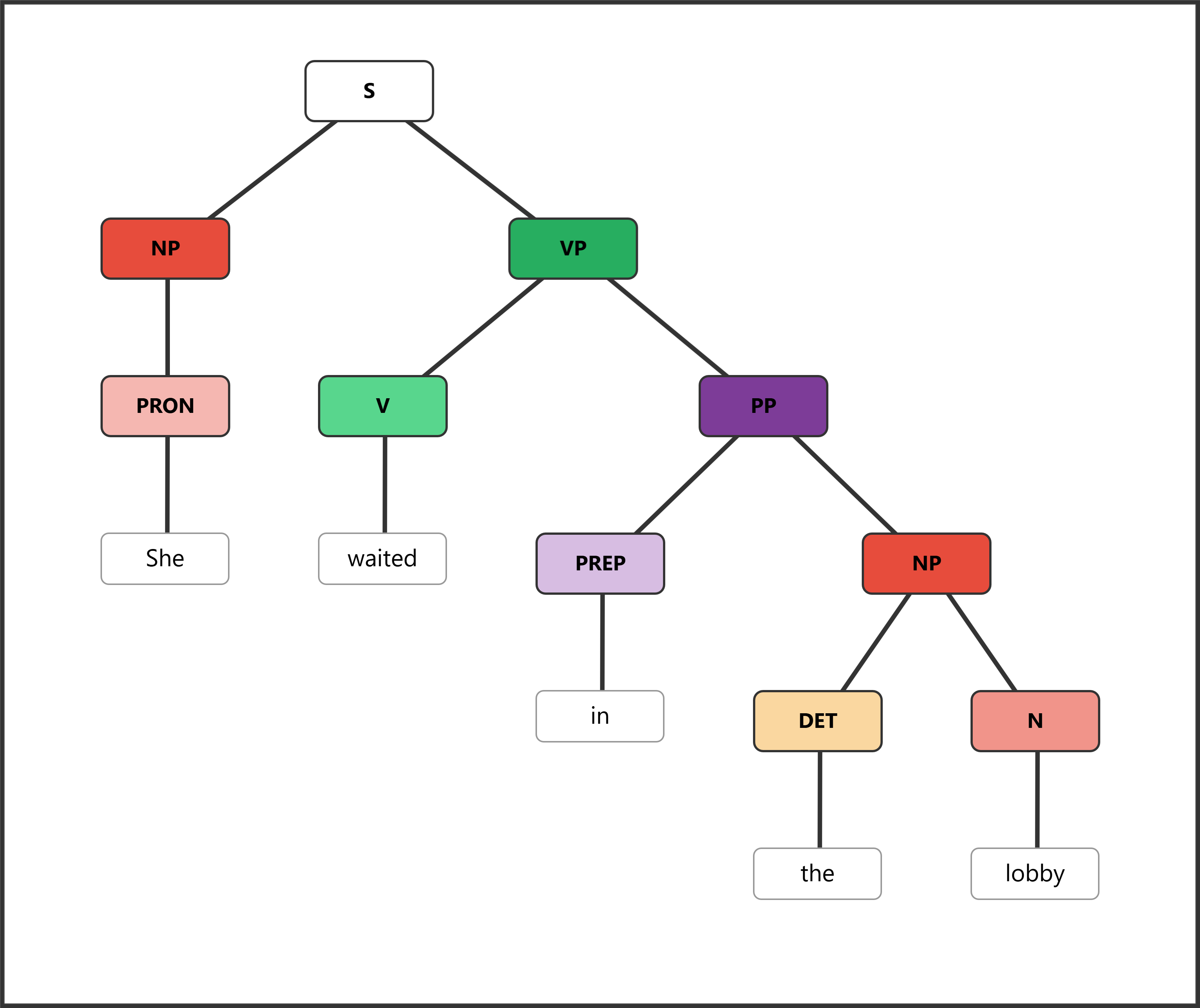
[S [NP [PRON She]] [VP [V waited] [PP [PREP in] [NP [DET the] [N lobby]]]]]
6.8.3 G: PP modifying AdjP — "She is proud of her work".
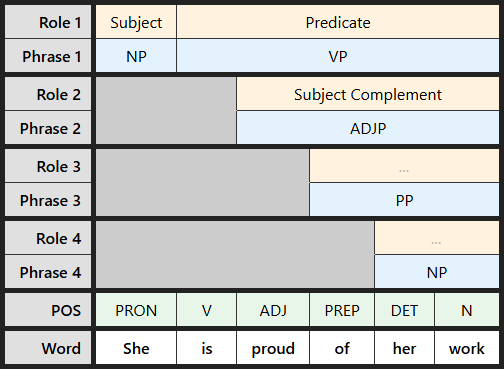
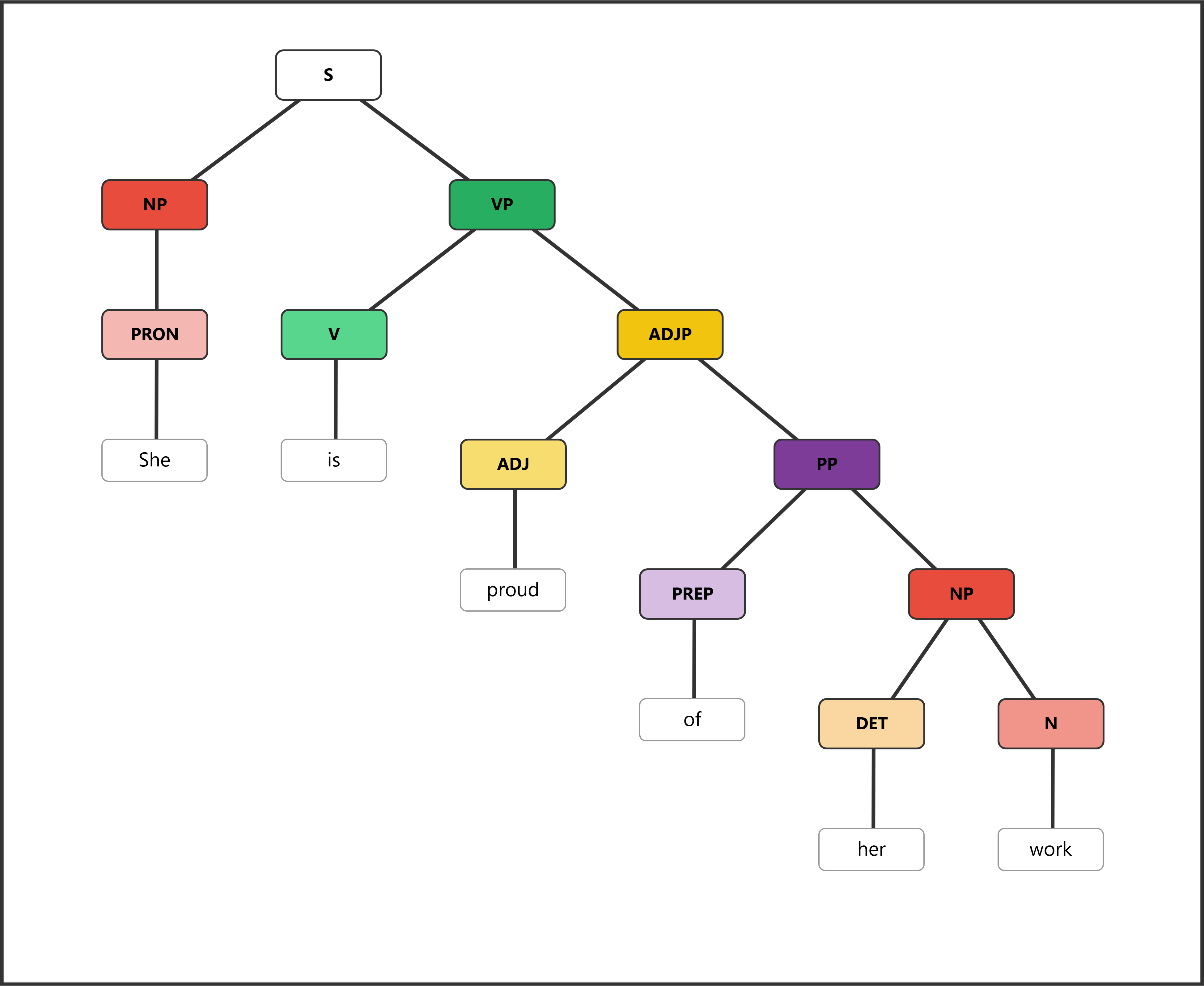
[S [NP [PRON She]] [VP [V is] [ADJP [ADJ proud] [PP [PREP of] [NP [DET her] [N work]]]]]]
6.8.3 H: PP modifying sentence — "In the morning, we will leave".
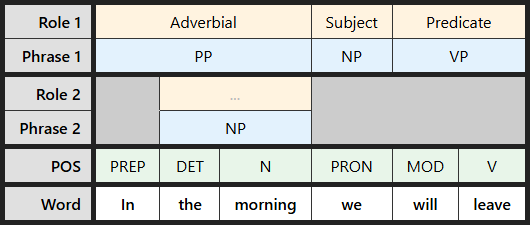
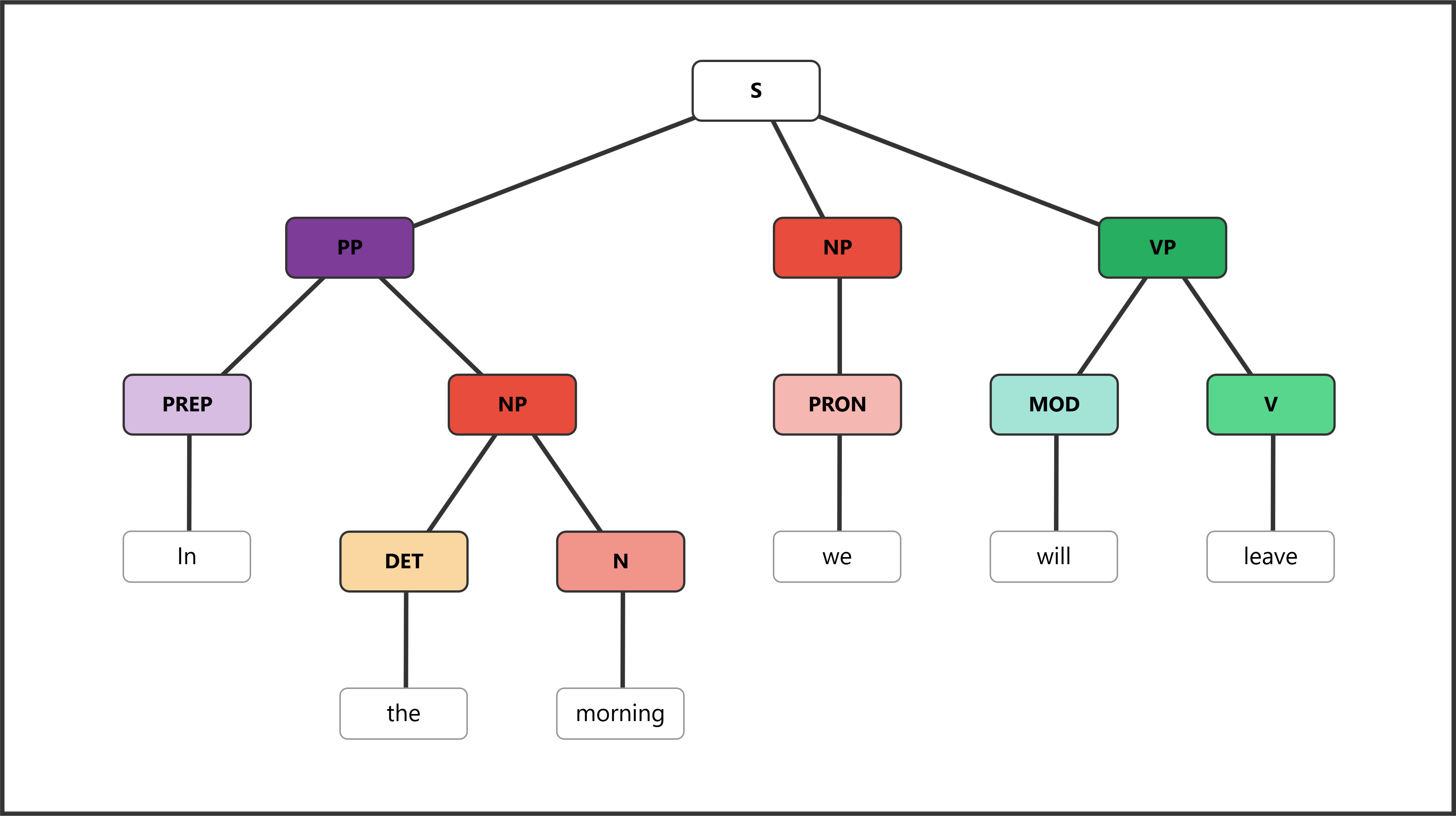
[S [PP [PREP In] [NP [DET the] [N morning]]] [NP [PRON we]] [VP [MOD will] [V leave]]]
The following pair of diagrams illustrates structural ambiguity. The sentence “I saw the man with binoculars” can be parsed two ways depending on whether the PP “with binoculars” modifies the noun phrase or the verb phrase.
6.8.3 I: PP modifies NP — "the man with binoculars".
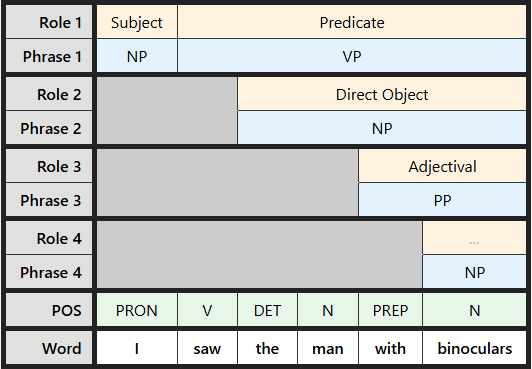
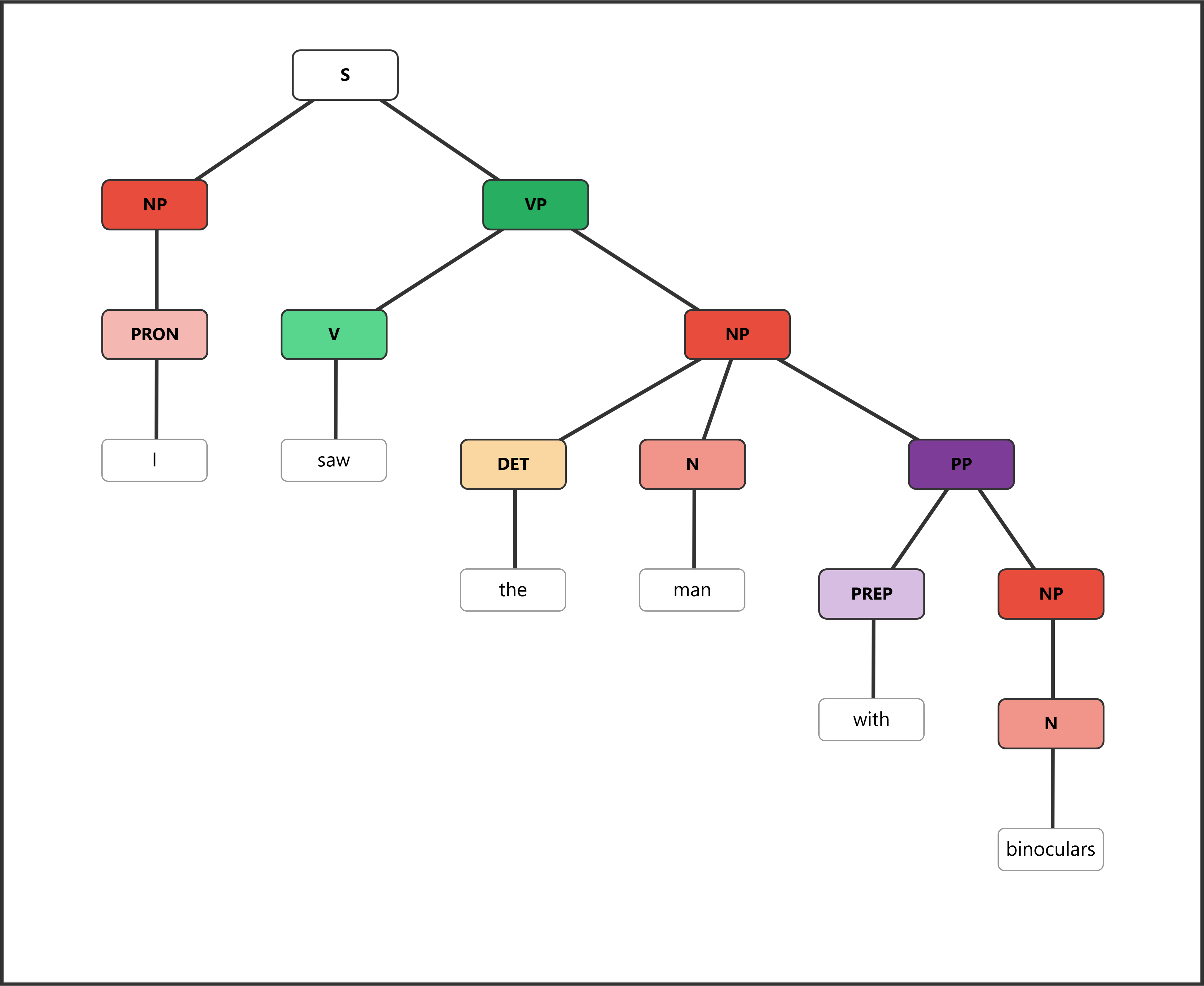
[S [NP [PRON I]] [VP [V saw] [NP [DET the] [N man] [PP [PREP with] [NP [N binoculars]]]]]]
6.8.3 J: PP modifies VP — "saw with binoculars".
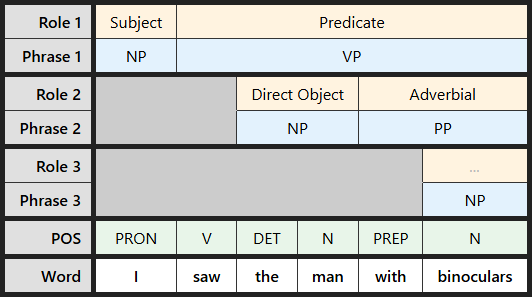
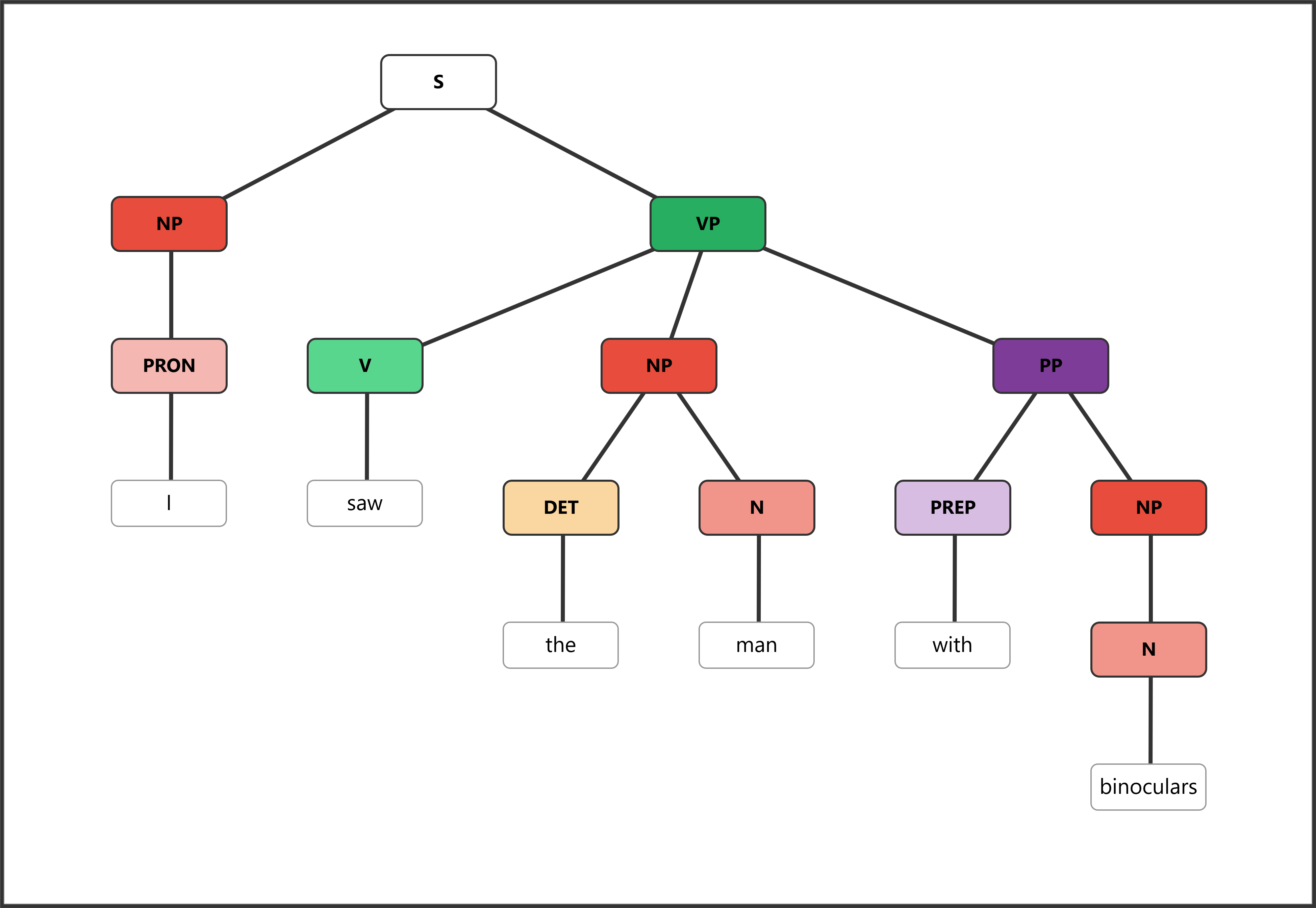
[S [NP [PRON I]] [VP [V saw] [NP [DET the] [N man]] [PP [PREP with] [NP [N binoculars]]]]]
6.8.3 K: Complex sentence with PP modifier.
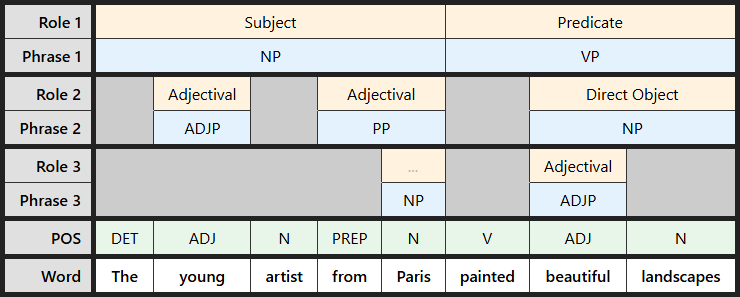
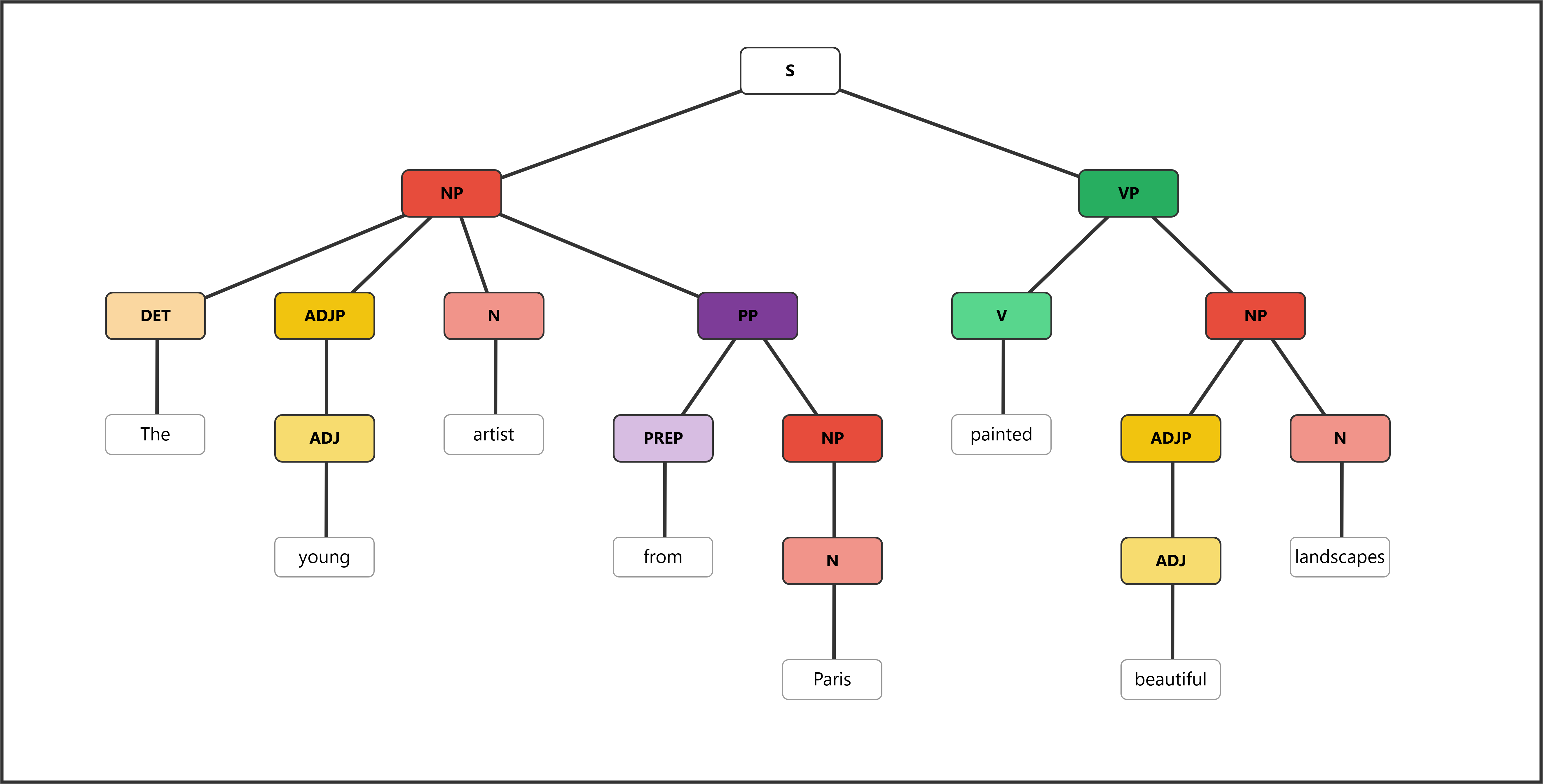
[S [NP [DET The] [ADJP [ADJ young]] [N artist] [PP [PREP from] [NP [N Paris]]]] [VP [V painted] [NP [ADJP [ADJ beautiful]] [N landscapes]]]]
Subsection 6.8.4 Coordination Examples
6.8.4 A: NP coordination — "cats and dogs".
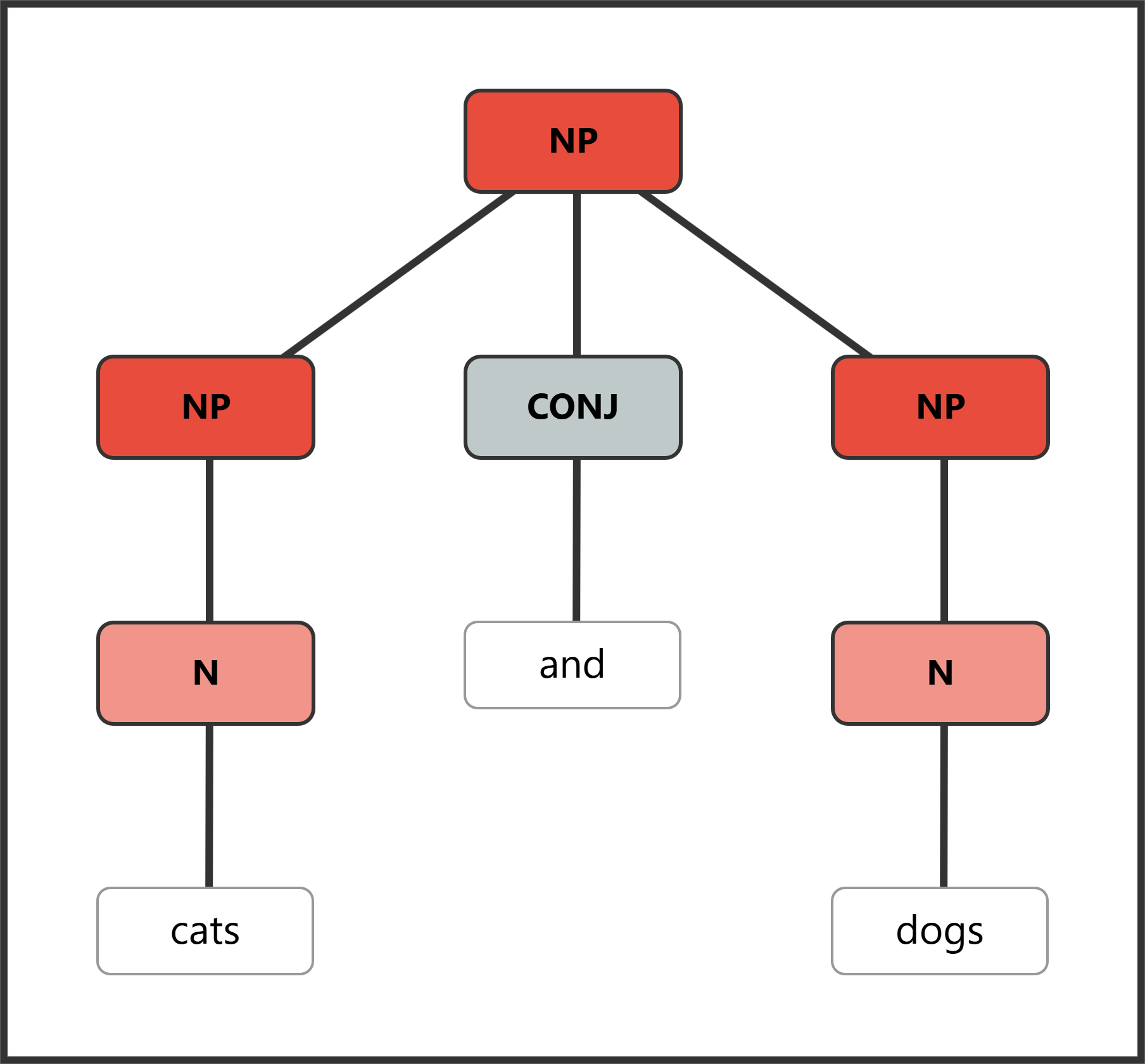
[NP [NP [N cats]] [CONJ and] [NP [N dogs]]]

