Section 13.2 Structures That Function as Adjectivals
Think about how many ways English has to say something about a noun. You can say the sleeping dog (participial phrase), the dog in the yard (prepositional phrase), the dog that bit me (relative clause), the dog to avoid (infinitive phrase), or the guard dog (attributive noun). Each of those noun phrases means something different, but in every case a modifier is doing the work of characterizing or identifying the noun dog. That is the adjectival function, and English fills it with at least six distinct structural forms. Learning to recognize all six will sharpen your ability to analyze noun phrases and to understand why some modifiers must follow the noun rather than precede it.
1. Adjective Phrases.
The prototypical adjectival is an adjective phrase—a single adjective or an adjective with modifiers:
-
the tall man
-
a very interesting book
-
someone happy about the news
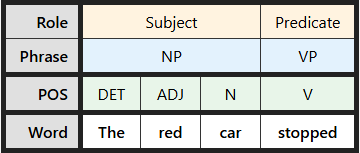
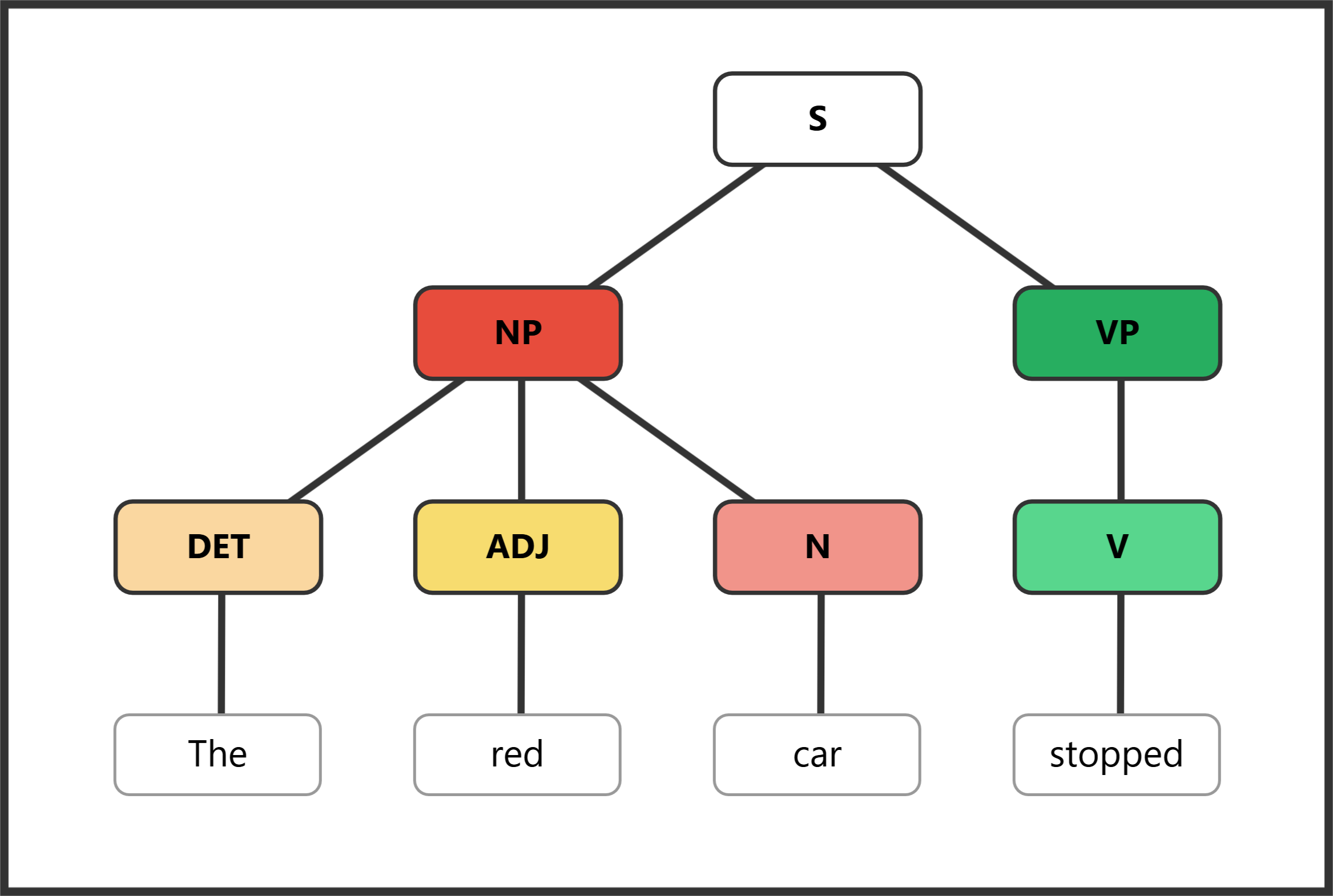
[S [NP [DET The] [ADJ red] [N car]] [VP [V stopped]]]
2. Nouns (Attributive).
Nouns can function adjectivally when they modify other nouns:
-
the coffee table
-
a government report
-
the history professor
These are sometimes called "noun adjectivals" or "attributive nouns." They always precede the head noun.
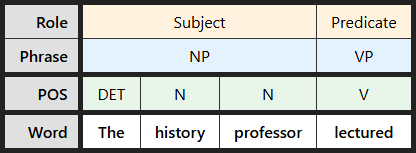
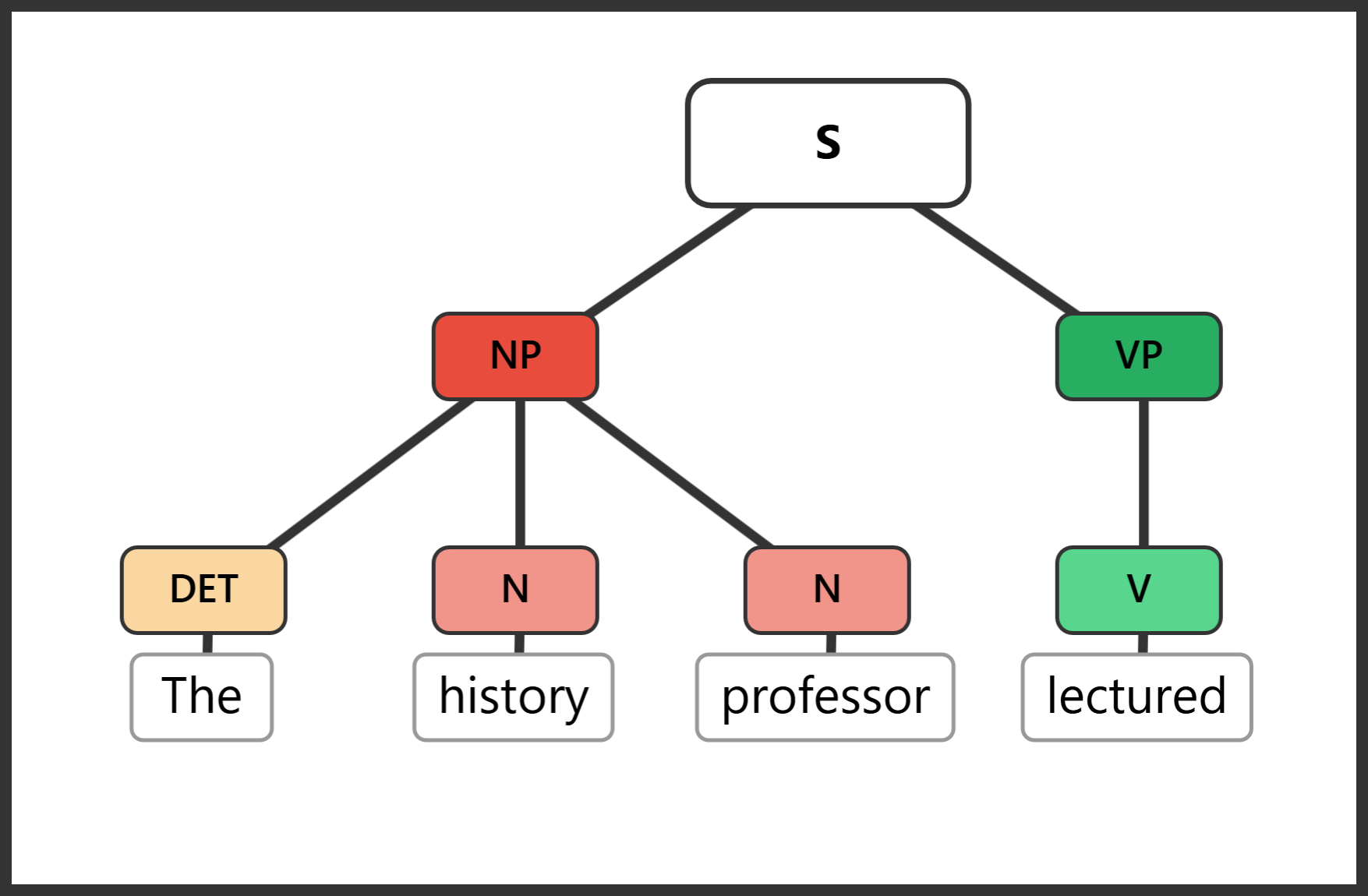
[S [NP [DET The] [N history] [N professor]] [VP [V lectured]]]
3. Prepositional Phrases.
Prepositional phrases commonly function as adjectivals, appearing as post-modifiers inside the NP:
-
the man in the hat
-
a book about grammar
-
a sense of accomplishment
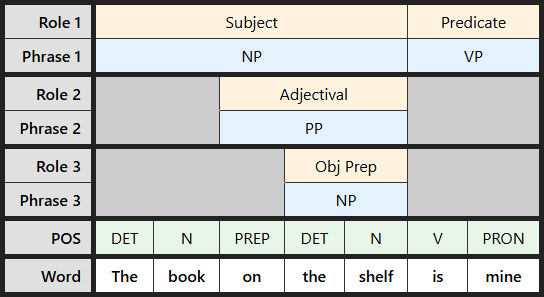
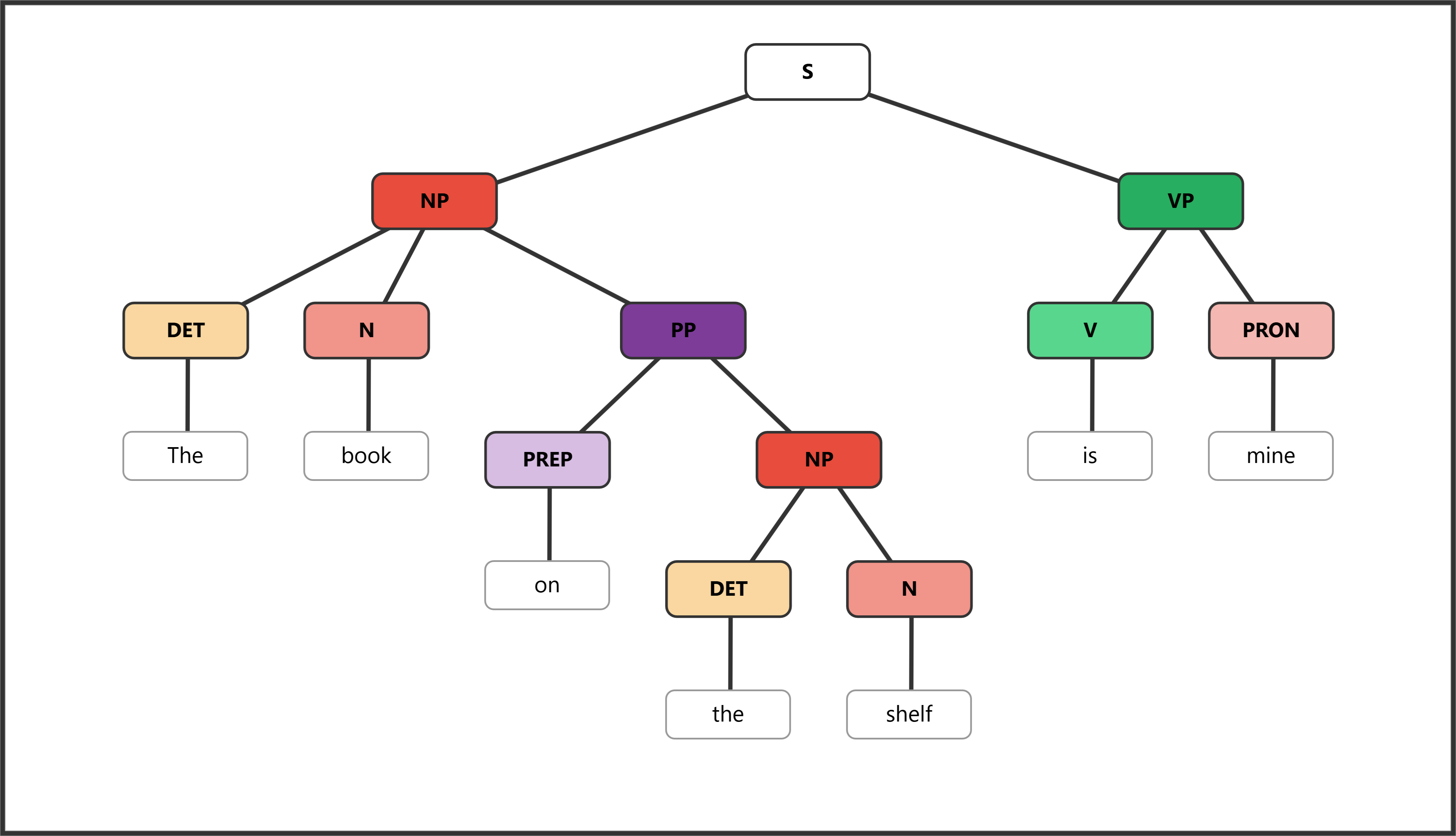
[S [NP [DET The] [N book] [PP [PREP on] [NP [DET the] [N shelf]]]] [VP [V is] [PRON mine]]]
4. Relative Clauses.
Clauses introduced by relative pronouns or adverbs function as adjectivals. They are the most structurally complex adjectival form and are covered in detail in Sections 13.10 and 13.11:
-
the book that I read
-
the student who won the prize
-
the place where we met
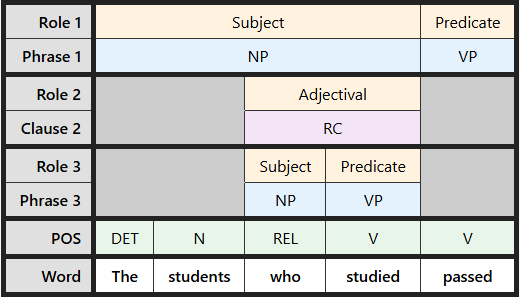
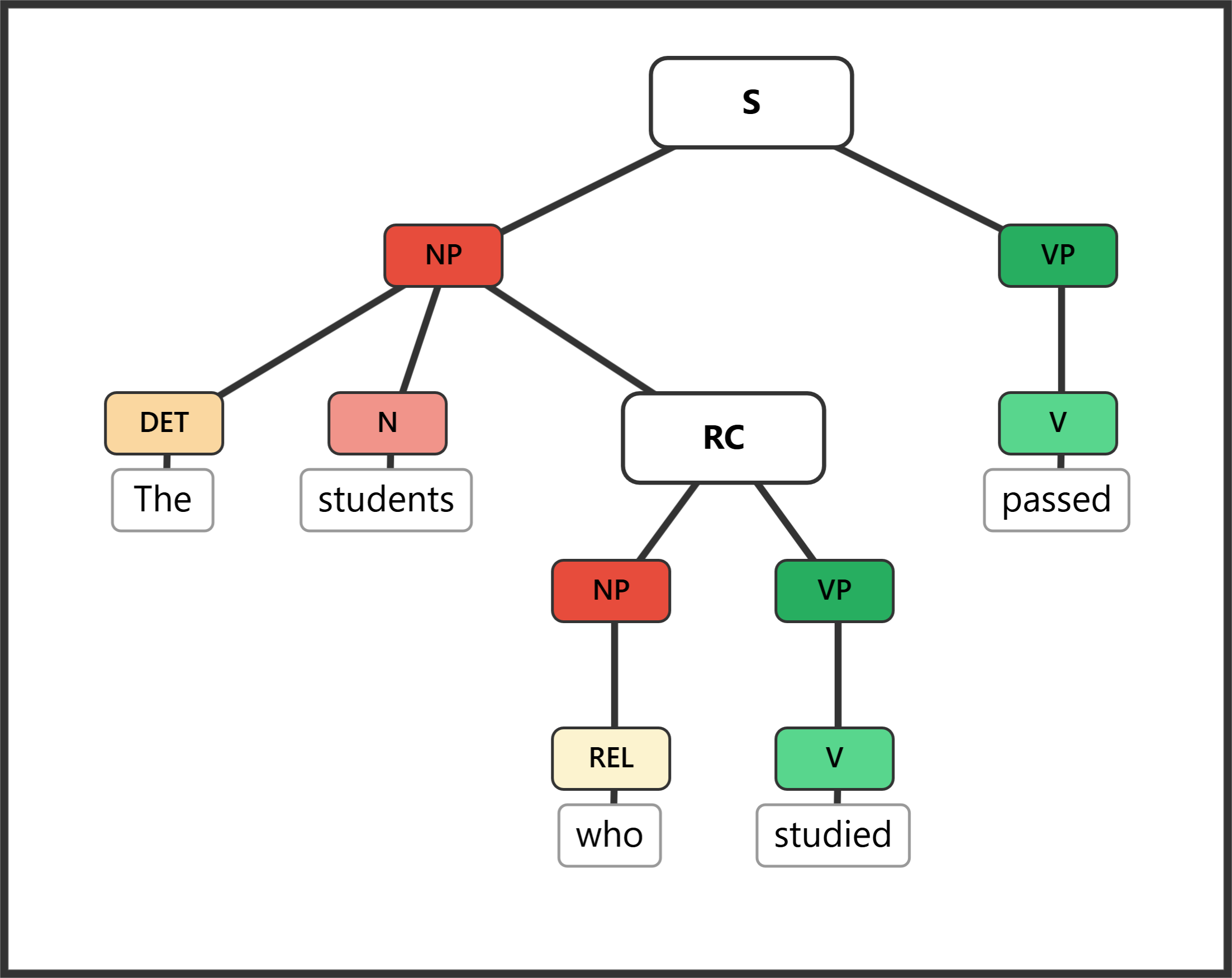
[S [NP [DET The] [N students] [RC [NP [REL who]] [VP [V studied]]]] [VP [V passed]]]
5. Participial Phrases.
Present and past participial phrases function as adjectivals:
-
the running water
-
the man standing by the door
-
the book written by Hemingway
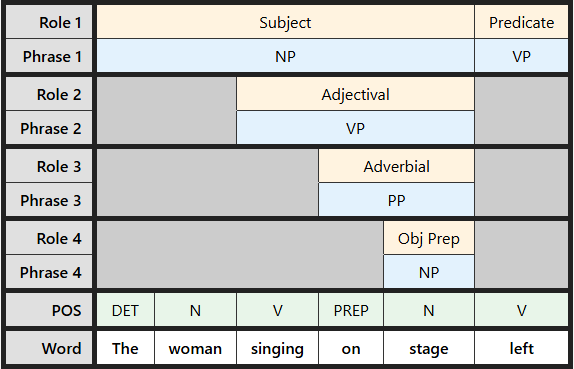
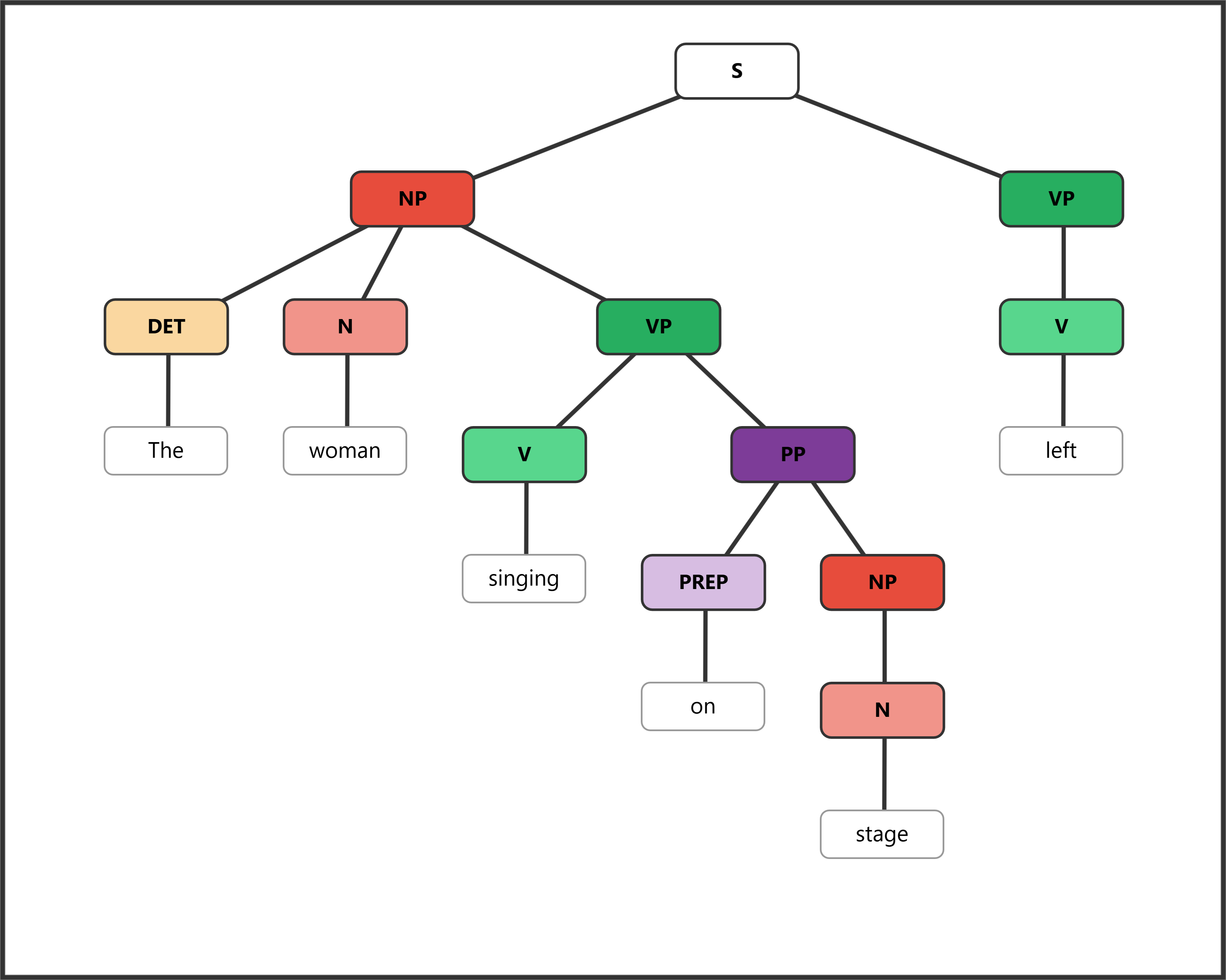
[S [NP [DET The] [N woman] [VP [V singing] [PP [PREP on] [NP [N stage]]]]] [VP [V left]]]
6. Infinitive Phrases.
Infinitive phrases can function adjectivally, typically as post-modifiers:
-
a book to read
-
the decision to leave
-
the first person to arrive
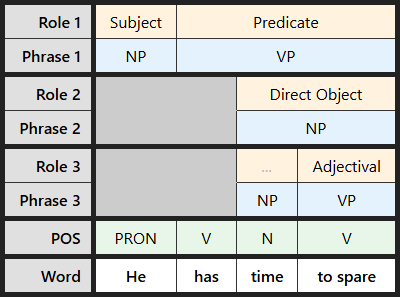
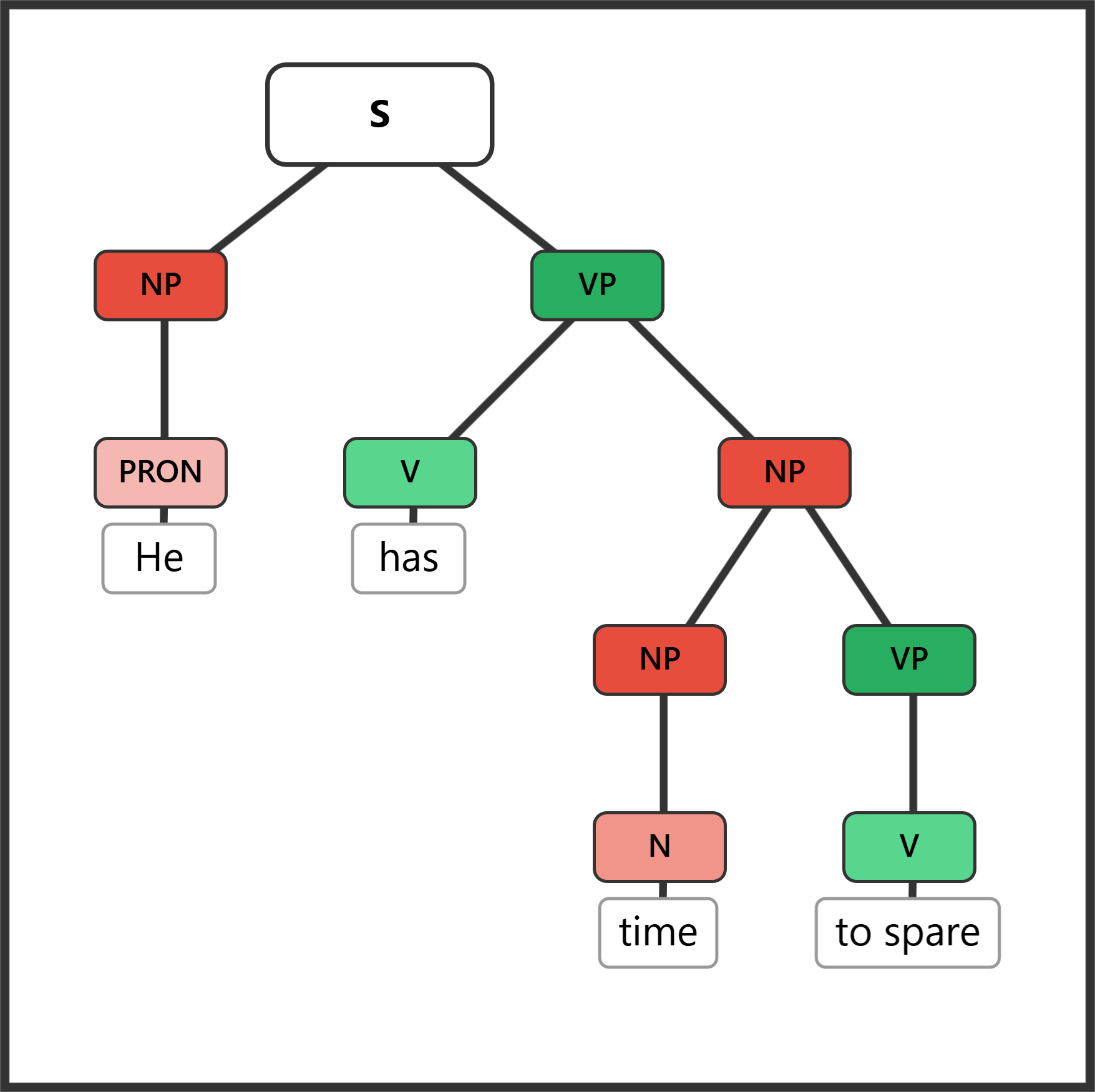
[S [NP [PRON He]] [VP [V has] [NP [NP [N time]] [VP [V to spare]]]]]

