Section 14.12 Diagram Examples
This section gathers reference diagrams for the nominal structures introduced in this chapter so they are easy to find and compare. The first subsection contrasts the three most common forms in subject position; the second collects complement-clause patterns.
Subsection 14.12.1 Forms in Subject Position
14.11.1 A: Noun phrase as subject: The students read books.
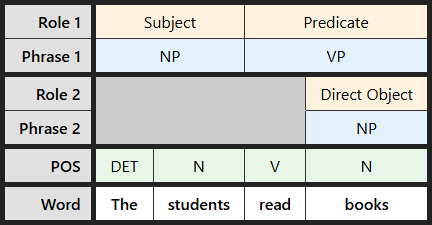
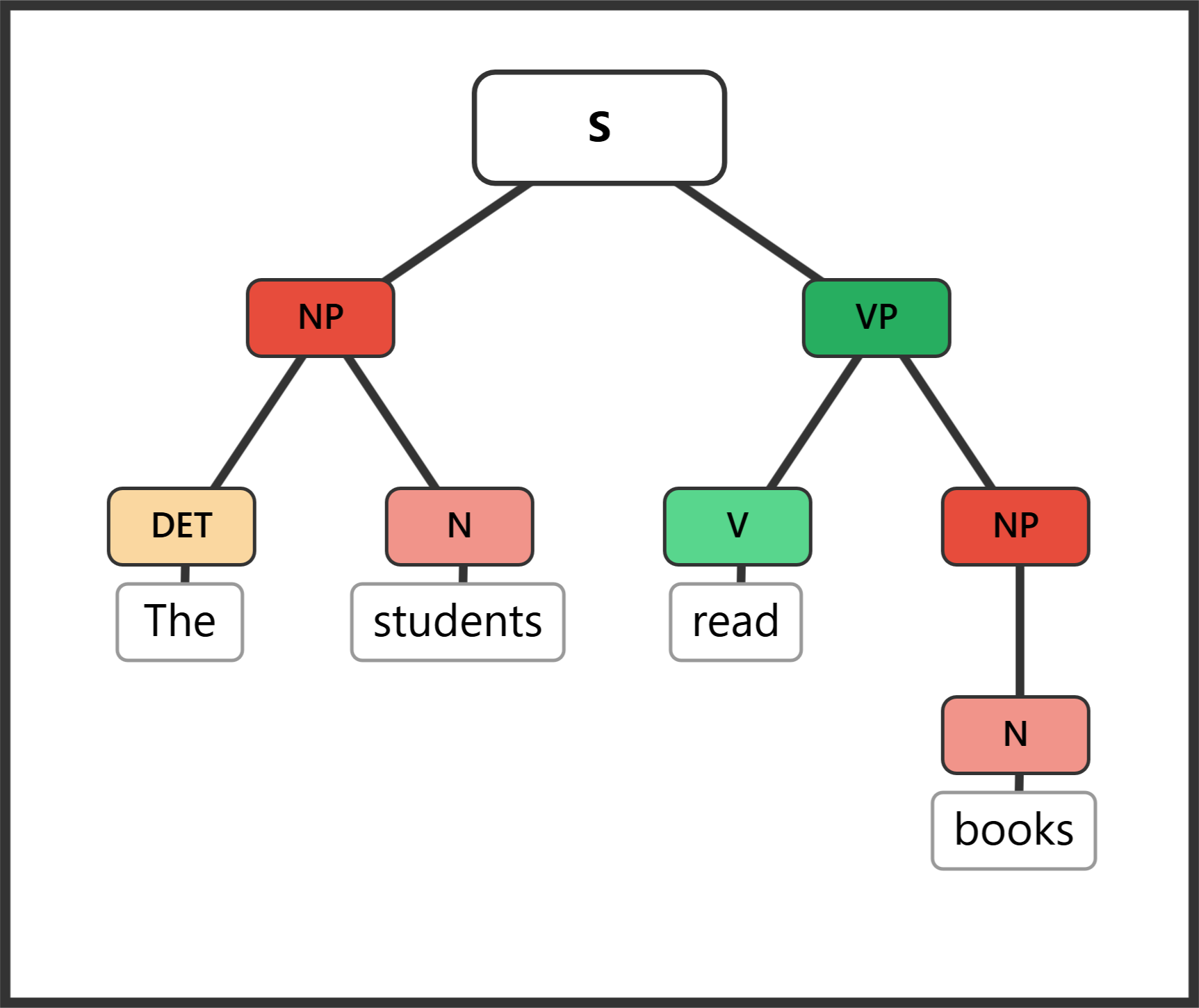
[S [NP [DET The] [N students]] [VP [V read] [NP [N books]]]]
14.11.1 B: Present participle phrase as subject: Running every morning is healthy.
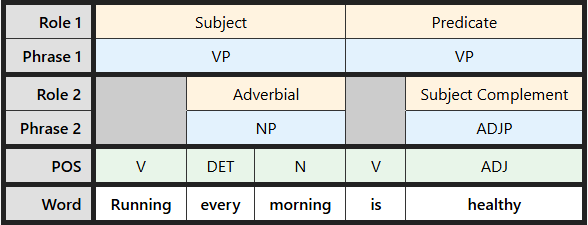
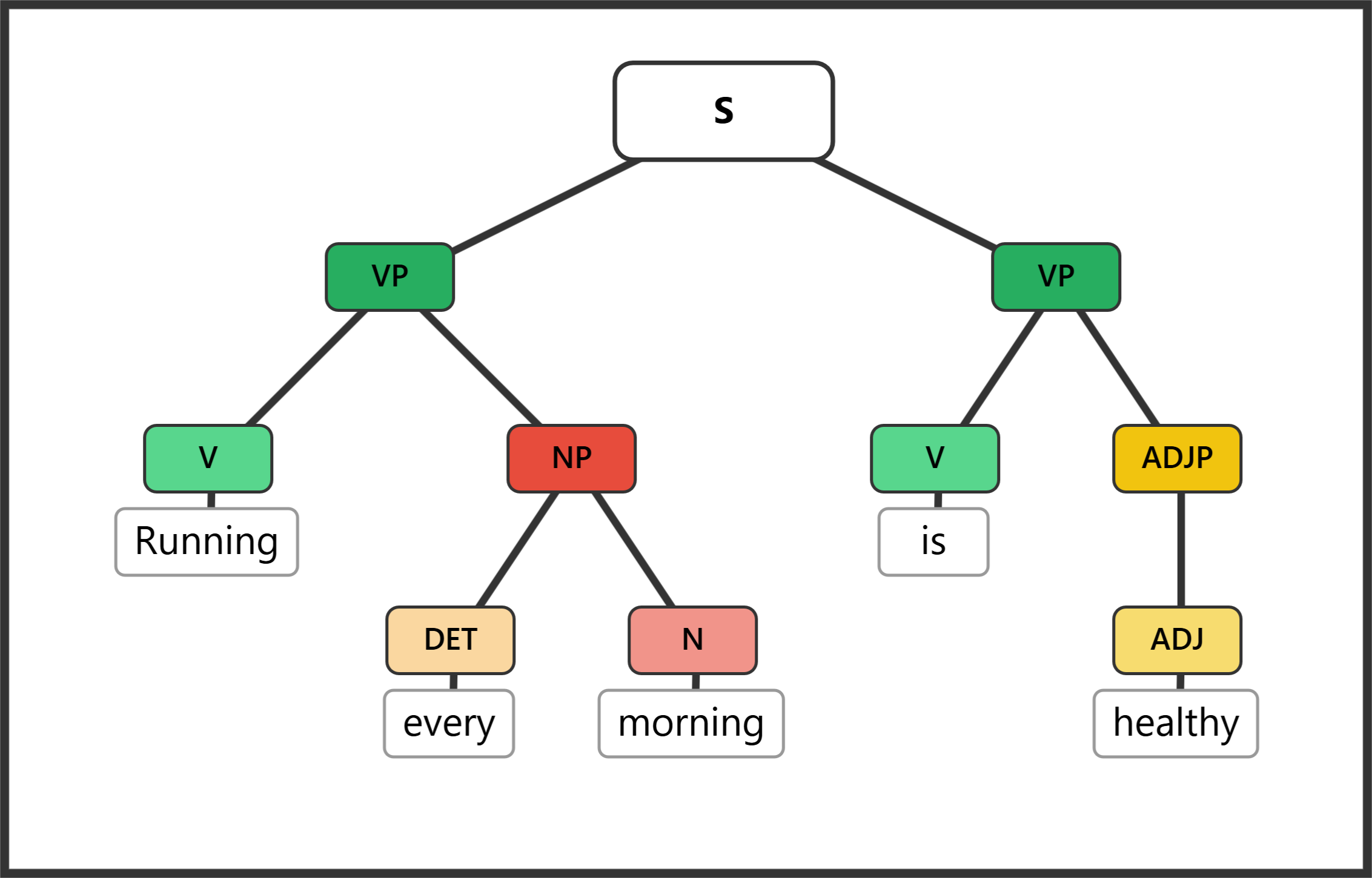
[S [VP [V Running] [NP [DET every] [N morning]]] [VP [V is] [ADJP [ADJ healthy]]]]
14.11.1 C: Infinitive phrase as subject: To win the race was her only goal.
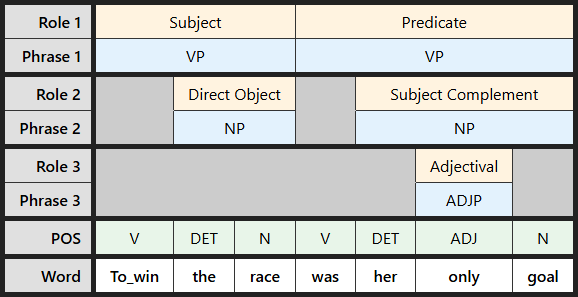
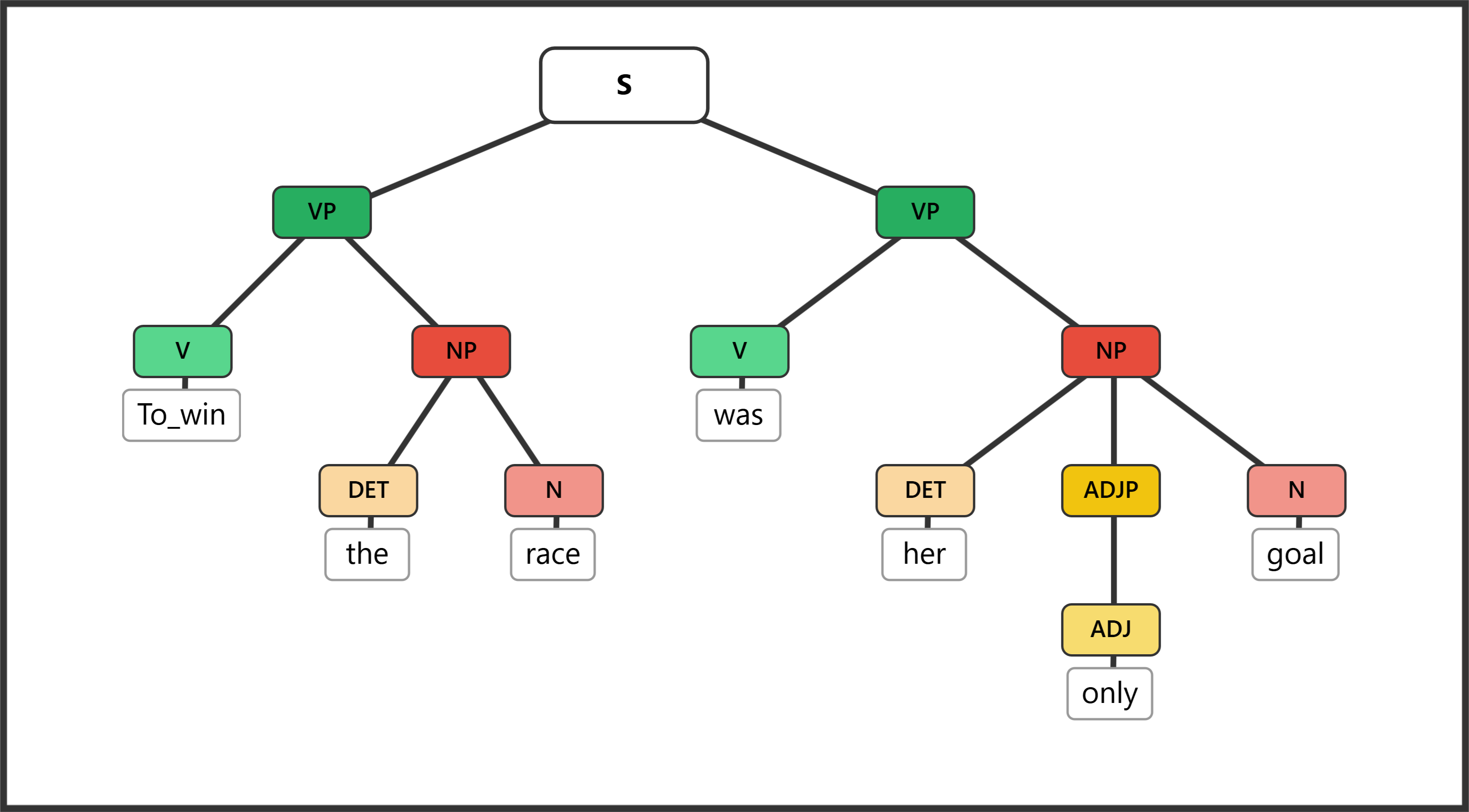
[S [VP [V To win] [NP [DET the] [N race]]] [VP [V was] [NP [DET her] [ADJP [ADJ only]] [N goal]]]]
Reading these three diagrams side by side makes the form-vs.-function distinction concrete: the subject slot looks identical from outside, but the structures slotting into it differ dramatically. The NP version is a flat determiner-noun structure; the present participle version is a VP whose head is the -ing form of a verb; the infinitive version is a VP whose head is the multi-word to V unit. In all three cases, the phrase as a whole functions as Subject regardless of what its internal structure is built from.
Subsection 14.12.2 Complement Clauses
14.11.2 A: Pattern 1 (complementizer + clause) as direct object: I know that you cry.
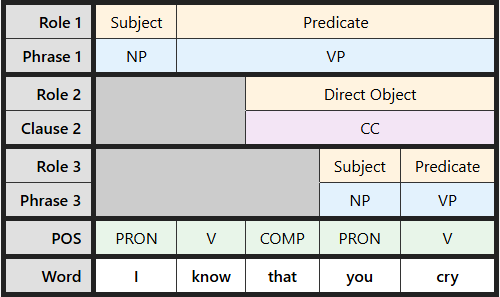
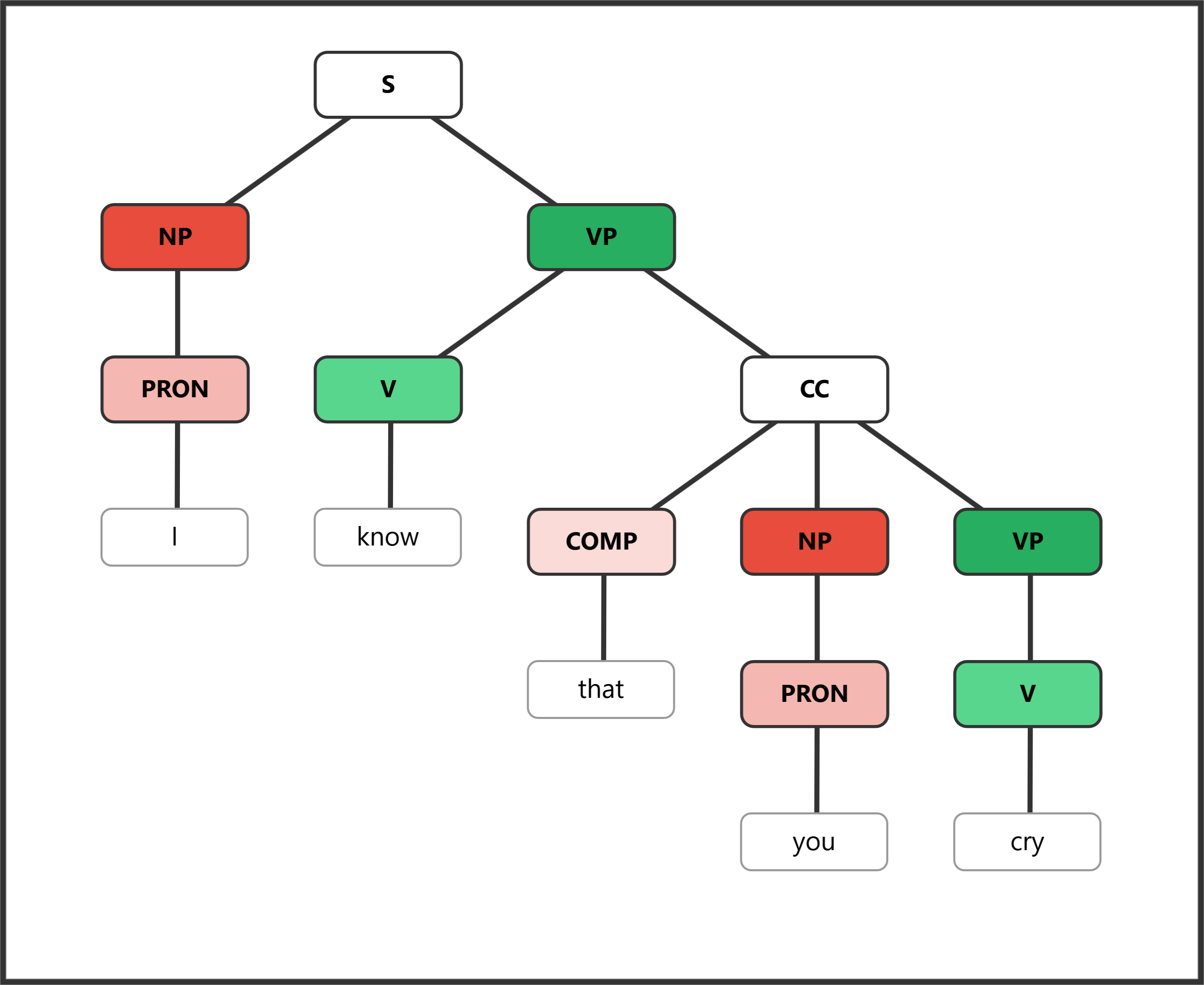
[S [NP [PRON I]] [VP [V know] [CC [COMP that] [NP [PRON you]] [VP [V cry]]]]]
14.11.2 B: Pattern 1 as subject: That you cry upsets me.
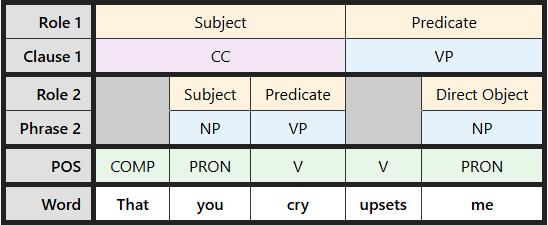
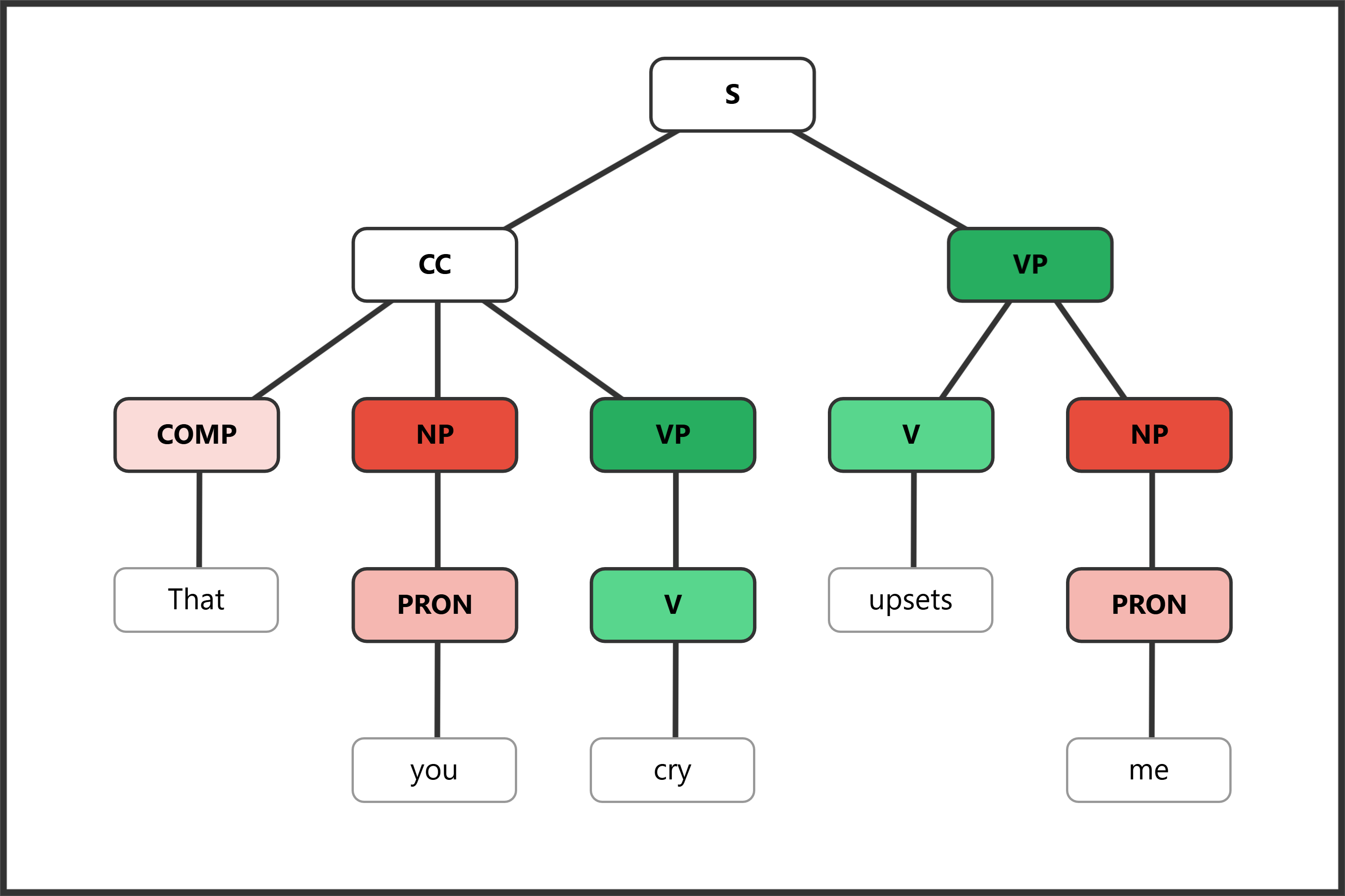
[S [CC [COMP That] [NP [PRON you]] [VP [V cry]]] [VP [V upsets] [NP [PRON me]]]]
14.11.2 C: Pattern 1 with if: I wonder if you cry.
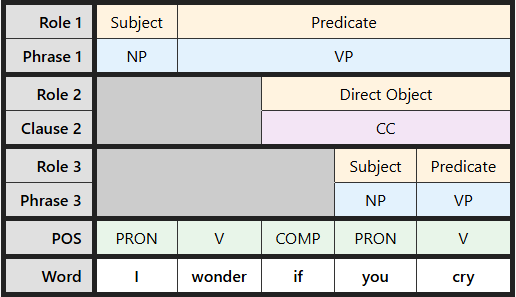
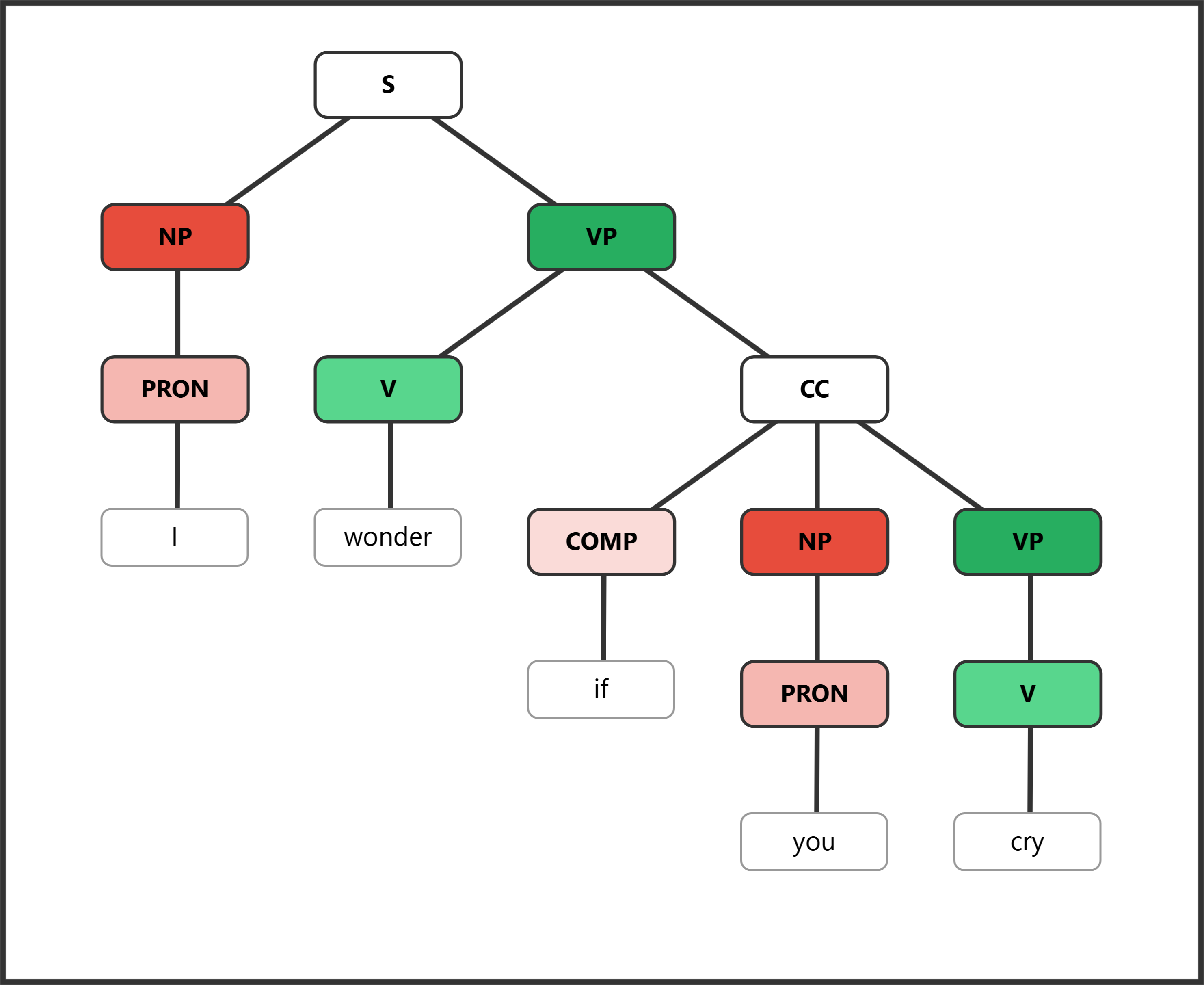
[S [NP [PRON I]] [VP [V wonder] [CC [COMP if] [NP [PRON you]] [VP [V cry]]]]]
14.11.2 D: Pattern 1 with empty complementizer: I know you cry.
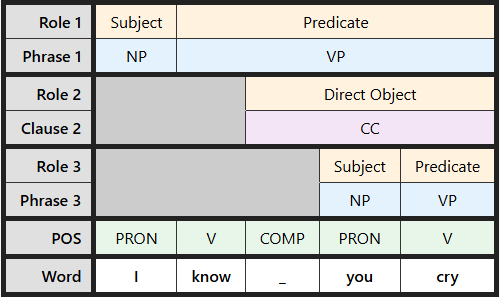
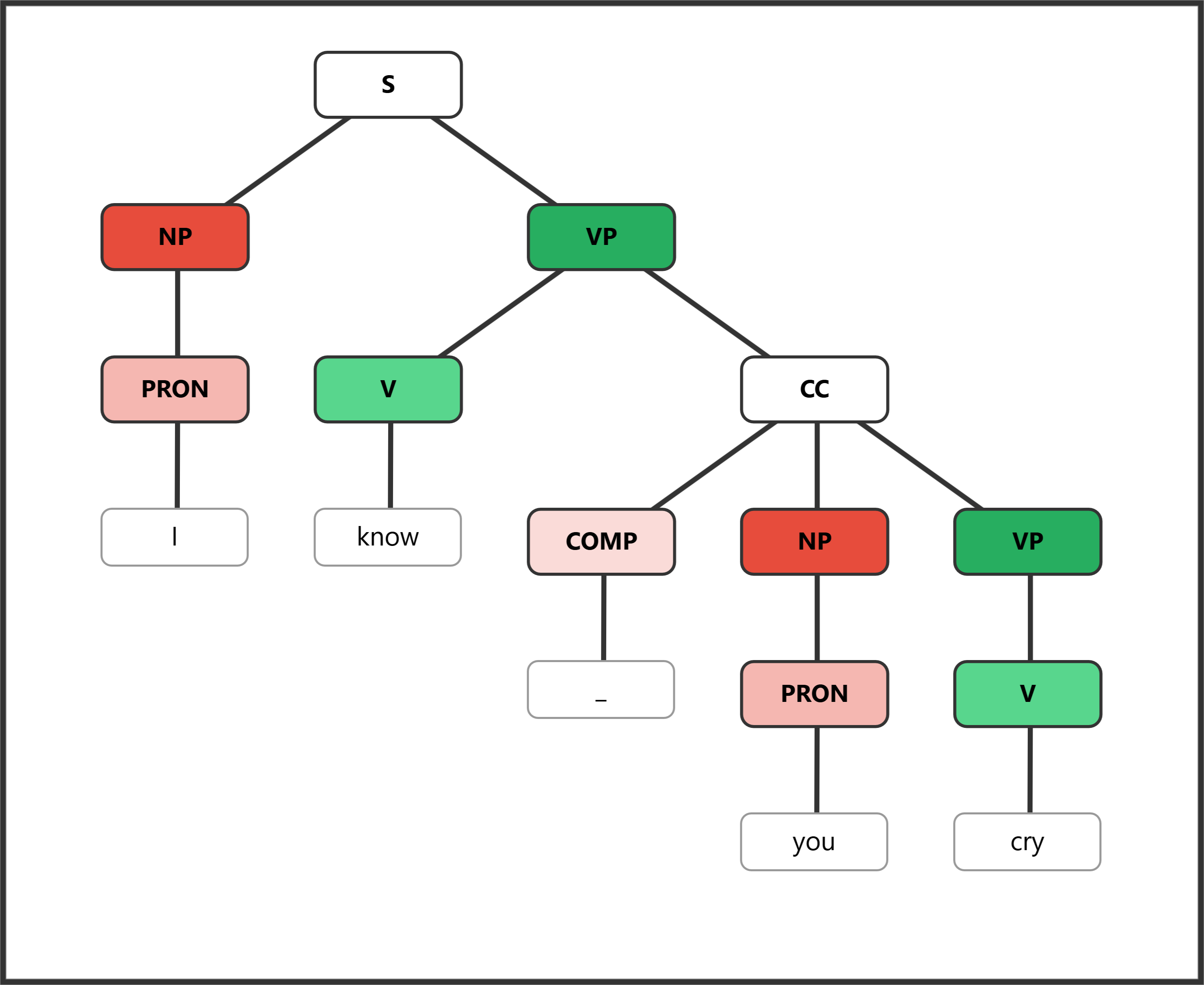
[S [NP [PRON I]] [VP [V know] [CC [COMP _] [NP [PRON you]] [VP [V cry]]]]]

