Section 9.4 Conjoined Phrases
Conjunctions do not only connect full clauses. They can also join two phrases of the same type, producing a larger phrase. This is called coordination at the phrase level, and it is important to distinguish it from compound sentences, which join clauses.
When a conjunction joins two noun phrases, the result is a larger NP—not a compound sentence. Similarly, two verb phrases joined by a conjunction produce a larger VP, not a compound sentence. The key grammatical difference is that conjoined phrases share a single subject or predicate; compound sentences each have their own.
Compound NP (Conjoined Noun Phrases).
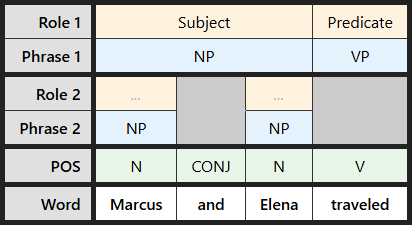
In Marcus and Elena traveled to Spain, the conjunction and joins two noun phrases—Marcus and Elena—into a single compound NP that serves as the subject. There is only one predicate. This is a simple sentence with a compound subject, not a compound sentence.
The labeling table and tree diagram below show how Marcus and Elena form a compound NP subject within a single clause:
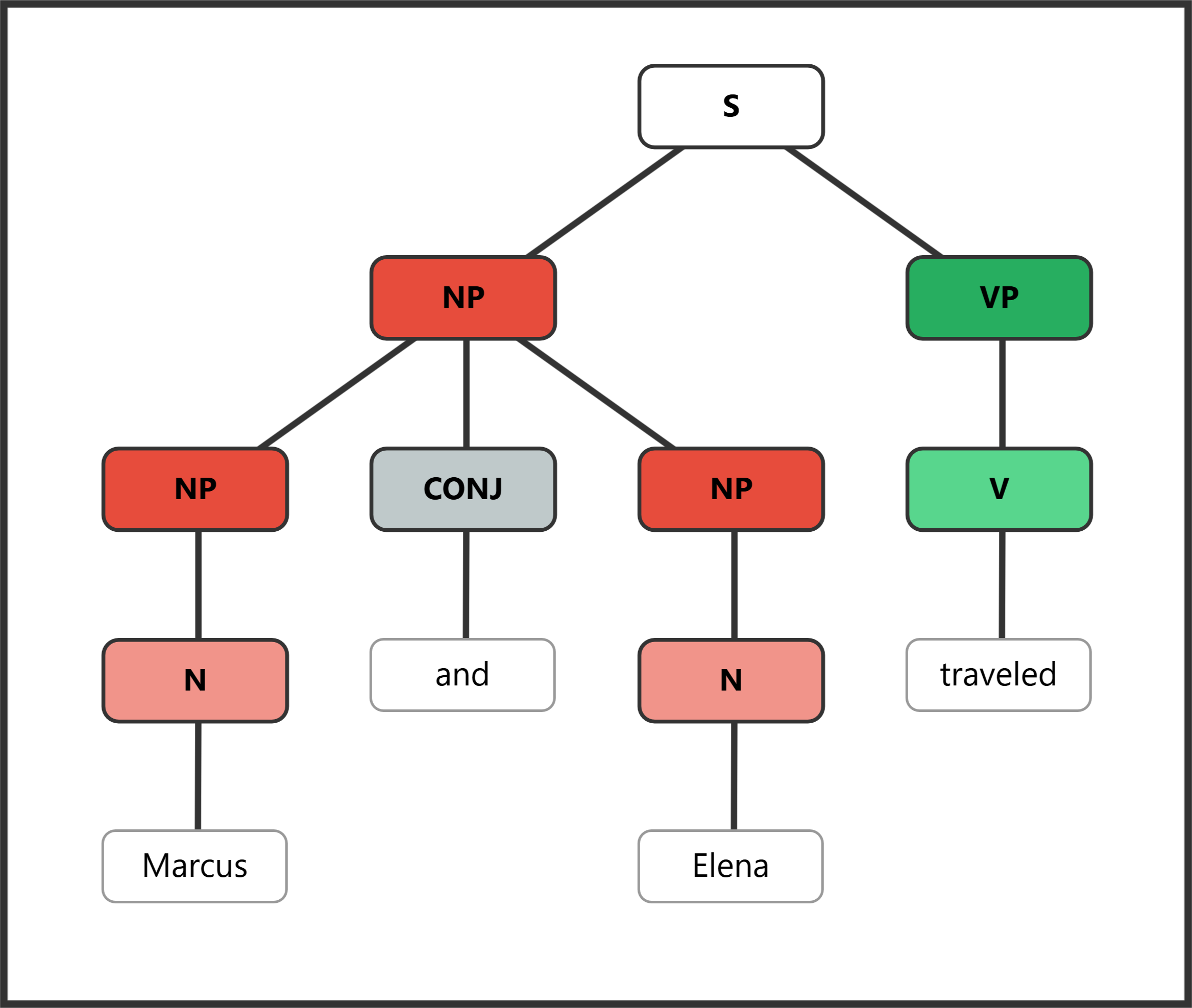
[S [NP [NP [N Marcus]] [CONJ and] [NP [N Elena]]] [VP [V traveled]]]
Notice that each conjunct—Marcus and Elena—keeps its own NP node inside the larger NP. The conjunction holds them together at the phrase level. There is no second predicate, so no second clause.
Compound VP (Conjoined Verb Phrases).
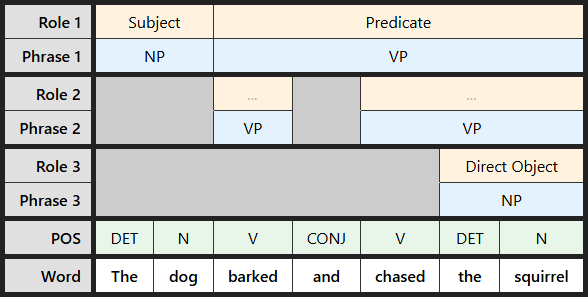
In The dog barked and chased the squirrel, the conjunction joins two verb phrases—barked and chased the squirrel—into a single compound VP. There is only one subject. This is again a simple sentence, this time with a compound predicate.
The labeling table and tree diagram below show the compound VP — two verb phrases joined inside a single clause:
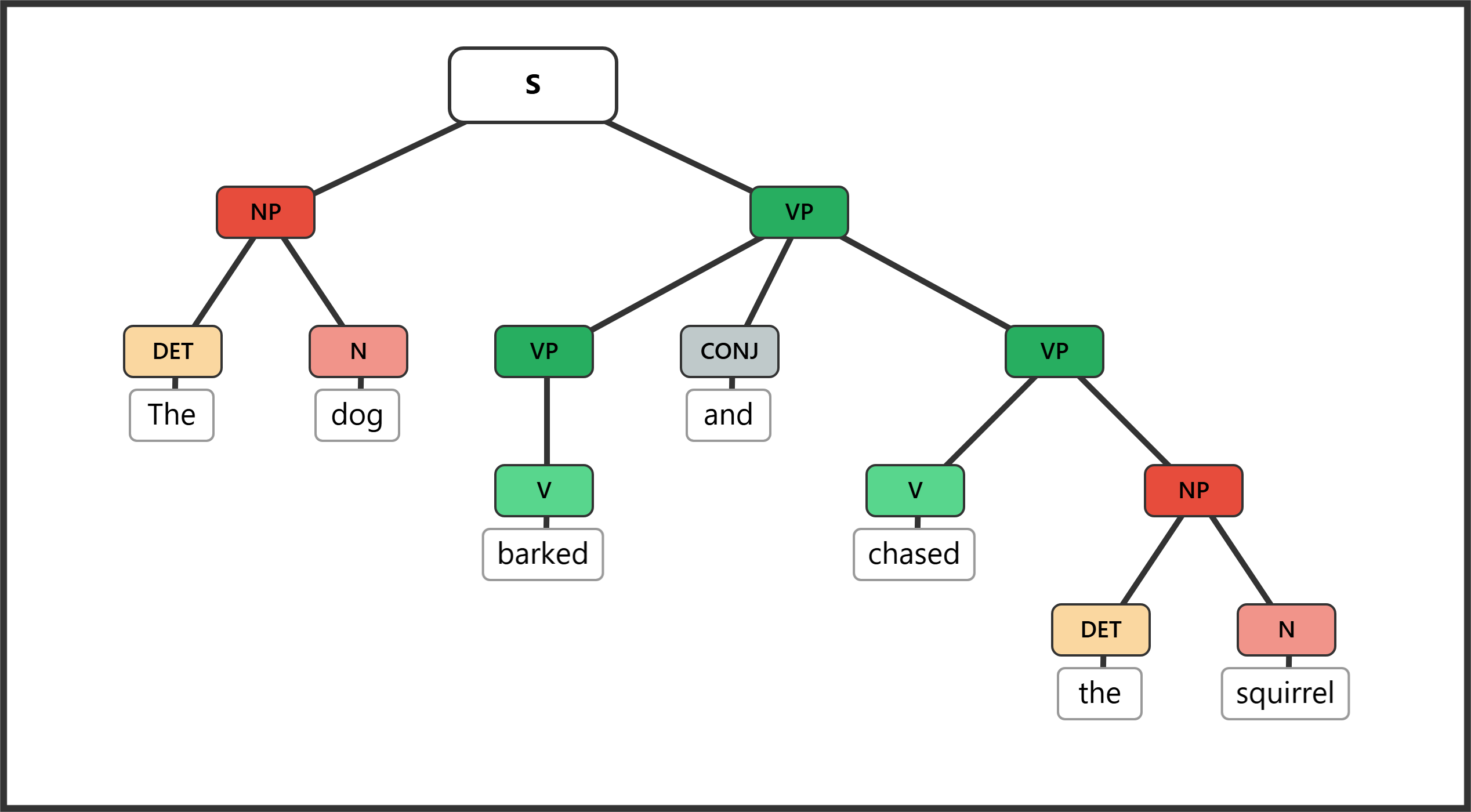
[S [NP [DET The] [N dog]] [VP [VP [V barked]] [CONJ and] [VP [V chased] [NP [DET the] [N squirrel]]]]]
Each conjunct VP keeps its own VP node inside the larger compound VP.
Other Conjoined Phrases.
The same coordination pattern applies to any phrase type. When a conjunction joins two phrases of the same category, the result is a larger phrase of that category—still inside a single clause, still a simple sentence.
Compound AdjP. In The soup was hot and spicy, the conjunction and joins two adjective phrases into a compound AdjP that serves as a subject complement:
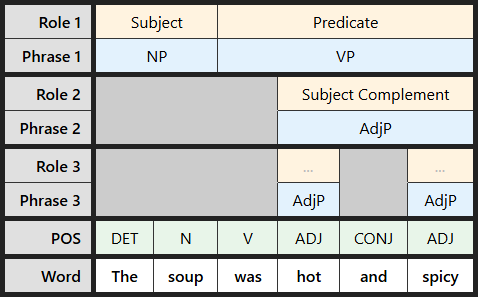
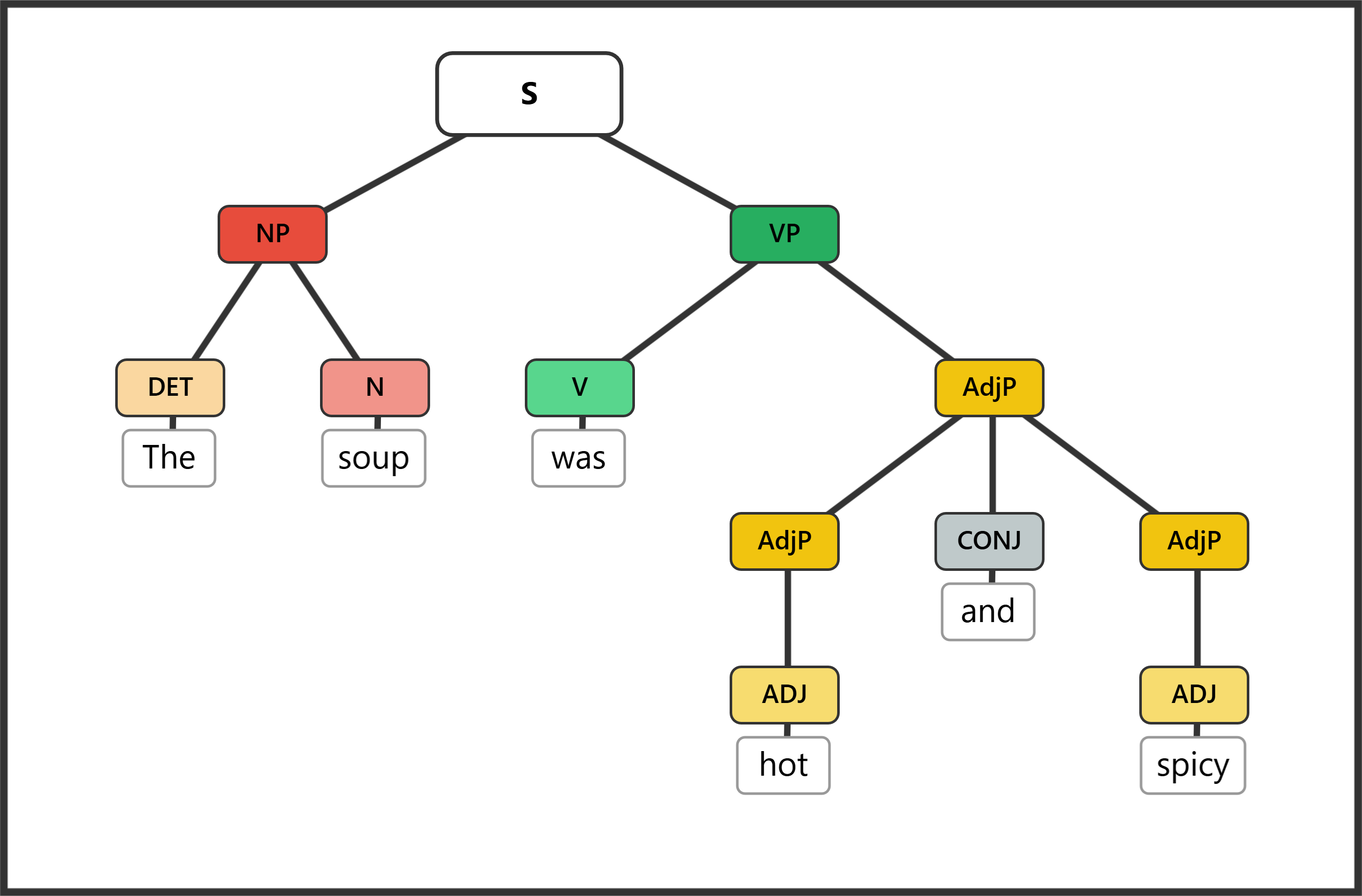
[S [NP [DET The] [N soup]] [VP [V was] [AdjP [AdjP [ADJ hot]] [CONJ and] [AdjP [ADJ spicy]]]]]
Compound AdvP. In She spoke clearly and confidently, the conjunction joins two adverb phrases into a compound AdvP functioning as an adverbial:
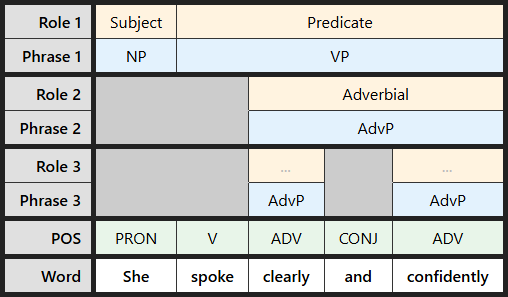
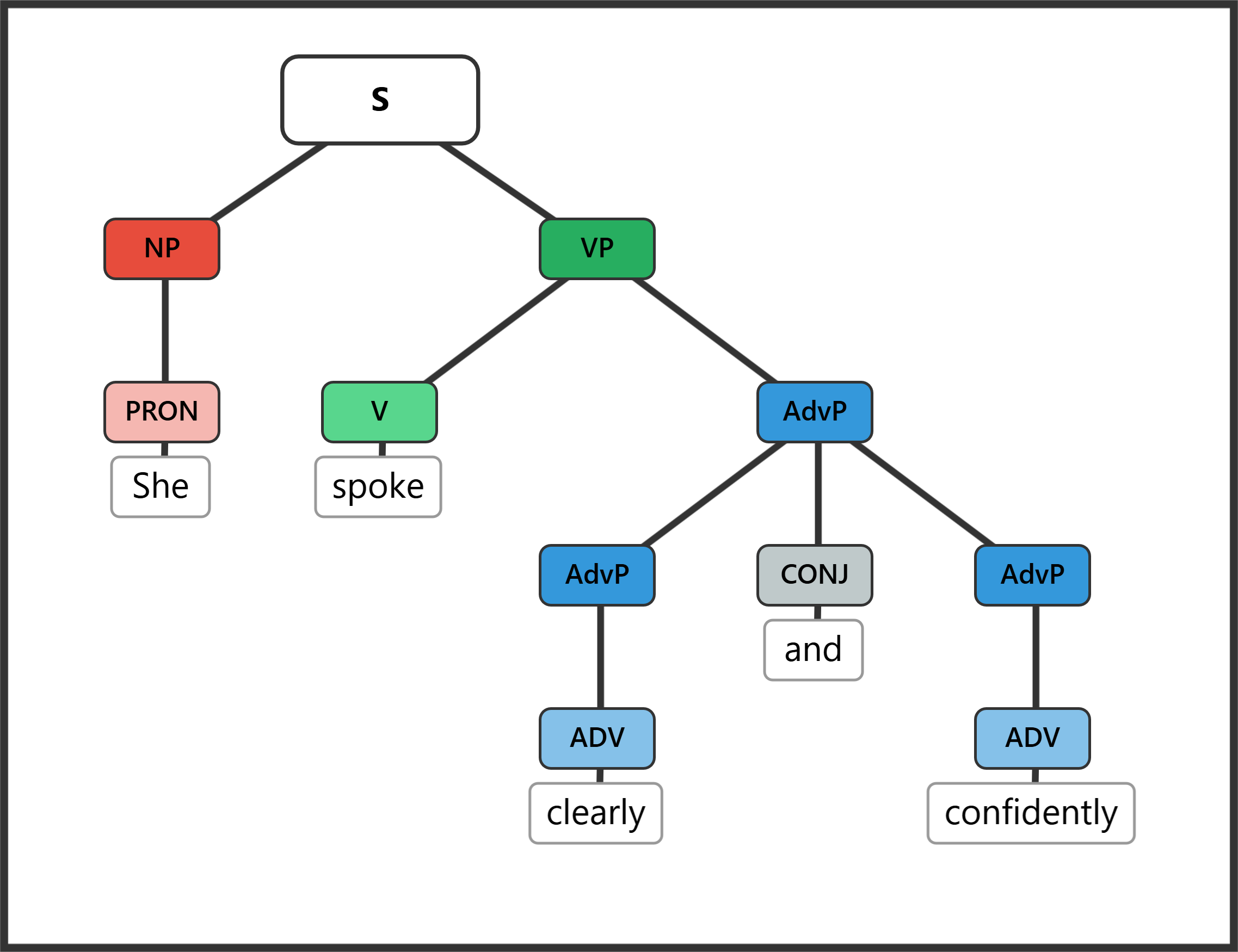
[S [NP [PRON She]] [VP [V spoke] [AdvP [AdvP [ADV clearly]] [CONJ and] [AdvP [ADV confidently]]]]]
Compound PP. In The cat slept on the couch and under the blanket, the conjunction joins two prepositional phrases into a compound PP functioning as an adverbial:
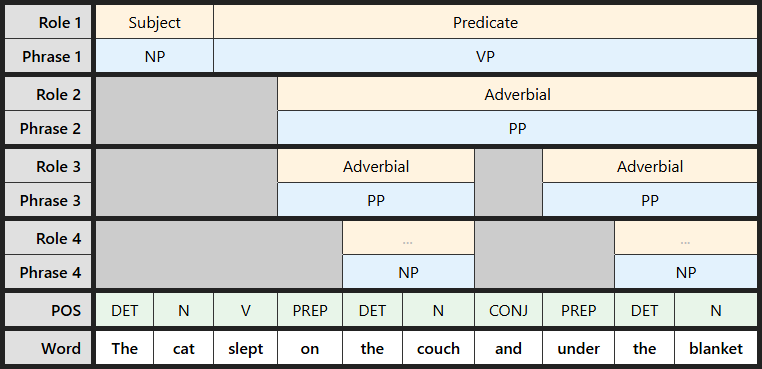
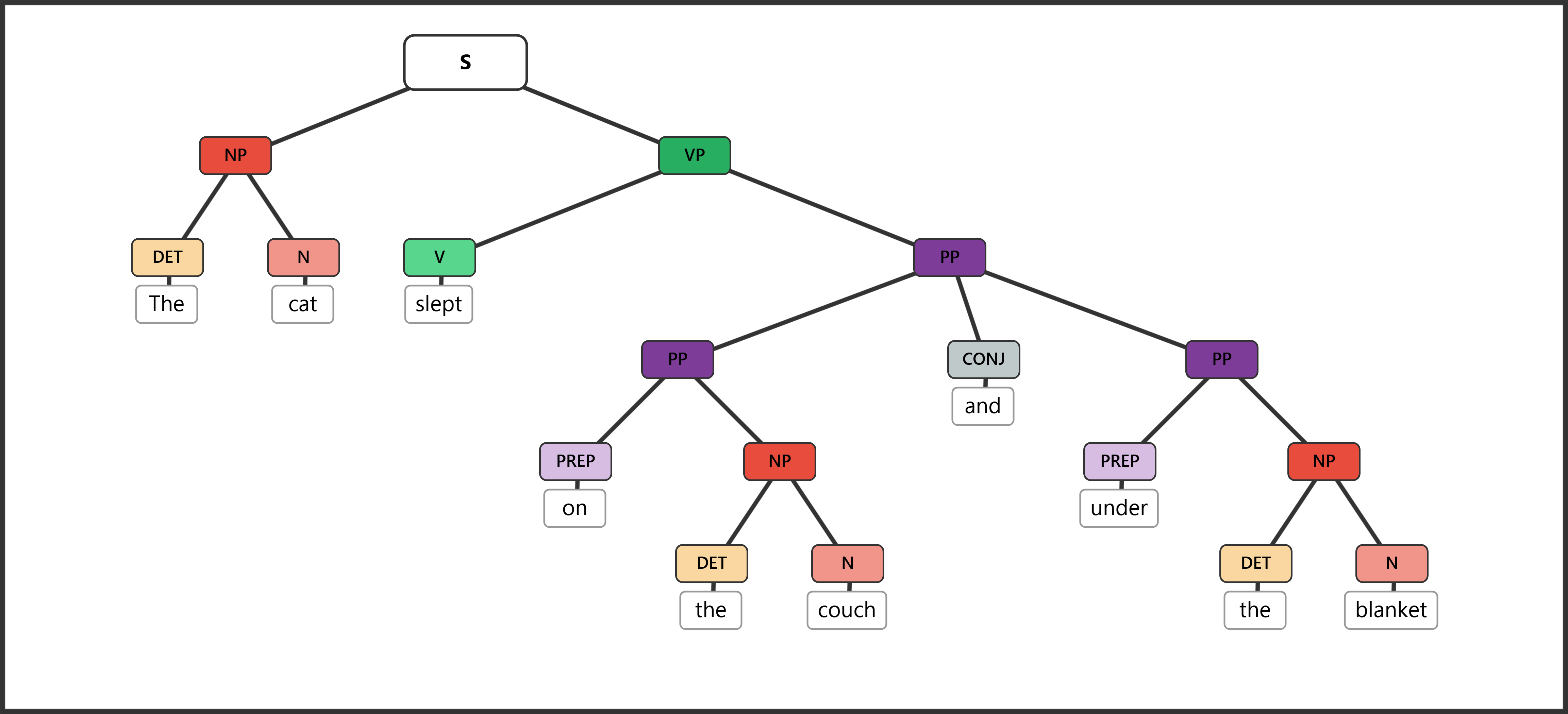
[S [NP [DET The] [N cat]] [VP [V slept] [PP [PP [PREP on] [NP [DET the] [N couch]]] [CONJ and] [PP [PREP under] [NP [DET the] [N blanket]]]]]]
In every case, each conjunct keeps its own phrase node inside a larger phrase of the same type. The conjunction holds them together at the phrase level, not the clause level.
Phrase vs. Clause Conjunction: The Test.
The practical test: does each side of the conjunction have its own subject and predicate? If so, you have a compound sentence (two independent clauses). If they share a subject or a predicate, you have a conjoined phrase inside a simple sentence.
| Example | Structure | Sentence type |
|---|---|---|
| Marcus and Elena traveled. | Compound NP subject, one VP | Simple |
| The dog barked and chased. | One NP subject, compound VP | Simple |
| The soup was hot and spicy. | Compound AdjP complement, one clause | Simple |
| Marcus traveled, and Elena stayed. | Two full ICs (each with subject + predicate) | Compound |

