Section 11.3 Modal Meanings in Detail
The table in the previous section gave you a starting point, but modal meaning is genuinely more complex than any single-gloss summary can capture. Most modals are polysemous—they carry multiple distinct but related meanings, and context determines which reading applies. This section works through each modal pair in detail. As you read, notice that the meanings within each pair often shade into each other: ability and possibility are closely related concepts, as are permission and possibility. The challenge—and the interest—of modal grammar is in distinguishing these readings precisely.
Can and Could.
Ability:
-
She can speak French. (present ability)
-
She could speak French when she was young. (past ability)
Possibility:
-
It can get cold here in winter. (general possibility)
-
That could be true. (specific possibility)
Permission:
-
Can I leave early? (informal)
-
Could I borrow your pen? (polite)
Will and Would.
Future:
-
I will call you tomorrow.
-
She will be at the meeting.
Willingness:
-
Will you help me?
-
I won’t tolerate that behavior.
Hypothetical/Conditional:
-
I would go if I had time.
-
What would you do?
Polite requests:
-
Would you close the door?
Past habit:
-
We would go fishing every summer.
Shall and Should.
Shall (formal, mostly British):
-
Shall I open the window? (offer)
-
We shall overcome. (determination)
Should (obligation, expectation):
-
You should apologize. (advice/obligation)
-
She should arrive soon. (expectation)
-
If you should need help, call me. (hypothetical)
May and Might.
Permission (may):
-
May I come in? (formal)
-
You may leave when finished.
Possibility:
-
It may rain tomorrow. (possible)
-
It might rain tomorrow. (less certain)
-
She may have forgotten. (possible past)
Must.
Necessity/Obligation:
-
You must submit the form by Friday.
-
Visitors must sign in.
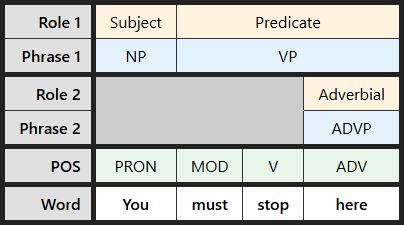
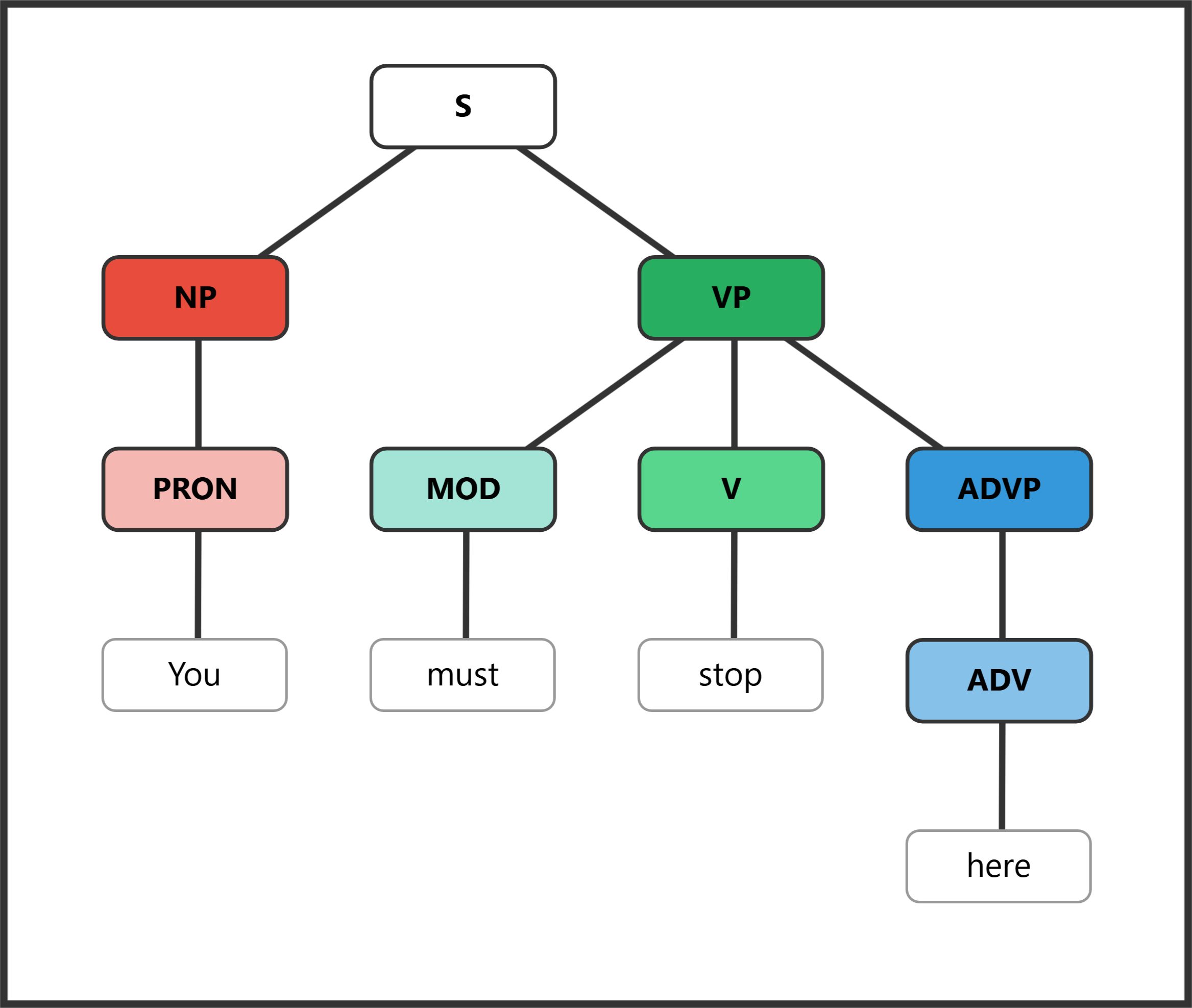
[S [NP [PRON You]] [VP [MOD must] [V stop] [ADVP [ADV here]]]]
Logical conclusion:
-
She’s not answering—she must be asleep.
-
He must have left already. (deduction about past)
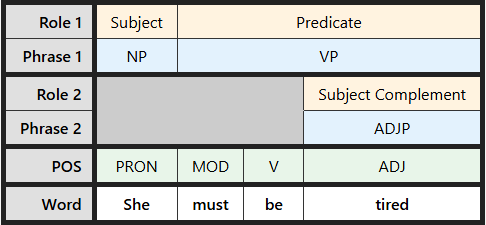
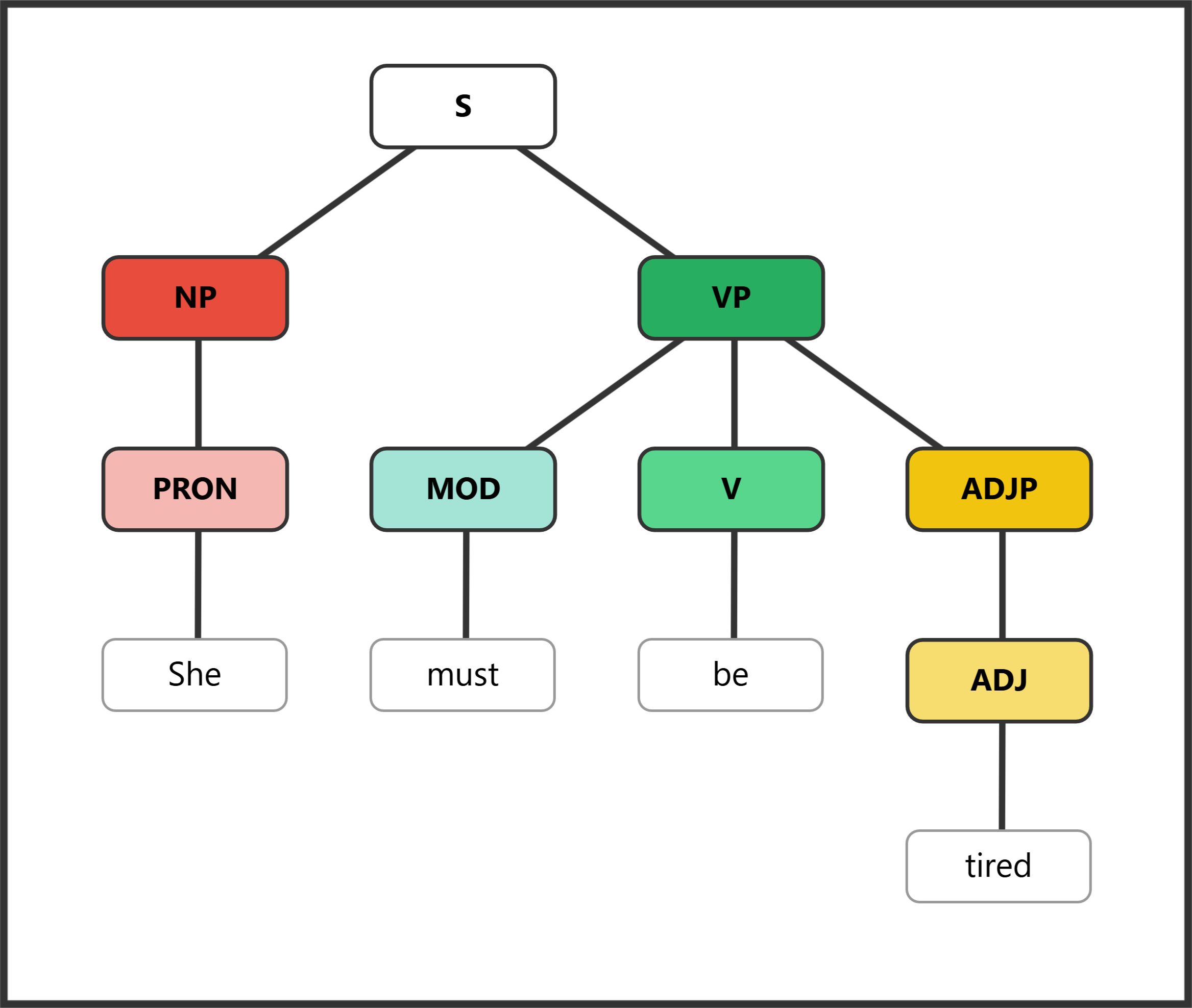
[S [NP [PRON She]] [VP [MOD must] [V be] [ADJP [ADJ tired]]]]
Notice that the same modal can express two very different things: You must rest (I am telling you to rest—obligation) versus You must be tired (I conclude that you are tired—deduction). Context always determines which reading applies. When must is followed by an action verb, it usually signals obligation. When it is followed by be or a stative expression, it usually signals a logical conclusion.

