Section 10.4 Primary Auxiliary: Do
Of the three primary auxiliaries, do is the odd one out. Unlike be and have, it does not add aspect or voice; it is essentially a grammatical placeholder. English requires an auxiliary verb in certain positions—for forming questions by inversion, for placing not after an auxiliary—but many sentences have no auxiliary at all. When that need arises, English inserts do to fill the slot. Linguists call this do-support, and understanding it helps explain a construction that seems arbitrary but is actually quite systematic.
Do is used for emphasis, questions, and negation when no other auxiliary is present.
Forms of Do.
| Present | Past |
|---|---|
| do, does | did |
Functions of Auxiliary Do.
Do-support: When a sentence needs an auxiliary (for questions, negation) but has none, do is inserted:
Questions:
-
She works here. → Does she work here?
-
They left early. → Did they leave early?
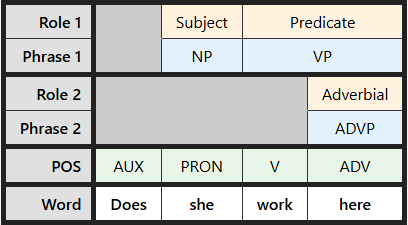
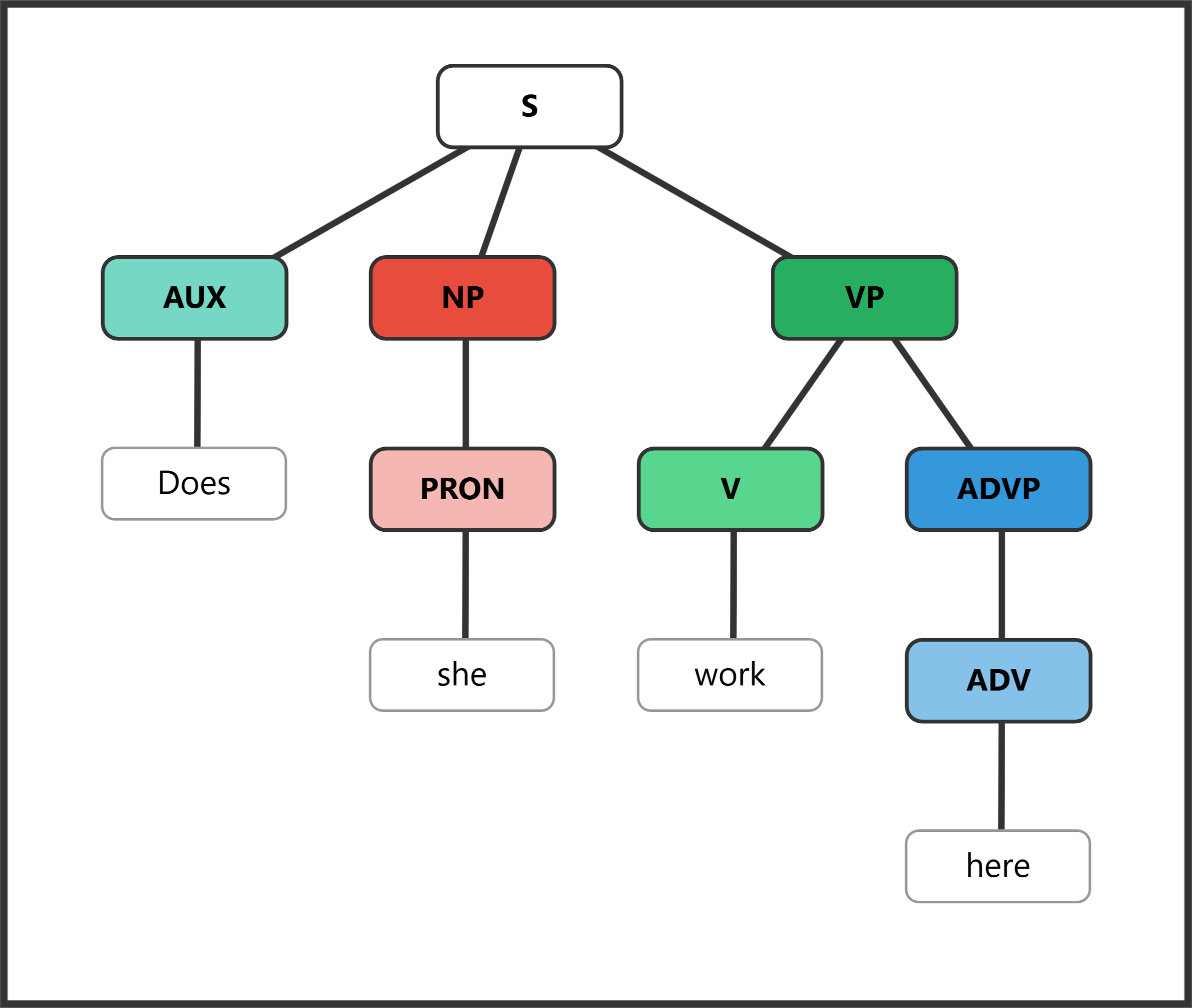
[S [AUX Does] [NP [PRON she]] [VP [V work] [ADVP [ADV here]]]]
Negation:
-
She works here. → She doesn’t work here.
-
They left early. → They didn’t leave early.
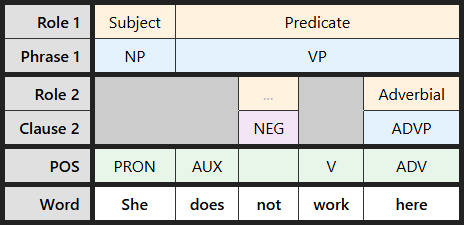
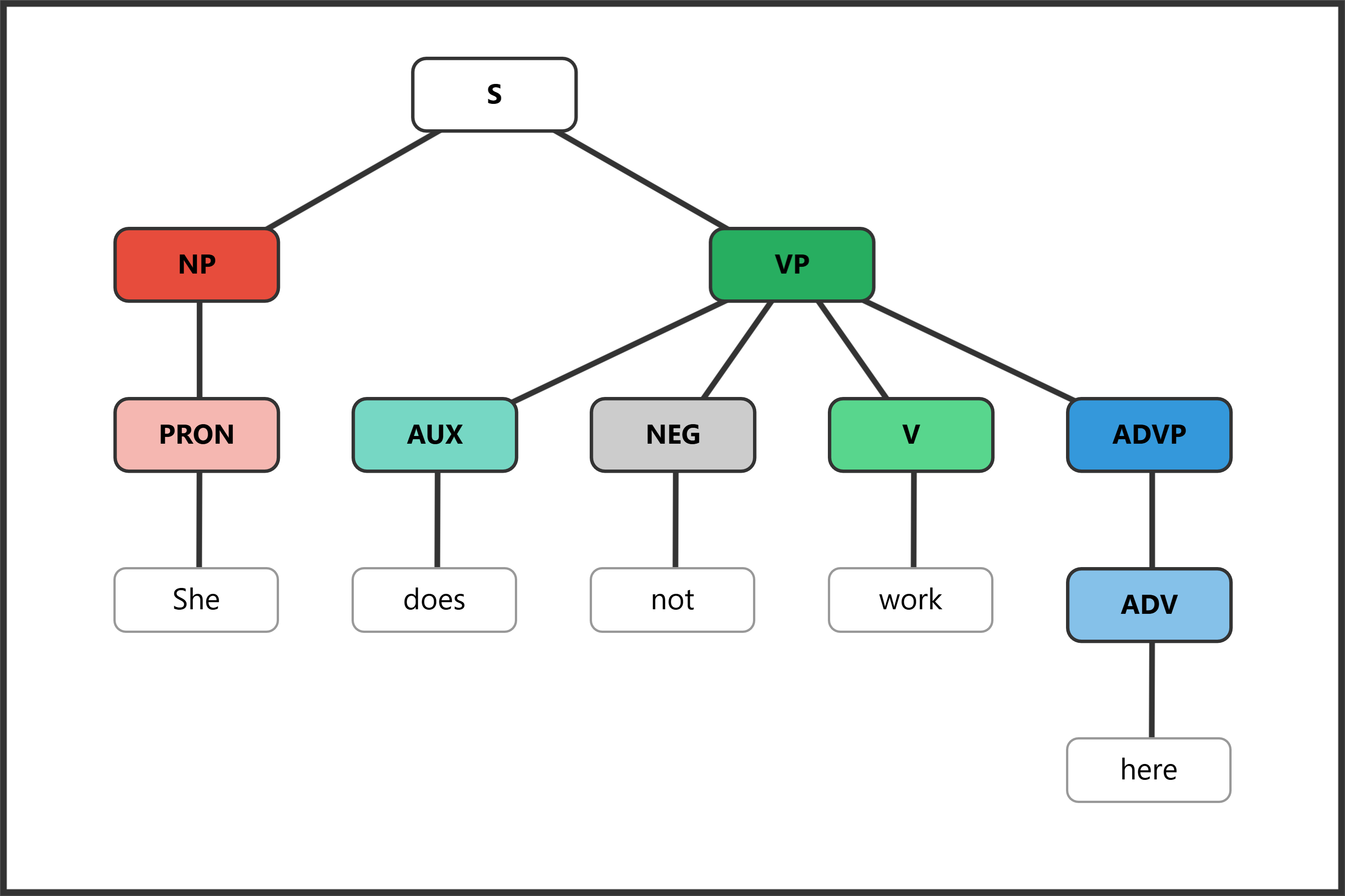
[S [NP [PRON She]] [VP [AUX does] [NEG not] [V work] [ADVP [ADV here]]]]
Emphasis:
-
I do understand your concern.
-
She did finish the assignment.
Note: If another auxiliary is present, do is not used:
-
She is working. → Is she working? (not
Does she is working?) -
He has left. → Has he left?

