Section 8.1 The Two Core Parts: Subject and Predicate
Most of us recognize a complete sentence when we hear one, even if we cannot always explain why. The dog. Something is missing. Barked loudly. Still not quite right. The dog barked loudly. Now it’s complete. What happened? Two things came together: something to talk about and something said about it. That two-part structure—the subject and the predicate—is the foundation that every sentence is built on.
Every complete sentence has two fundamental parts: a subject and a predicate.
The Subject.
The subject is what the sentence is about—typically who or what performs the action or is described. The subject is usually a noun phrase.
Examples:
-
The tall man walked slowly.
-
Three ambitious students from Pueblo study hard.
-
Swimming is fun.
-
What she said surprised everyone.
Finding the subject:
-
Ask “Who or what [verb]?”
-
The tall man walked. → Who walked? → The tall man
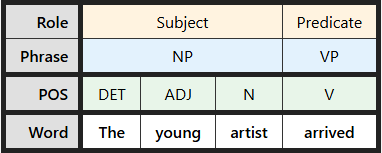
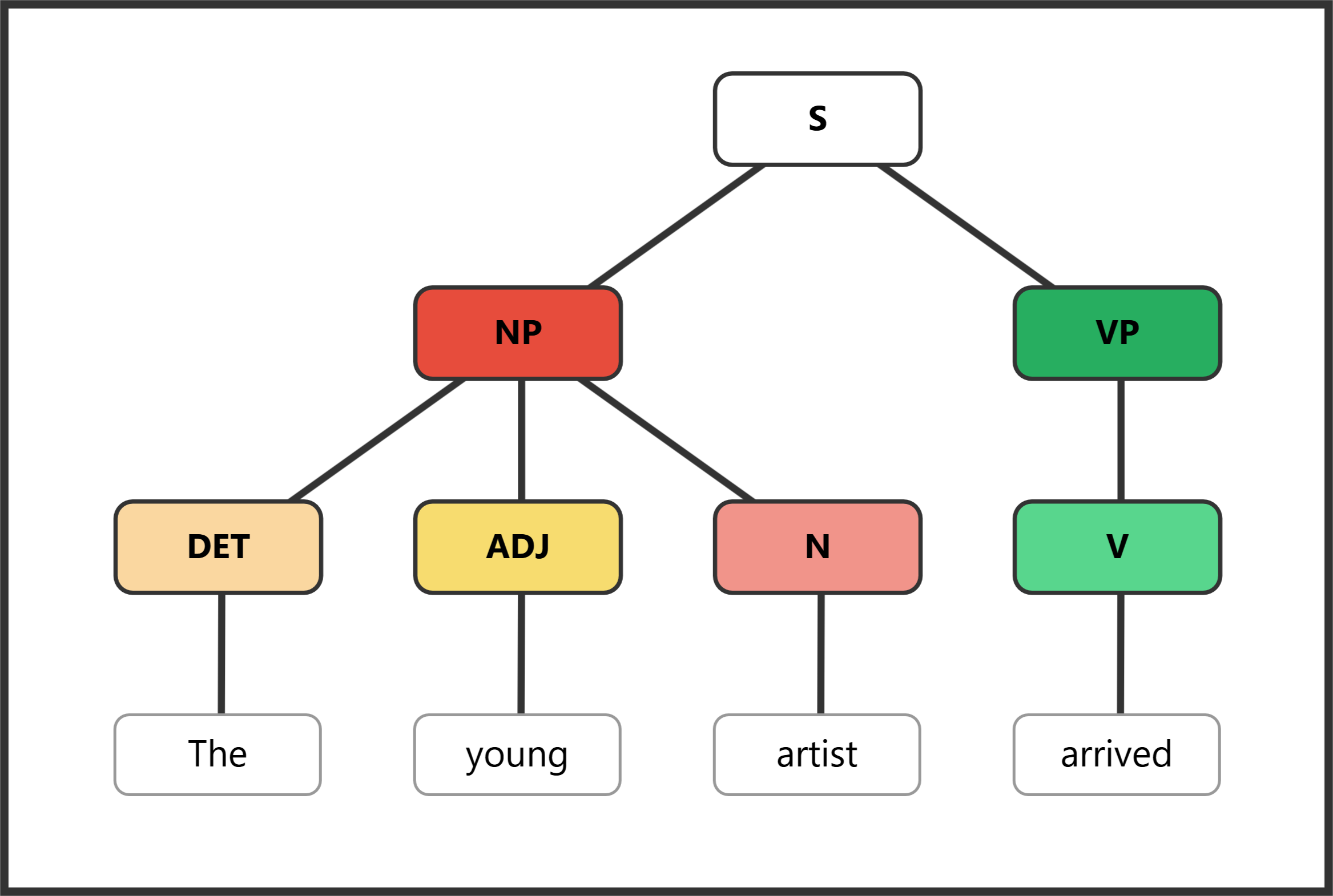
[S [NP [DET The] [ADJ young] [N artist]] [VP [V arrived]]]
The Predicate.
The predicate is everything that is said about the subject. It always includes a verb phrase and may include objects, complements, and adverbials.
Examples:
-
The tall man walked slowly.
-
Three students study in the library every evening.
-
She is a talented musician from Argentina.
The predicate includes:
-
The main verb (required)
-
Objects and complements (depending on verb type)
-
Adverbials (optional)
Subject-Predicate Division.
Every sentence divides into these two parts:
| Subject | Predicate |
|---|---|
| Dogs | bark. |
| The young artist | painted beautiful landscapes. |
| My neighbor’s daughter from next door | won the competition last week. |
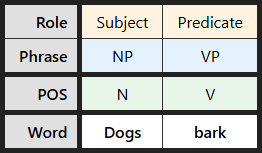
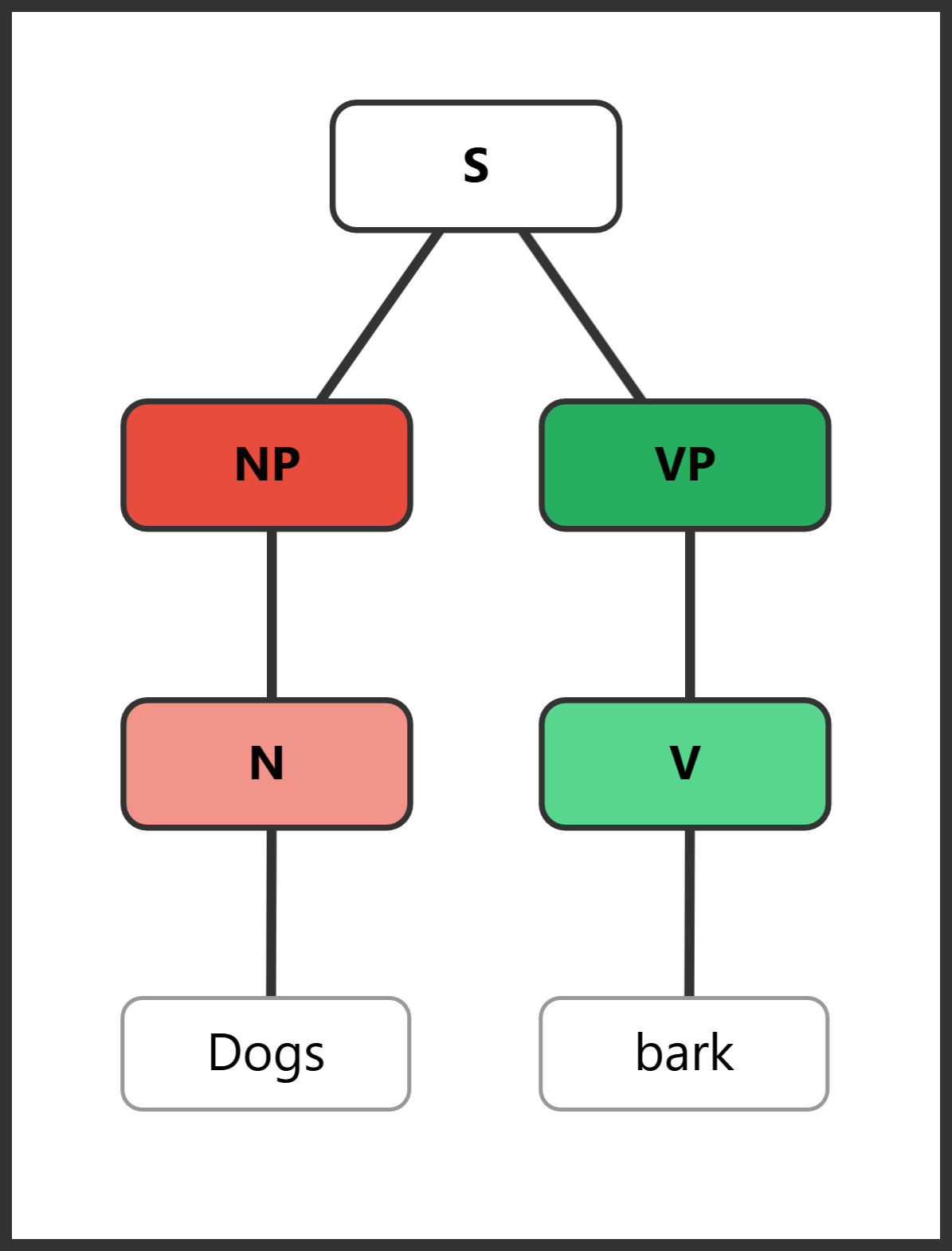
[S [NP [N Dogs]] [VP [V bark]]]
Notice that the subject can be as short as a single word or as long as a full noun phrase with modifiers—what matters is its grammatical role, not its size. The same is true of the predicate: it can be a single verb or an elaborate structure with objects, complements, and adverbials. That range is part of what makes the subject/predicate distinction so useful. Once you can reliably identify these two parts, you can go further—asking what is inside the predicate, what role each element plays, and which of the six fundamental patterns a sentence follows. That is the work of the sections ahead.

